


Planning a dedicated setup requires balancing physical room layout with the equipment you plan to house. Learning how to build a gaming table starts with identifying whether you need a recessed play vault for board games, a reinforced surface for heavy desktop hardware, or a convertible dining station that hides your ongoing campaign. While dedicated furniture serves as an ergonomic and organizational accessory rather than a computing component, your table choice heavily impacts cable pathways and equipment ventilation. Gamers who allocate resources toward budget gaming desktop builds often discover that a well-structured table preserves desk space for airflow and peripheral movement.
Whether you construct a customized wooden centerpiece from raw lumber or assemble a pre-drilled modular kit, structural rigidity remains the primary consideration. Solid hardwoods like Malaysian oak or fir handle substantial downward pressure from monitor mounts and player weight much better than lightweight fiberboards. Modern convertible designs also utilize removable leaf panels and felt or neoprene playing mats to transition between daily dining and intense campaign nights. By evaluating your available room dimensions, storage needs, and required weight capacities early, you can create a reliable gaming station that lasts for years.





Practical Guidelines for Designing, Sourcing, and Building a Gaming Table
Constructing a customized play surface requires careful planning around spatial ergonomics, joinery strength, and functional versatility. Whether your goal centers on running extended tabletop roleplaying campaigns or establishing a dedicated hub for hybrid digital and physical entertainment, the physical table dictates your comfort. Approaching this project involves understanding whether a scratch-built carpentry build or an engineered flat-pack kit best aligns with your available tools and workshop skills. By establishing exact room dimensions and component weight requirements before cutting timber or unboxing hardware, you avoid structural instability and cramped gaming quarters.
Distinguishing Gaming Furniture from Core PC Hardware
A gaming table acts as physical infrastructure rather than an electronic processing unit. It is vital to separate your furniture platform from the internal computer components that render high-definition graphics or process game logic. While a sturdy desk supports your monitor arms, keyboard trays, and computer towers, it contains no computing hardware of its own. Conflating furniture specifications with desktop performance can lead to misallocated budgets when setting up an entertainment space.
Physical tables do, however, interface directly with your digital equipment through load ratings and physical dimensions. Compact setups that employ all-in-one gaming PC options require less surface area and simpler cable management than sprawling multi-monitor battle stations. Heavy steel computer cases, wide gaming monitors, and external power hardware place continuous downward force on the desktop frame. Ensuring your table frame features reinforced bracing prevents wobbling whenever you type, roll dice, or adjust mounted peripherals.
Determining Dimensions, Player Capacity, and Room Clearances
Room proportions dictate the outer footprint of any furniture you plan to construct or install. A table measuring roughly sixty-two to sixty-three inches in length, such as the Agreatby or Haddockway formats, comfortably accommodates four to six seated adults. Smaller spaces may require a more compact layout, like the forty-seven-inch HIMcup design, to keep walking paths open. You must always maintain at least three feet of perimeter clearance between the table edges and adjacent walls so guests can pull chairs out freely.
Inner dimensions demand equal attention when calculating playfield usability. A recessed game area measuring approximately fifty-three inches by thirty inches provides adequate space for oversized board game maps, character sheets, and card displays. If the inner vault is constructed too narrow, players will struggle to manage their resource tokens and rulebooks simultaneously. Verifying both outer boundary dimensions and inner playfield zones ensures your build fits your physical room while providing an expansive gaming arena.
Selecting Structural Materials: Solid Hardwoods versus Engineered MDF
Material selection determines how much weight your finished gaming surface can reliably carry over several years. Dense hardwoods like Malaysian oak, utilized in heavy-duty Agreatby builds, support up to four hundred and fifty pounds without flexing or warping. Solid fir wood, featured in Garvee designs, offers substantial structural resilience along with natural wood grain aesthetics that fit traditional game rooms. Hardwood frames resist the gouges, scratches, and screw-loosening tendencies that often plague heavily used gaming furniture.
Medium-density fiberboard, often designated as MDF, presents an accessible alternative for budget-conscious builders. Units like the HIMcup convertible table utilize dense MDF panels coated with scratch-resistant and waterproof laminate veneers. While MDF does not match the raw tensile strength or heirloom longevity of solid oak, it provides a completely uniform surface free from natural knots. Working with MDF requires careful sealing along all exposed edges to prevent internal swelling if drinks ever penetrate the outer finish.
Hybrid builds that blend steel framework with wooden tops deliver exceptional lateral stability during intense sessions. The ARTETHYS table incorporates heavy-duty X-shaped steel legs underneath its multi-panel wooden playing surface. Metal leg structures eliminate side-to-side racking without requiring bulky wooden corner aprons that might intrude upon player knee space. Combining metallic structural elements with a finished wooden top represents an efficient way to achieve high load ratings and modern visual appeal.
Designing the Recessed Game Vault and Playing Surface
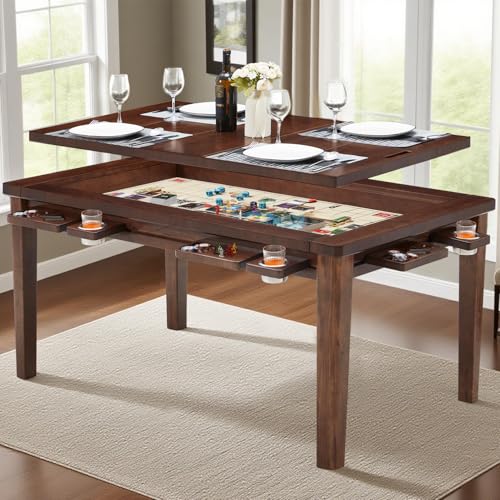
The recessed vault stands as the defining feature of any purpose-built tabletop gaming station. A vault depth between three and three and a half inches allows owners to leave ongoing campaigns, miniatures, and puzzles undisturbed under protective cover leaves. Lower vault depths risk crushing tall game pieces, while excessive depths cause wrist fatigue when players reach down to interact with components. Incorporating wide, smooth armrest ledges around the vault perimeter provides a comfortable resting place during multi-hour gaming sessions.
Lining the floor of the vault with cushioned fabric improves card manipulation and dampens the sound of rolling dice. High-density neoprene mats, such as the reversible gray and red inserts found in premium tables, offer water resistance and smooth tactile glide. Soft felt or speed cloth can also serve as effective floor coverings if stretched taut over a thin layer of closed-cell foam. A quality underlayment prevents cards from sticking flat against bare timber, making quick pickups effortless for players.
Card handling precision plays a major role in games that demand repeated shuffling and dealing across the felt. Instructional literature on close-up table magic, such as works published by Dover Publications, routinely highlights the importance of a compliant, friction-balanced surface for card manipulation. Hard tabletop wood causes playing cards to skate out of reach or bend at the corners during pickup attempts. Installing a purpose-built gaming mat inside your recessed vault protects your card collections and mirrors professional gaming felt standards.
Crafting the Removable Leaf System and Spill Management
Convertible functionality turns a specialized gaming station into a practical everyday dining or conference surface. Multi-piece leaf systems, typically consisting of three or four interlocking wooden panels, fit snugly over the sunken vault. Precision-cut finger slots or recessed lift grooves along the table lip enable users to raise each panel without gouging the surrounding woodwork. Once fully positioned, these leaves create a seamless flat surface capable of handling dinner plates, craft projects, or work laptops.
Spill prevention represents the most vital engineering hurdle when designing removable leaf assemblies. Without protective barriers, spilled beverages on the upper surface can trickle down through panel seams directly onto game components below. Advanced designs incorporate rubber leaf locks, tongue-and-groove gaskets, and perimeter spill channels to divert liquids safely away from the recessed well. Taking time to rout dedicated drainage channels or installing tight rubber under-locks protects expensive board game expansions and sensitive paper maps.
Storing leaf panels when the vault is open requires a deliberate strategy to prevent warped wood and chipped edges. The Garvee table design includes an integrated storage box underneath the table frame specifically to hold removed panels securely. Other systems utilize external vertical storage racks that keep heavy oak leaves upright without leaning them against vulnerable drywall. Providing a safe storage location ensures your table panels remain straight and aligned across changing seasonal humidity conditions.
Integrating Modular Rail Systems and Player Accessories
Perimeter accessory rails elevate tabletop utility by moving clutter away from the active playing arena. Tables from ARTETHYS, Agreatby, and Haddockway feature concealed aluminum or wooden tracks mounted along the inner and outer table walls. Players can slide wooden dice trays, token holders, and cup holders along these channels to suit their individual seating preferences. Removable hardware allows you to reconfigure the table layout instantly depending on whether you host four players or six.
Dedicated drink holders prevent the single most common game-night disaster by isolating open liquids from cards and electronics. Providing both standard and oversized cup holders ensures the table securely accommodates beverage cans, coffee mugs, and stemware alike. When building your own rail system, routing a consistent T-slot groove into the side apron allows for endless accessory experimentation. Smooth-sliding accessory blocks keep dice rolls clean and ensure player character sheets remain dry throughout long campaigns.
Electrical Wiring, Cable Routing, and Power Protection for Gaming Rigs
Hybrid gaming tables that accommodate laptops, digital combat displays, or desktop setups require thoughtful power integration. Drilling clean two-inch grommet openings into discreet corners allows you to route heavy power cables without dangling cords across player legroom. Installing under-desk cable trays or J-channel raceways keeps power bricks and peripheral wiring neatly tucked against the subframe. Proper cable management also prevents players from accidentally snagging sensitive display cords with their knees during active gameplay.
Sensitive gaming electronics demand reliable power conditioning to prevent abrupt shutdowns and data loss. Connecting your gaming station to dedicated battery backup solutions shields digital campaign monitors and nearby desktop computers from voltage sags and blackouts. A continuous uninterruptible power source gives hosts adequate time to save digital session notes and power down equipment cleanly if household circuits trip. Pairing your physical table structure with robust surge protection ensures a dependable environment for all connected gaming gear.
Step-by-Step Assembly: DIY Construction versus Pre-Engineered Kits
Building from scratch demands specialized woodworking tools, including a table saw, pocket hole jig, router, and multiple bar clamps. The process begins with squaring your leg posts and cutting the structural aprons that form the outer perimeter frame. Builders then construct an internal subfloor box out of high-grade plywood to support the playing mat and game components. Applying multiple coats of polyurethane seals the natural lumber against sweat, drink spills, and everyday friction before any fabric is installed.
Assembling a pre-drilled flat-pack kit offers a faster alternative for creators without dedicated workshop spaces. Tables like those produced by Agreatby often ship in multiple large packages that may arrive on separate delivery days due to heavy shipping weights. You should unpack all components, inspect the solid oak or fir planks for shipping transit damage, and confirm all hardware packets are accounted for before starting. Following the manufacturer assembly schematic ensures frame bolts are torqued evenly, preventing premature stress cracks or uneven joint gaps.
Accounting for natural wood movement remains essential whether you mill your own timber or assemble a factory-made unit. Solid Malaysian oak and natural fir expand and contract across their grain patterns as seasonal humidity levels fluctuate throughout the year. Manufacturers engineer subtle expansion tolerances into leaf joints to prevent buckling during humid summer months. Leaving minor gaps between removable panels allows the timber to breathe naturally without causing the dining surface to bind or warp.
Practical Verification and Long-Term Table Maintenance
Completing your table setup requires a sequence of physical checks to verify stability and playfield balance. Use a bubble level across both the recessed play area and the upper dining leaves to confirm the surface rests completely flat. Most modern designs, including steel and wooden frames, feature threaded leveling feet that compensate for uneven hardwood or tiled floors. Testing the glide of sliding rail trays and checking leaf panel tightness confirms that all joints remain square under everyday use.
Routine maintenance preserves both the functional moving parts and the exterior finish of your gaming station. Removable neoprene play mats should be vacuumed with a soft brush attachment and wiped down with a damp microfiber cloth to remove dust and dice debris. Solid wood frames benefit from occasional applications of natural furniture polish to keep moisture levels stable and prevent surface cracking. Avoiding harsh chemical cleaners preserves protective lacquer coatings, ensuring your customized table retains its rich luster for decades of game nights.
Careful planning around player dimensions, solid wood construction, and modular accessory rails transforms any standard room into a versatile entertainment hub. Whether you build your frame board by board in a woodshop or assemble an engineered solid oak centerpiece, prioritizing structural stability ensures a superior playing experience. Keeping your physical table platform distinct from digital processing gear allows you to balance furniture durability with evolving computing needs. With solid materials and proper maintenance, your gaming table will comfortably anchor unforgettable campaign sessions for years to come.





Write Your Review
No reviews yet. Be the first to share your experience!