


You saved up for a gaming laptop, but the stutter in Valorant makes you want to throw your controller. Budget gaming laptops often promise the world but deliver thermal throttling and blurry motion. The RTX 3050 aims to change that for entry-level gamers. But is rtx 3050 good for gaming laptop usage in 2026? That depends on your expectations. Based on product specs and user feedback, this GPU handles esports titles like Fortnite and Rocket League at solid framerates, especially when paired with a 144Hz display. However, 8GB RAM can bottleneck performance in modern AAA games. Many budget models now ship with 16GB, which helps a lot. Cooling design matters too – a thin chassis can choke the GPU. For more context on brand reliability, check our breakdown on Are HP Gaming Laptops Good or Just Hype?.
The NVIDIA Ampere architecture brings ray tracing and DLSS support to this price range. Sure, you won’t max out Cyberpunk at 4K, but for 1080p medium settings with DLSS on, it’s playable. The key is picking a laptop with enough RAM and good thermal management. Our list covers 10 models from HP, MSI, Acer and more that balance cost and capability. We’ve focused on laptops with 144Hz panels and at least 16GB RAM where possible, because those upgrades dramatically improve the experience.

Pros
- Excellent value for 144Hz gaming at this price point, delivering smooth visuals in popular esports titles.
- Upgradeable RAM (up to 64GB) and storage (up to 2TB) allows future-proofing as your library grows.
- Reliable build and thermal design keep the system stable during extended gaming sessions without excessive fan noise.
- Wi-Fi 6 and USB 3.0 ports offer modern connectivity for peripherals and high-speed internet.
- Windows 11 Pro adds business-grade features like BitLocker and Remote Desktop for versatile use.
Cons
- Battery life drops significantly under gaming load, typical for budget gaming laptops; expect around 2-3 hours of intense use.
- Some units may ship with the RTX 3050 4GB variant instead of the advertised 6GB, so verify your specific configuration.
- The 144Hz panel is decent but not the brightest; outdoor or brightly lit rooms may cause glare.
The HP Victus 15.6" gaming laptop is an entry-level to mid-range option designed for PC gamers who want solid 1080p performance without breaking the bank. It's best suited for casual and competitive gamers, college students, streamers just starting out, and anyone building a budget gaming setup that needs portability. With an Intel Core i5-12450H processor and an NVIDIA GeForce RTX 3050 graphics card, this machine handles most modern titles at medium to high settings.
In real-world gaming, the 144Hz display offers a significant advantage in fast-paced shooters like Call of Duty or Overwatch, providing smoother motion and reduced input lag. The 16GB of DDR4 RAM ensures that you can keep Discord, Spotify, or OBS running in the background without stuttering. The 512GB PCIe SSD loads games quickly, though you may want to upgrade storage if you plan to install multiple AAA titles. According to user feedback, the laptop performs reliably for games such as Fortnite and Apex Legends at 60-90 FPS on high settings.
Build quality is typical for the HP Victus line: a sturdy plastic chassis with a blue finish that looks sleek on a desk. The backlit keyboard is comfortable for typing, though not mechanical, and the trackpad is adequate. The laptop weighs 5.1 pounds, making it easy to take to a dorm room or LAN party. Cooling is handled by dual fans that keep temperatures in check during long sessions, but the fans do become audible under load. Battery life is a limitation: you'll get around 5-6 hours for light use, but expect only 2-3 hours while gaming, which is common among budget gaming laptops.
Setup is straightforward out of the box, but if you want more RAM or storage, the bottom panel is easy to remove for upgrades. Some users noted that the advertised 6GB VRAM may actually be 4GB on their unit, so double-check your specific model before buying. This is a realistic caveat but doesn't diminish the laptop's overall value. The included Wi-Fi 6 and USB 3.0 ports give you fast networking and peripheral connectivity, and the micro-edge display minimizes bezels for a more immersive look.
Limitations include the aforementioned battery life and a display that isn't very bright (around 250 nits), which can be a problem in well-lit rooms. Additionally, the RTX 3050 is best for 1080p gaming; don't expect to run demanding titles at 1440p. For content creators, the laptop can handle light video editing in DaVinci Resolve, but heavier workloads may require a more powerful GPU. Overall, the HP Victus is a practical recommendation for budget-conscious PC gamers who need a portable, capable machine for school, work, and play.

Pros
- 144Hz display enhances gameplay fluidity in FPS, MOBA, and racing games
- Strong CPU and GPU combo for the price point, handling esports and moderate AAA gaming well
- Backlit keyboard is a welcome feature for dark environments
- Solid build quality with a clean, understated blue design
Cons
- 8GB of RAM is limiting for heavy multitasking or memory-intensive games; an upgrade is recommended
- Battery life may be shorter during gaming sessions, typical for budget gaming laptops
- The 512GB SSD can fill up quickly with modern game installations
The HP Victus 15.6" gaming laptop is a solid entry-level machine aimed at PC gamers who want decent performance without breaking the bank. It's a perfect fit for college gamers, casual players, and esports enthusiasts who need a portable rig for dorms, LAN parties, or home gaming setups.
Under the hood, the Intel Core i5-13420H processor and NVIDIA GeForce RTX 3050 graphics with 6GB VRAM provide enough muscle for smooth gameplay in popular titles like Fortnite, Valorant, and Apex Legends. The 144Hz display is a standout feature for this price range, offering fluid motion and reduced screen tearing during fast-paced action. However, the 8GB of DDR4 RAM can be a bottleneck for more demanding games or when running multiple apps, so many users may want to upgrade to 16GB for a better experience.
The 512GB SSD ensures quick boot times and fast load speeds, though you'll need to manage your storage carefully if you install several large games. The anti-glare screen is great for reducing reflections in brightly lit rooms, and the backlit keyboard adds convenience for late-night sessions. The laptop's 'Performance Blue' finish looks sleek and understated, fitting well into most desk setups.
Build quality is decent for a budget machine, with a sturdy plastic chassis that feels durable enough for daily use. The cooling system handles moderate loads well, but expect fans to spin up under heavy gaming. The 10-hour battery life estimate is more realistic for light use like browsing or streaming, not gaming. Connectivity is solid with multiple USB ports, Wi-Fi 6, and HDMI output for an external monitor.
One realistic limitation is the RAM, which HP has configured as single-channel 8GB in some units, hindering performance in CPU-bound scenarios. Upgrading to a second stick of RAM can noticeably improve frame rates. The 512GB storage may also fill up quickly, so an external drive or cloud storage is a smart addition. The laptop is relatively lightweight at 5.04 pounds, making it easy to carry in a backpack.
Overall, the HP Victus is a strong value for budget-conscious PC gamers and students. If you're building a gaming setup on a tight budget or need a portable companion for esports and casual gaming, this laptop delivers where it counts. Just plan for a RAM upgrade and keep your storage habits in check.

Pros
- Great value for entry-level gaming with modern hardware
- Thin and light design makes it easy to transport
- 144Hz display enhances gaming smoothness
- Upgradable RAM and storage for future needs
Cons
- Battery life is limited, especially during gaming
- Fans can get loud under heavy load
- Build quality feels somewhat plastic and less durable than premium models
The MSI Thin A15 is a budget-friendly gaming laptop designed for gamers who need a portable system that can handle both work and play. It combines a Ryzen 5-7535HS processor with an RTX 3050 GPU, 16GB of DDR5 RAM, and a 512GB SSD, all packed into a thin and light chassis. The 15.6-inch FHD display with a 144Hz refresh rate ensures smooth visuals during fast-paced games, while the Cooler Boost thermal system helps manage heat during longer sessions.
This laptop is best suited for casual gamers, college students, and anyone looking for an affordable entry into PC gaming. It runs popular titles like Fortnite, Minecraft, and League of Legends at medium settings with good frame rates, making it a practical choice for those who don't need max settings. The 144Hz display is a nice bonus for competitive games where fluid motion matters, though the RTX 3050 is better suited for esports than demanding AAA titles.
Build quality is a mixed bag. The laptop feels lightweight and portable, but the plastic construction may not withstand rough handling. User reviews mention that the case feels less sturdy than other MSI models, so careful transport is advised. On the plus side, the keyboard includes a backlight, and the webcam works well for video calls, though image quality is average. The cooling system keeps temperatures in check, but the fans can get loud under load.
Setup is straightforward with Windows 11 pre-installed. The laptop offers several ports, including USB-C and HDMI, which makes connecting external monitors or peripherals easy. The MSI Center software allows you to customize performance modes and monitor system stats. Upgrading RAM or storage is possible by removing the bottom panel, which is a nice feature for future-proofing.
One realistic limitation is battery life. Like many gaming laptops, the Thin A15 doesn't last long on a single charge when gaming, so you will need to keep the power adapter handy for extended sessions. The 512GB SSD fills up quickly if you install multiple large games, but the upgradable storage helps mitigate this.
Overall, the MSI Thin A15 is a solid choice for budget-conscious gamers who prioritize portability and decent performance over premium build quality. It works well for school, work, and casual gaming, and its 144Hz display adds value for competitive play. If you need a versatile laptop that won't break the bank, this is a strong contender.

Pros
- Excellent value for entry-level PC gaming, especially with Ryzen 5 and RTX 3050 combo
- 144Hz display with Adaptive-Sync makes gameplay feel responsive and smooth in esports titles
- MIL-STD-810H certification adds peace of mind for rugged everyday use
- Upgradeable RAM and storage let you extend the laptop's lifespan for years
Cons
- Base 8GB RAM is limiting for modern AAA games and multitasking; an upgrade is recommended
- Battery life is short – expect around 1.5-2 hours of light use, so this is best kept plugged in
- Build uses some plastic components, and the webcam quality is poor
The ASUS TUF Gaming A15 (model FA506NC-ES51) is a classic entry-level gaming laptop designed for PC gamers, competitive esports players, and college students who need a reliable machine for gaming, schoolwork, and light content creation without breaking the bank. At its core, this laptop pairs an AMD Ryzen 5 7535HS processor with an NVIDIA GeForce RTX 3050 laptop GPU, making it capable of running popular titles like Fortnite, Valorant, Rocket League, and Rust at medium settings and smooth frame rates on its 15.6-inch 144Hz display. The FHD 1080p resolution combined with Adaptive-Sync technology helps minimize screen tearing and stuttering, so your gameplay feels fluid during fast-paced matches. This setup works especially well for competitive gamers who prioritize responsiveness over maxed-out graphics.
In real-world use, the RTX 3050 (up to 70W TGP with Dynamic Boost) handles 1080p gaming at medium to high settings in most current esports and mainstream titles. You can expect smooth 60-100 fps in games like Overwatch 2, Apex Legends, and CS2, though more demanding AAA releases like Cyberpunk 2077 will need lower settings. The 144Hz panel ensures motion clarity, which is a significant advantage in competitive shooters. However, the 8GB of DDR5-5600MHz RAM is the most common bottleneck – many users upgrade to 16GB or 32GB for better multitasking and smoother gameplay in memory-heavy games like Rust or Helldivers 2. The 512GB PCIe 4.0 SSD is fast for boot times and game loads, but storage fills quickly; you'll likely need an external drive or a second SSD down the line.
Build quality is a mixed bag but generally good for the price. The TUF A15 carries MIL-STD-810H certification, meaning it has passed tests for drops, vibration, humidity, and extreme temperatures, so it's tough enough for a backpack or dorm room. The chassis is mostly plastic with a graphite black finish, and while it won't feel premium like aluminum laptops, it's sturdy enough for daily use. The keyboard features transparent keycaps that let RGB lighting shine through, though some users note that dust and hair can accumulate under the keys. The touchpad is responsive, and the port selection includes three USB 3.0 ports, HDMI, and an Ethernet jack, so connecting peripherals for your gaming desk setup is straightforward.
Thermals and noise are well managed thanks to the dual 84-blade Arc Flow Fans. During gaming, the fans ramp up but remain quieter than many budget laptops, which is a plus for long sessions or streaming. That said, the laptop does get warm under load, so an external cooling pad may help if you're pushing it for hours. Battery life is a clear weak point – you'll get about 1.5 to 2 hours of web browsing, and less than an hour of gaming. This is typical for gaming laptops in this price range, so plan to keep it plugged in most of the time. Setup is quick out of the box: Windows 11 pre-installed, and you can upgrade the RAM and SSD easily through the bottom panel, which is a major plus for gamers who want to future-proof their investment.
If you're a casual gamer, a college student on a budget, or someone building a secondary gaming setup for esports titles, the ASUS TUF Gaming A15 offers solid performance right out of the box. However, if you plan to play the latest AAA games or do heavy content creation, you'll want to budget for a RAM upgrade (8GB to 16GB or more) and consider an external storage solution. The laptop also works decently for light streaming or Discord calls, though the built-in webcam is poor and speakers are mediocre – using a quality gaming headset is recommended. Overall, for under $800, this is a practical, upgradeable entry point into PC gaming that balances performance, durability, and cost effectively.
Pros
- Excellent price-to-performance ratio for entry-level to mid-range gaming
- 144Hz IPS display offers smooth visuals and good color accuracy for the price
- Solid build quality with a rugged chassis that feels durable for travel
- Upgradable RAM (up to 32GB) and dual M.2 slots plus a 2.5-inch bay for storage expansion
- Killer networking suite provides reliable, low-latency online gaming
Cons
- Fans can become quite loud during intensive gaming sessions, which may be distracting in quiet environments
- Built-in speakers lack depth and volume; headphones or external speakers are recommended
- Battery life is limited to around 1-2 hours under gaming load, so it's best used plugged in for performance
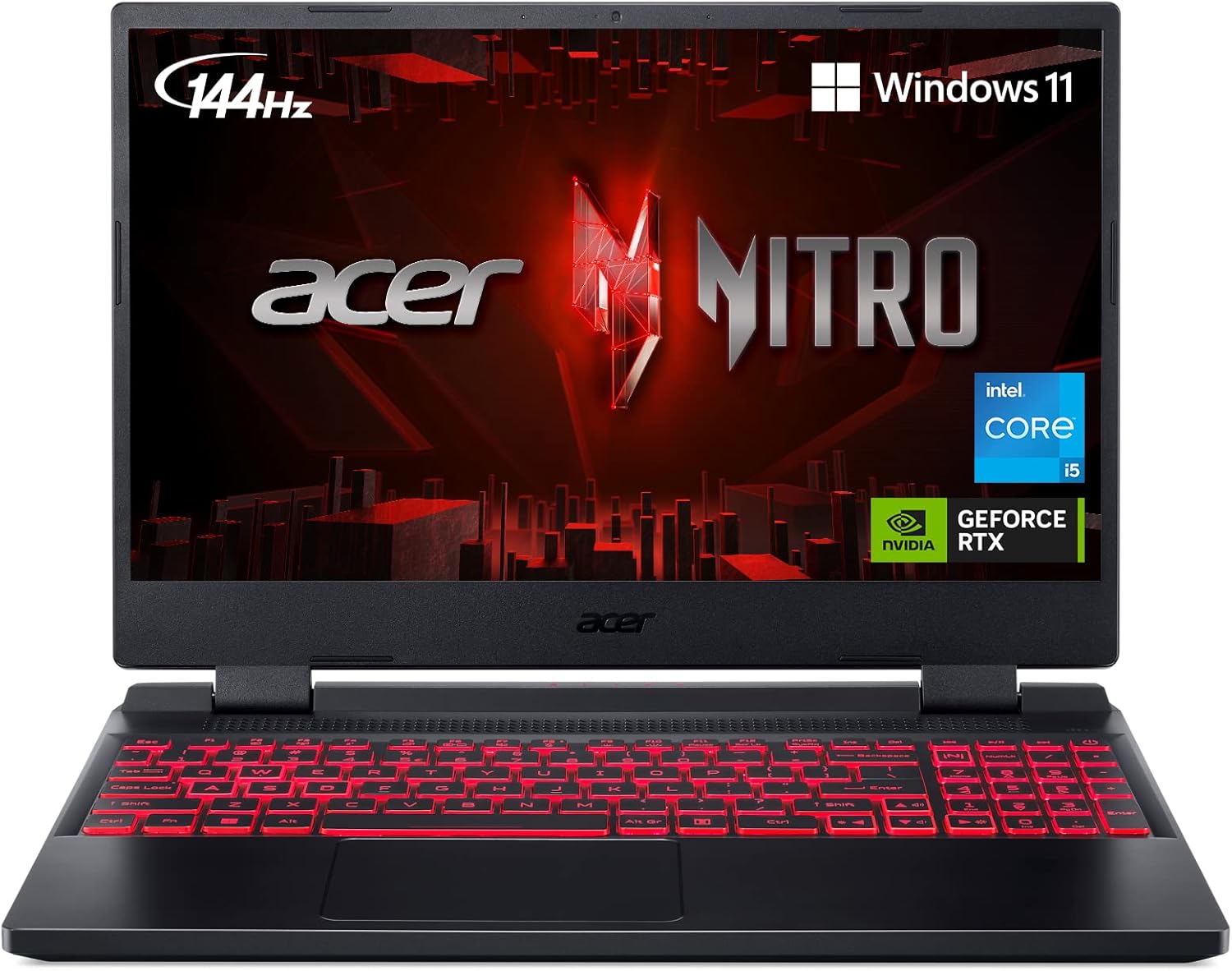
The Acer Nitro 5 AN515-58-57Y8 is a gaming laptop that strikes a strong balance between price and performance, making it a compelling option for PC gamers on a budget. Powered by a 12th Gen Intel Core i5-12500H and NVIDIA GeForce RTX 3050 Ti, this machine handles modern esports titles like Valorant, Fortnite, and Overwatch 2 with ease, often pushing well over 100 FPS at high settings. It's also capable of running more demanding games at medium to high settings, thanks to the RTX 3050 Ti's ray tracing cores and DLSS support.
This laptop is best suited for competitive gamers, casual gamers, college students, and anyone who needs a portable gaming rig for both work and play. The 15.6-inch Full HD IPS display with a 144Hz refresh rate delivers smooth, tear-free visuals that give you an edge in fast-paced shooters. The 16GB of DDR4 RAM and 512GB PCIe Gen 4 SSD ensure quick load times and snappy multitasking, while the Killer Wi-Fi 6 and Ethernet help maintain stable connections during online matches.
Build quality is a standout feature here. The chassis feels sturdy and well-constructed, with a red backlit keyboard that's comfortable for long typing sessions. The dual-fan cooling system with quad exhaust ports does a decent job managing thermals, though users should expect fan noise to ramp up under sustained gaming loads. The laptop also offers good upgrade potential with two M.2 slots and a 2.5-inch drive bay, plus two SODIMM slots for RAM expansion up to 32GB.
Setup is straightforward out of the box, with Windows 11 Home pre-installed. The Nitro Sense software provides useful controls for fan speed, performance modes, and system monitoring. One realistic limitation is the battery life: expect around an hour to an hour and a half of gaming on a full charge, and about three hours for lighter tasks. The built-in speakers are also underwhelming, so using a gaming headset or external speakers is highly recommended for an immersive experience.
Overall, the Acer Nitro 5 AN515-58-57Y8 is a reliable and practical choice for gamers who want solid 1080p performance without breaking the bank. It's particularly well-suited for esports players, streamers on a budget, and students who need a powerful laptop for both gaming and coursework. If you can tolerate the fan noise and plan to use it mostly plugged in, this laptop offers excellent value for the money.
With its Intel Core i5-12500H and RTX 3050 Ti, the Acer Nitro 5 handles most modern games at 1080p with good frame rates. In esports titles like CS:GO and Rocket League, you can expect well over 144 FPS, making full use of the 144Hz display. More demanding games like Cyberpunk 2077 or Red Dead Redemption 2 will run at medium settings with smooth 40-60 FPS, especially with DLSS enabled. The 4GB of GDDR6 VRAM is sufficient for 1080p gaming, but may become a bottleneck in future titles with higher VRAM requirements.
The 144Hz IPS panel provides a clear, responsive experience with minimal ghosting, which is a big plus for competitive play. The laptop's cooling system keeps temperatures in check during extended sessions, but expect fan noise to be noticeable. For best performance, keep the laptop plugged in and use the 'Performance' mode in Nitro Sense.
The Acer Nitro 5 features a black plastic chassis with a textured finish that resists fingerprints and feels solid. The hinges are sturdy, and the overall build inspires confidence for daily use and travel. The red backlit keyboard is comfortable for typing and gaming, though the lighting is single-zone (red only) and not customizable per key. The touchpad is responsive and supports Windows Precision gestures, but most gamers will prefer an external mouse.
The port selection is generous: one USB-C with Thunderbolt 4, three USB-A ports (including one with power-off charging), HDMI 2.1, Ethernet, and a headphone jack. This makes it easy to connect to external monitors, peripherals, and a wired network. The laptop weighs 5.51 pounds and is 1.06 inches thick, making it reasonably portable for a gaming laptop.
Pros
- Affordable entry-level gaming laptop with good CPU performance for the price.
- Portable and lightweight enough for college students or work-from-home gamers.
- Backlit keyboard and IPS display add value for the budget segment.
- Solid build quality with a clean, professional silver design.
Cons
- Only 8GB RAM may limit multitasking in demanding games and applications; upgrade recommended.
- Display likely 60Hz refresh rate, not ideal for competitive FPS gamers seeking higher smoothness.
- Limited storage expansion options? The 512GB SSD is decent but may fill up quickly; check for upgradeability.
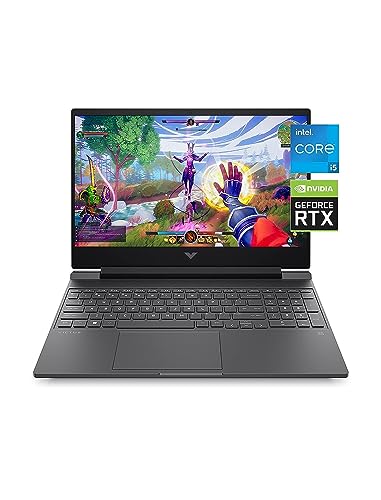
The HP Victus 15 is a budget gaming laptop that brings together a capable NVIDIA GeForce RTX 3050 and a 12th Gen Intel Core i5-12500H processor. This combination makes it a solid choice for PC gamers looking for an affordable entry point into portable gaming. It's also well-suited for casual gamers, esports players, and college students who need a laptop for both schoolwork and light gaming.
In terms of real-world performance, the RTX 3050 can handle most modern games at 1080p with medium to high settings, especially when using DLSS. The i5-12500H is a strong performer for multitasking, so you can stream, browse, or run productivity apps without major slowdowns. However, the 8GB of RAM is a bottleneck for more demanding titles and heavy multitasking. Many users may want to upgrade to 16GB for smoother performance in games like Call of Duty or Cyberpunk 2077. The display is a Full HD IPS panel with good viewing angles, but the refresh rate is likely 60Hz, which is fine for casual play but not ideal for competitive FPS gamers who prefer 120Hz or higher.
Build quality is solid for the price range. The laptop feels sturdy with a clean silver finish, and the backlit keyboard is a nice touch for late-night gaming sessions. The enhanced thermal design helps keep temperatures in check during extended play, though it can get warm under load. Portability is a plus: at just over 5 pounds and a slim profile, it fits easily into a backpack for dorm or office use. The 512GB SSD provides fast boot times and enough storage for a few games, but you may need to manage space or invest in an external drive.
Setting up the HP Victus 15 is straightforward. It comes with Windows 11 pre-installed, and the HP software suite includes basic controls for performance and power management. The laptop has a decent selection of ports including USB-A, USB-C, HDMI, and a headphone jack, making it easy to connect peripherals like a gaming mouse or headset. Cable management is simple given the laptop form factor, but the included charger is a bit bulky.
One realistic limitation is the 8GB RAM, which is on the low side for modern gaming. Additionally, the display's 60Hz refresh rate may disappoint competitive gamers. The storage is also limited to 512GB, so you'll need to be selective about which games you install. Upgrading the RAM and SSD is possible on some models, but check the specific configuration before buying.
Overall, the HP Victus 15 is a practical choice for budget-conscious gamers who need a portable machine for light gaming and everyday tasks. It's a solid entry-level gaming laptop for students, casual players, and those who want to dip their toes into PC gaming without breaking the bank. If you're willing to upgrade the RAM later, this laptop offers good value for the price.

Pros
- Excellent 1080p gaming performance with ray tracing and DLSS
- Quiet operation with fan stop mode under low load
- Compact size fits most cases, including smaller form factors
- Solid build quality with stainless steel bracket and dust-resistant fans
- Affordable entry point for RTX features and modern gaming
Cons
- 6GB VRAM may limit texture quality in demanding titles at higher settings
- Not suitable for 1440p high-refresh gaming or heavy content creation
- No RGB lighting for those wanting aesthetic customization
The ASUS Dual GeForce RTX 3050 6GB OC Edition is a graphics card designed for gamers who want to step into ray tracing and DLSS without breaking the bank. It targets the sweet spot of 1080p gaming, making it a great choice for budget-conscious PC gamers, casual streamers, and those building compact gaming rigs. With its dual-fan cooling and 2-slot profile, this card fits neatly into smaller cases while still delivering solid performance for modern titles.
In real-world gaming, the RTX 3050 handles popular esports titles like Fortnite, Valorant, and Apex Legends at high settings with smooth frame rates. It also brings ray tracing to more affordable builds, letting you enjoy reflections and lighting effects in games like Cyberpunk 2077 and Control, especially with DLSS enabled. The 6GB of GDDR6 memory is enough for most 1080p gaming scenarios, though you may need to dial back textures in the most demanding AAA releases. For competitive gamers, the low-latency performance and G-SYNC support ensure a responsive, tear-free experience.
Build quality is a strong point here. ASUS uses a stainless steel bracket that resists corrosion, and the dual Axial-tech fans feature a smaller hub for longer blades and increased downward air pressure. The card also carries an IP5X dust resistance rating, which helps keep the fans running smoothly over time. The 2-slot design and 20 cm length mean it fits in a wide range of cases, from mid-towers to smaller SFF builds. Installation is straightforward, and since this model draws power solely from the PCIe slot (no extra cables needed), it's a breeze to set up in prebuilt or older systems.
Thermal performance is impressive for the size. The fans use 0dB technology, so they stop completely under low loads, making the card silent during web browsing or light productivity. Under gaming load, the fans spin up quietly and keep temperatures in check. The Auto-Extreme automated manufacturing process adds to reliability by reducing thermal stress during assembly. While there's no RGB lighting, the clean black shroud and steel bracket give it a professional look that suits any build.
One realistic limitation is the 6GB VRAM. While fine for 1080p today, future games may push past that buffer, forcing lower texture settings. Also, this card isn't meant for 1440p high-refresh gaming or heavy video editing; it's squarely a 1080p performer. For streamers, it can handle basic encoding, but for serious streaming or content creation, a higher-tier card would be better. Overall, the ASUS Dual RTX 3050 6GB OC Edition is a practical choice for anyone building a budget gaming PC or upgrading an older system. It offers a reliable mix of performance, silence, and modern features at a reasonable price point.
Pros
- Powerful AI-optimized CPU and GPU combination for demanding games and creative apps
- Excellent 32GB DDR5 RAM and fast 1TB Gen 4 SSD out of the box reduce need for upgrades
- High 180Hz refresh rate with good color accuracy enhances visual clarity and responsiveness
- Compact and relatively lightweight chassis (4.63 lbs) makes it portable for gamers on the go
- Robust cooling solution with quad air intakes and dual fans keeps thermals under control during intense sessions
Cons
- Maximum RAM is 32GB with no expansion slots available after purchase, limiting future upgrade potential
- Battery life may be typical for a gaming laptop and could require frequent charging during extended unplugged use
- Integrated webcam quality not specified; users may want an external camera for streaming
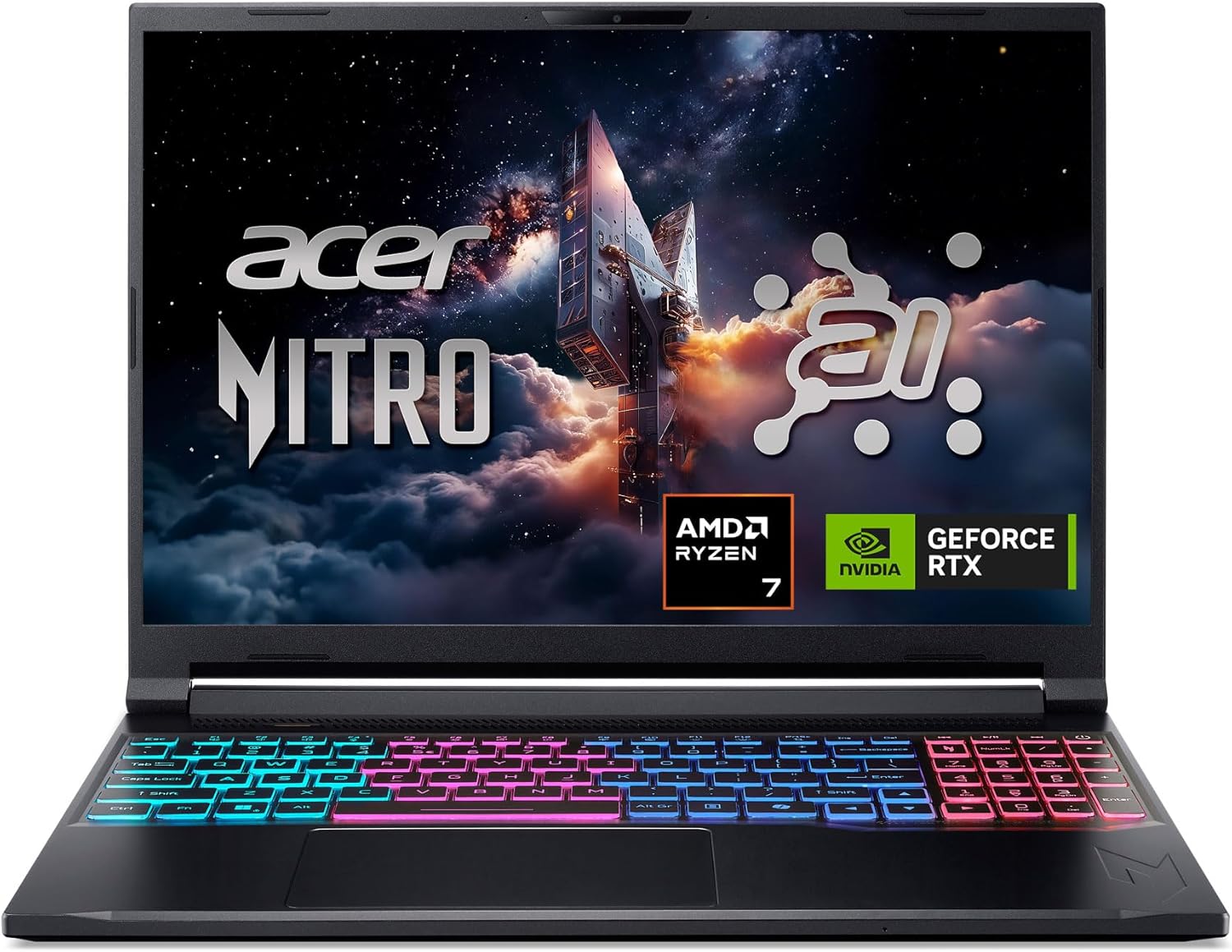
The Acer Nitro V 16S AI is a mid-range gaming laptop built around the latest AMD Ryzen 7 260 processor and NVIDIA GeForce RTX 5060 GPU. It's designed for PC gamers who want a balance of performance and portability, as well as content creators and streamers who can leverage the AI capabilities for tasks like upscaling, background effects, and faster encoding. With a 16-inch 180Hz display and 32GB of DDR5 RAM, this laptop aims to deliver smooth gameplay and efficient multitasking right out of the box.
When it comes to real-world gaming performance, the RTX 5060 with DLSS 4 and full ray tracing support gives you high frame rates in modern titles at 1080p or 1200p resolution. The 180Hz refresh rate makes fast action in FPS and racing games feel buttery smooth, while the 100% sRGB coverage ensures vibrant colors for open-world adventures. The AMD Ryzen 7 260's AI TOPS also help with background tasks, voice commands, and optimizing settings in supported software, giving an edge in competitive scenarios.
Build quality is typical for the Nitro line: a black plastic chassis with a clean, understated look. At 4.63 pounds, it's slim enough to slip into a backpack for college or LAN parties. The dual-fan quad-intake cooling keeps temperatures reasonable under load, though you'll still hear the fans ramp up during extended gaming sessions. The keyboard includes a backlit numeric keypad, and the touchpad is responsive for everyday use. Port selection is solid with USB4, two USB 3.2 Gen 2, HDMI 2.1, and Ethernet, making external monitor or dock setups easy.
Setting up the laptop is straightforward: it runs Windows 11 Home, and the pre-installed NitroSense software gives you control over fan speeds, power profiles, and system monitoring. The Acer PurifiedView and PurifiedVoice 2.0 features handle webcam background blur and noise reduction during Discord calls or streams. There are two M.2 SSD slots (one free) for storage expansion, but note that the RAM is soldered and maxes out at 32GB, so choose your capacity wisely at purchase.
One realistic limitation is that while the laptop includes a USB4 port, you'll need an external GPU dock if you ever want more graphics power - but for most users the RTX 5060 is plenty. Battery life is average for a gaming laptop; expect around four to five hours of light use. Also, the 1080p webcam isn't specified, but many laptops in this range offer only basic 720p or 1080p sensors, so external webcams are still recommended for professional streaming.
Overall, the Acer Nitro V 16S AI is a well-rounded portable gaming machine that hits a sweet spot for price-conscious PC gamers, esports players, and content creators. If you value high-refresh-rate gaming, AI-assisted performance, and decent portability without breaking the bank, this laptop is worth considering. It also comes with a three-month PC Game Pass trial to get you started with hundreds of games on day one.
The RTX 5060 laptop GPU with 572 AI TOPS and DLSS 4 Multi Frame Generation provides a significant boost in supported games. You can expect high settings at 1080p with smooth frame rates in titles like Call of Duty, Fortnite, and Cyberpunk 2077. The 180Hz display minimizes motion blur and screen tearing, while the AMD Ryzen 7 260 processor handles CPU-intensive simulations and background tasks without stutter. Gamers who play competitive esports titles will appreciate the low-latency response and Killer Ethernet for stable online play.
Despite being a slim 0.79-inch profile, the Nitro V 16S AI packs a dual-fan, quad-intake, quad-exhaust cooling system. This design pushes heat out efficiently, keeping the CPU and GPU within safe operating temperatures during long gaming sessions. The chassis is made of durable plastic with a matte finish that resists fingerprints. The hinge feels sturdy, and the weight of 4.63 pounds makes it manageable for daily carry. The backlit keyboard has a numeric keypad and decent key travel, suitable for both gaming and typing.

Pros
- 144Hz display for smooth gaming visuals and reduced tearing.
- Dedicated RTX 3050 graphics handles esports titles and light creative work.
- 16GB RAM offers solid multitasking headroom for gaming and streaming.
- Lightweight and portable design at 4.1 pounds.
- Competitive price point for the specs provided.
Cons
- RTX 3050 is entry-level, so high-end AAA gaming at max settings is limited.
- 512GB storage may fill quickly with modern games and media.
- No Thunderbolt or USB-C charging limits fast charging and display flexibility.
The MSI Thin gaming laptop is a budget-friendly entry into the world of portable PC gaming. It combines a 13th Gen Intel Core i5-13420H processor with an NVIDIA GeForce RTX 3050 graphics card, 16GB of DDR4 RAM, and a 512GB NVMe SSD. This configuration targets PC gamers, streamers, content creators, and college students who need a machine that can handle esports, light creative projects, and everyday productivity without a hefty price tag.
When it comes to gaming performance, the 144Hz refresh rate on the 15.6-inch Full HD display is a clear highlight. It delivers smooth motion in fast-paced shooters like Valorant, Overwatch, and Fortnite, reducing screen tearing and ghosting. The RTX 3050 is capable of running these titles at high settings with consistent frame rates, though more demanding AAA games may require lowered settings for a stable experience. The 16GB of RAM ensures that streaming software, Discord, and game launchers can run simultaneously without stuttering.
Build quality is practical for a portable gaming laptop. Weighing only 4.1 pounds and measuring 0.9 inches thick, it slides easily into a backpack for trips between home, dorm, or LAN parties. The gray chassis is understated but feels sturdy for everyday use. The display hinge feels solid, and the keyboard offers decent travel for casual gaming and typing. While it's not a premium metal build, it's durable enough for a student or on-the-go gamer.
Setup is straightforward: Windows 11 Home comes pre-installed, so you can start gaming right out of the box. The 144Hz display is enabled by default, and the MSI Center software provides basic system monitoring and performance modes. Cleaning the laptop requires only a soft cloth, and storage upgrades are possible via the NVMe slot if you need more space later. The port selection includes USB-A, HDMI, and a 3.5mm jack, which covers most peripherals for a basic desktop replacement.
Realistically, the RTX 3050 is the main compromise. It's an entry-level GPU, so don't expect ray tracing at high frames or ultra settings in the newest releases. The 512GB SSD also fills up fast with modern game installs, so an external drive or cloud storage may be needed. Battery life is typical for a gaming laptop - expect around 4-5 hours of light use, less during gameplay. There's no Thunderbolt or USB-C charging, so you'll rely on the included power brick.
Overall, the MSI Thin is a worthwhile choice for PC gamers on a budget who prioritize portability and esports performance. It's also a great fit for college students who need a laptop for classes, gaming in the dorm, and light streaming or editing. If you're looking for a machine that balances price, performance, and mobility, this laptop deserves a spot on your shortlist.
Pros
- Affordable entry into 144Hz gaming with RTX 3050 performance
- Solid build with an aluminum lid and thin profile for portability
- 144Hz screen improves responsiveness in competitive games
- 16GB RAM is generous for multitasking and future-proofing
- Fast NVMe SSD storage for quick game and app loading
Cons
- Battery life is limited to around 2-4 hours under load, typical for gaming laptops
- RTX 3050 is best for 1080p medium settings in newer AAA titles
- Some users report WiFi connectivity issues that may require troubleshooting
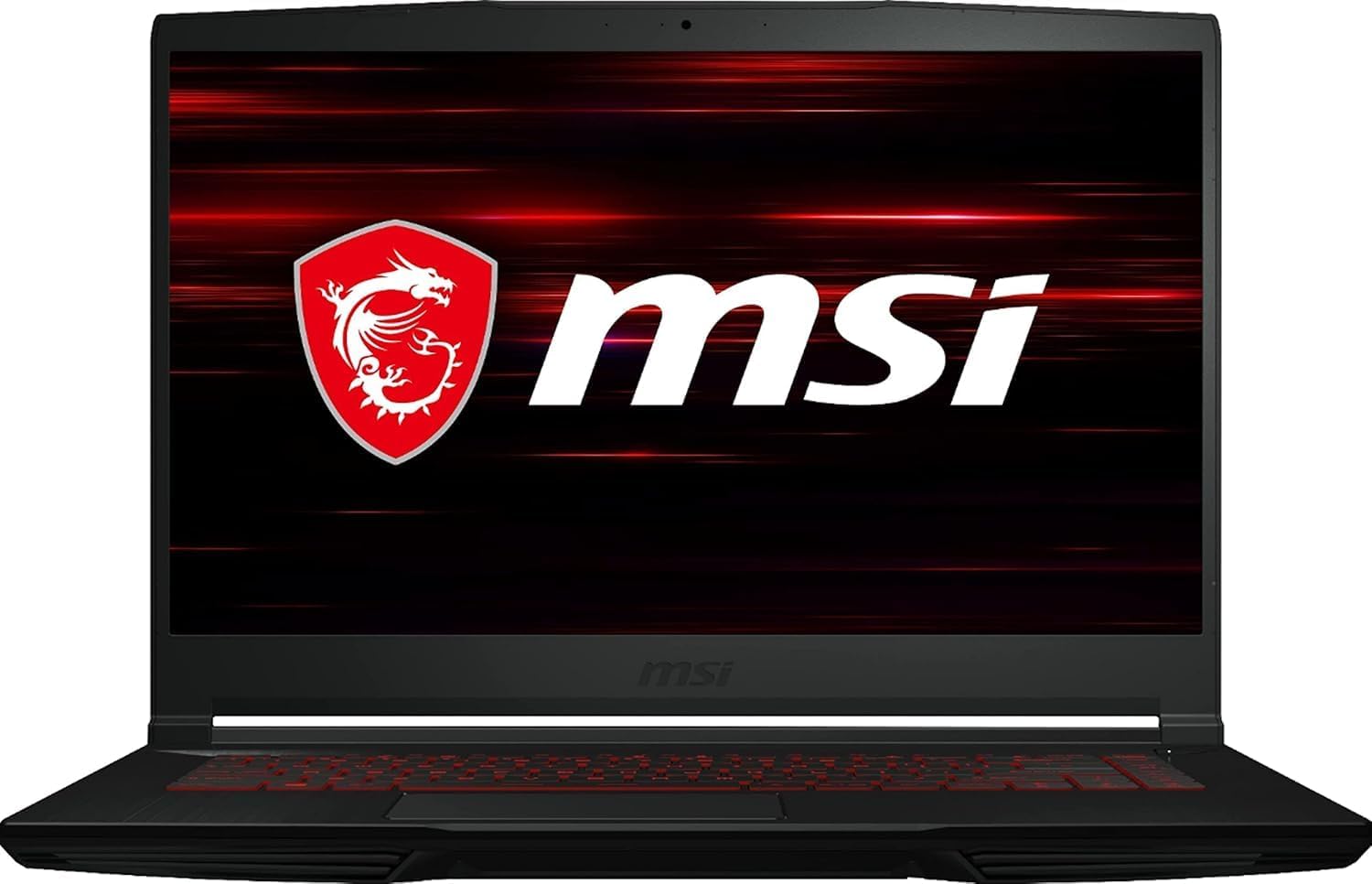
The MSI GF63 Thin is a 15.6-inch gaming laptop that aims to deliver solid 1080p gaming performance at a competitive price point. It's built around an Intel Core i5-11400H processor, NVIDIA GeForce RTX 3050 graphics, 16GB of DDR4 RAM, and a 512GB NVMe SSD. The 144Hz Full HD display is a standout feature for this price range, offering smoother motion clarity that benefits fast-paced games like shooters and racing titles.
This laptop is best suited for casual to mid-level PC gamers, esports players, college gamers, and those building a portable gaming setup on a budget. It's also a viable option for streamers or content creators who need a secondary machine for light editing or streaming on the go. The RTX 3050 can handle popular esports titles like Fortnite, Valorant, and Apex Legends at high settings with good frame rates, while newer AAA games may require medium settings for a smooth experience.
In terms of build quality, the GF63 features an aluminum lid and a plastic chassis that feels reasonably sturdy for its price. The thin bezel design helps keep the overall footprint compact, making it easy to slip into a backpack. The backlit keyboard is comfortable for typing and gaming, though the power button placement near the keyboard may take some getting used to. The laptop includes a range of ports including USB 3.0, HDMI, and an audio jack, which covers most peripheral needs.
Performance-wise, the combination of the i5-11400H and RTX 3050 provides responsive gameplay for most modern titles at 1080p. The 144Hz display is a real asset for competitive gaming, reducing motion blur and improving target tracking. The 16GB of RAM ensures you can run games alongside Discord, browser tabs, or streaming software without major hiccups. The 512GB NVMe SSD delivers fast boot times and quick level loads, though you may want to add an external drive for a larger game library.
One area where the GF63 shows its budget nature is battery life. Under gaming load, you can expect around 2 hours of runtime, and even light use may only stretch to 4-5 hours. This is typical for gaming laptops with dedicated graphics, but it's worth noting if you plan to game away from an outlet. The cooling system does its job under load, though the fans can get audible during intense gaming sessions. A laptop stand can help improve airflow and keep temperatures in check.
Overall, the MSI GF63 Thin is a practical choice for gamers who want a portable machine capable of smooth 1080p gaming without spending a fortune. It's not the most powerful laptop in its class, but it hits a sweet spot for price and performance. If you're a college gamer, a casual player, or someone looking for an affordable entry into 144Hz gaming, this laptop is worth considering. Just keep realistic expectations around battery life and graphics settings for the most demanding games.
Frequently Asked Questions About the RTX 3050 in Gaming Laptops
Below are real questions gamers ask before buying an RTX 3050 laptop. We answer based on product data and typical user experiences.
Is the RTX 3050 good for 1080p gaming?
Yes, the RTX 3050 is well-suited for 1080p gaming. It delivers smooth 60+ FPS in esports titles like Apex Legends and Overwatch at high settings. For more demanding games, you may need to lower settings or enable DLSS for playable framerates.
Can an RTX 3050 laptop run ray tracing?
Technically yes, but performance takes a big hit. The second-gen RT Cores in Ampere allow ray tracing, but at 1080p you’ll often need DLSS to maintain acceptable FPS. It’s more of a showcase feature than a practical one in this tier.
How much RAM do I need with an RTX 3050 laptop?
At least 16GB is recommended. Many budget models ship with 8GB, which can cause stuttering in modern games when background apps are open. Look for laptops with upgradeable RAM if you start with 8GB. Check out our guide on What Are the Cheapest Gaming Laptops Worth It? for budget-friendly options with good specs.
Is the RTX 3050 better than a GTX 1650 laptop?
Yes, significantly. The RTX 3050 offers roughly 40-50% better performance thanks to Ampere architecture, plus features like DLSS and ray tracing. It also has 4GB VRAM vs 4GB on the GTX 1650, but the newer memory and compute units make a big difference.
Which laptop brand has the best cooling for RTX 3050?
Based on user feedback, HP Victus and MSI Thin series offer decent cooling for the price. The ASUS TUF line uses dual Arc Flow fans and military-grade build, so it runs cooler under load. Always check if the laptop has multiple heat pipes and good exhaust vents.
Does the RTX 3050 support DLSS?
Yes, the RTX 3050 includes third-gen Tensor Cores that support DLSS up to version 3. This is a huge plus for gaming laptops because it can boost fps in supported titles without sacrificing much image quality.
Is 8GB RAM enough for RTX 3050 in 2026?
It’s borderline. For esports and older games, 8GB works. But for newer AAA titles and multitasking (discord, browser), you’ll encounter hitches. We recommend spending a bit more for a 16GB model or one with upgradeable slots.
Have questions about our Is Rtx 3050 Good For Gaming Laptop recommendations? Check out our Why Is Gaming Laptop Battery Life Bad? Real Reasons for more insights.


Write Your Review
No reviews yet. Be the first to share your experience!