

Excessive headband pressure and muffled spatial cues quickly ruin an otherwise thrilling dive into alternate realities. Sweaty face cushions and front-heavy frames can turn a casual session into a neck-straining chore. Quality hardware demands balanced weight distribution, breathable facial interfaces, and crisp 3D spatial sound that tracks every subtle movement in your room. Evaluating manufacturer specifications, acoustic driver features, and community user feedback reveals that the best headsets for vr combine ergonomic stability with low-latency responsiveness. Pairing your space with a responsive PC gaming mouse ensures smooth navigation before you strap in for simulated flight, combat, or social exploration.
Modern options span standalone wireless units, budget-friendly smartphone shells, and ultra-sharp PC tethered rigs built for competitive simulations. High-fidelity spatial speakers and noise-rejecting microphones keep team voice chat sharp across intense multiplayer lobbies. Whether running demanding flight sims from a high-performance gaming laptop or enjoying untethered room-scale motion, balanced ergonomics keep you immersed without nagging fatigue.

Pros
- Exceptional visual clarity with sharp, high-resolution display
- Powerful Snapdragon processor ensures smooth, responsive performance
- Wireless freedom eliminates cord tangles and enhances immersion
- Generous 512GB storage for many games and content
- Color passthrough cameras allow seamless mixed reality interaction
- Comfortable fit for extended play sessions according to user feedback
Cons
- Battery life around 2 hours may require breaks for longer gaming marathons
- Some users may find the standalone library less extensive than PC VR options
- Premium pricing for the 512GB model, though it offers ample storage
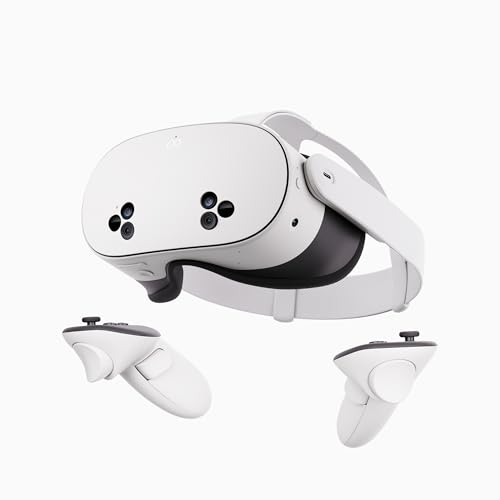
The Meta Quest 3 512GB is a standalone virtual reality headset that brings together high-resolution visuals, powerful processing, and a completely wireless design. It's built for PC gamers, streamers, esports enthusiasts, content creators, and anyone who wants to dive into immersive VR gaming without the hassle of cables. With nearly 30% sharper resolution than its predecessor and a 4K Infinite Display, every scene pops with detail—from the textures in open-world adventures to the fast-paced action of competitive shooters.
For gamers who prioritize responsiveness, the Snapdragon XR2 Gen 2 processor delivers 2X the graphical power, resulting in lightning-fast load times and smooth frame rates. The 8GB of RAM ensures that multitasking and complex scenes remain fluid, while the 512GB storage gives you plenty of room for a growing library of games and experiences. The wireless freedom is a game-changer for room-scale VR, letting you move naturally without tripping over cords, and the improved battery provides about 2 hours of playtime—enough for most sessions.
Build quality is solid, with a lightweight design (under 0.9 pounds) and comfortable padding that many users find suitable for extended use. The dual RGB color cameras enable high-fidelity passthrough, letting you blend virtual objects with your real environment for mixed reality applications. Setup is straightforward: just power on, connect to Wi-Fi, and start exploring the included 3-month trial of Meta Horizon+, which grants access to over 40 games.
In terms of practicality, the Quest 3 works well for both casual and competitive gamers. Its high resolution and low-latency performance make it great for fast-paced VR games, while the wireless aspect is ideal for fitness titles or social experiences. Streamers can use the built-in casting feature to share gameplay on Twitch or YouTube, and content creators will appreciate the ability to capture mixed reality footage. The headset also integrates with PC VR via Link cable or Air Link, expanding its library to include PC VR titles—though that requires additional setup.
One realistic limitation is battery life: at around 2 hours, you may need to take breaks or keep a power bank handy for longer sessions. Additionally, while the standalone library is impressive and growing, it may not match the depth of PC VR offerings. The premium price for the 512GB model is justified by the storage capacity, but budget-conscious buyers might consider the 128GB version.
Overall, the Meta Quest 3 512GB is an excellent choice for gamers and streamers who want high-quality, wireless VR with minimal setup. Its sharp display, powerful processor, and comfortable design make it a versatile addition to any gaming setup—whether you're a seasoned VR enthusiast or new to the medium. For those who prioritize immersion and freedom of movement, this headset delivers a compelling experience.
The Meta Quest 3 excels in gaming performance thanks to the Snapdragon XR2 Gen 2 chipset, which provides 2X the graphical processing power of its predecessor. This translates to smoother frame rates, faster load times, and the ability to handle graphically intense VR titles. The 4K Infinite Display (nearly 30% sharper) ensures crisp visuals with minimal screen-door effect, enhancing immersion in racing games, shooters, and open-world adventures. With 8GB of RAM, multitasking and complex scenes remain responsive, and the 512GB storage gives you ample space for a large game library.
Weighing just under 0.9 pounds and featuring a well-padded interface, the Quest 3 is designed for comfort during extended sessions. The adjustable head strap and soft facial interface help distribute weight evenly, reducing pressure points. The build quality feels robust, with durable materials that can withstand regular use. Users report that it remains comfortable for hour-long gameplay, though individual fit may vary. The lightweight design also minimizes neck strain during active VR experiences.
Setting up the Quest 3 is remarkably simple: power on, follow the on-screen instructions, connect to Wi-Fi, and you're ready to explore. The headset supports both standalone operation and PC connectivity via Link cable or Air Link (wireless). For PC VR gaming, you'll need a compatible gaming PC and a USB-C cable or 5GHz Wi-Fi network. The wireless streaming works well in most home environments, though latency may vary depending on network conditions. The dual RGB cameras also enable full-color passthrough, making it easy to see your surroundings without removing the headset.

Pros
- Exceptional per-eye resolution and QLED HDR visuals create a lifelike, high-contrast image ideal for sim racing and flight sims
- Low-latency 120Hz refresh rate minimizes motion blur and input lag, critical for competitive iRacing and fast-paced VR action
- Easy room-scale setup with built-in inside-out tracking, no external sensors needed
- Glass aspheric lenses provide sharp edges with minimal chromatic aberration, improving overall immersion
Cons
- At 815 grams (28 ounces), the headset is heavier than many competitors, which may cause fatigue during very long sessions
- Inside-out tracking, while convenient, may struggle in low-light or monochrome environments compared to outside-in systems
- Premium pricing places it well above entry-level VR headsets, making it a niche choice for dedicated sim enthusiasts
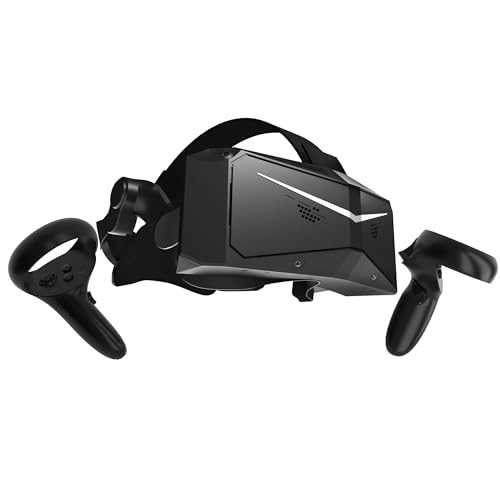
The Pimax Crystal Light is a premium PC VR headset that targets sim racing and flight simulation enthusiasts who demand the highest visual fidelity. Boasting an impressive 2880x2880 resolution per eye, this headset delivers 16.6 million pixels per display, resulting in incredibly sharp images that make reading cockpit instruments or spotting distant track markers a breeze. The QLED panel with local dimming and HDR support further enhances contrast and color accuracy, pulling you deeper into your favorite virtual worlds.
This headset is best suited for competitive sim racers using iRacing or Assetto Corsa, flight sim pilots in Microsoft Flight Simulator or DCS World, and any PC gamer who prioritizes visual clarity above all else. Streamers and content creators focused on VR gameplay will also appreciate the crisp footage captured through the lens. However, casual gamers or those new to VR might find the high price and weight a bit much for less demanding experiences.
Performance-wise, the 120Hz refresh rate combined with ultra-low latency ensures that even the most rapid head movements stay smooth and responsive. The inside-out tracking system uses built-in cameras to translate your movements accurately without external base stations, simplifying your desk setup and reducing cable clutter. Paired with SteamVR compatibility, you can use your existing controllers - like the Valve Index Knuckles - and jump straight into your library without fuss.
Build quality reflects Pimax's focus on high-end VR. The glass aspheric lenses minimize distortion and deliver edge-to-edge clarity, a significant upgrade over cheaper Fresnel lenses. The headset's ergonomic design, weighing approximately 815 grams, includes a padded head strap and face cushion to distribute weight. While not the lightest option, many users may find it comfortable for hour-long sessions after adjusting the fit. For cleaning, simply wipe the lenses and face pad with a microfiber cloth - no disassembly required.
A realistic limitation is the weight. At 28 ounces, it's noticeably heavier than competitors like the Valve Index or Meta Quest 3, which could lead to neck strain during marathon sim races. Additionally, inside-out tracking, while convenient, can lose accuracy in dimly lit or featureless rooms. The price point also puts it firmly in the enthusiast category, so budget-conscious gamers may want to wait for sales or consider lower-resolution alternatives.
Overall, the Pimax Crystal Light is an outstanding choice for PC gamers who demand the best visuals for sim racing, flight sims, and immersive VR experiences. If you have a powerful gaming PC and a dedicated space for VR, this headset will elevate your virtual cockpit and track days to new levels of realism. For casual VR gaming or general entertainment, simpler and lighter headsets may offer better value.
With 2880x2880 per eye and a 120Hz refresh rate, the Pimax Crystal Light delivers exceptional visual performance for sim racing and flight sims. The high resolution allows you to see fine details like brake markers and instrument readings with crystal clarity. The QLED panel with local dimming enhances contrast, making night scenes in iRacing or dusk flights in Microsoft Flight Simulator look truly immersive. The ultra-low latency ensures that head tracking feels instantaneous, reducing motion sickness for many users.
The headset features a robust plastic chassis with a padded head strap and face cushion. The glass aspheric lenses are a highlight - they resist scratches better than plastic lenses and provide consistent sharpness across the field of view. The weight is distributed via a halo-style strap, but at 815 grams it's heavier than most. The inside-out tracking cameras are integrated seamlessly and feel durable. Overall, the build quality feels premium and designed for long-term reliability.
Setting up the Pimax Crystal Light is straightforward: plug into your PC via DisplayPort and USB, install the Pimax software, and configure your play space using the inside-out cameras. No external sensors are needed, which keeps your desk clean. Comfort is decent for a high-res headset - the padding is soft but the weight may be noticeable after two hours. Adjustment dials for IPD and strap tension help achieve a secure fit. Cleaning is simple: wipe the lenses and foam with a dry cloth.
The Pimax Crystal Light is fully compatible with SteamVR, meaning it works with hundreds of VR titles and controllers like the Valve Index Knuckles, HTC Vive wands, and more. It supports most PC VR games that use SteamVR tracking. The headset requires a DisplayPort 1.4 port and USB 3.0 for data, plus a powerful GPU - at least an RTX 3080 or equivalent is recommended for the full 120Hz experience. It also works with motion sim platforms for racing and flight setups.


Frequently Asked Questions
What makes the Best Headsets For Vr comfortable during long sessions?
Balanced weight distribution and breathable facial interfaces prevent localized skull pressure and neck fatigue. Models like the Pimax Crystal Light use ergonomic counterweights across an 815-gram frame, while standalone headsets like the Meta Quest 3 rely on compact profiles. Soft, ventilated padding stops heat buildup during extended play.
Can you wear prescription glasses inside modern VR headsets?
Yes, many current designs accommodate eyeglasses or offer built-in focal adjustments. The TECKNET VR Headset provides dual independent pupil and focal knobs supporting myopia up to 600 degrees without glasses. Dedicated spacing brackets on standalone models also prevent frame rims from scratching internal display lenses.
How does integrated spatial audio compare to regular gaming headsets?
Integrated 3D spatial speakers deliver realistic directional sound without putting clamping pressure on your ears. Headsets like the Pimax Crystal Super feature off-ear acoustic drivers and noise-canceling microphones for clear team comms. For complete sound isolation, standard 3.5mm jacks let you plug in passive closed-back headphones.
Do standalone VR headsets support high-end PC simulation games?
Yes, standalone headsets can stream PC games over high-speed USB-C cables or fast Wi-Fi links. However, dedicated PC rigs with DisplayPort cables deliver uncompressed visuals with refresh rates up to 120Hz. Powering those high resolutions requires a robust setup, such as an efficient gaming processor build, to prevent stutter in crowded flight simulators.
What is the typical battery life for the Best Headsets For Vr of 2026?
Wireless standalone headsets run for roughly two hours of active gameplay on a full charge. Units like the Meta Quest 3 and Quest 3S rely on Snapdragon XR2 Gen 2 silicon tuned for approximately two hours of gaming and color passthrough. Managing sweat during these intense sessions is just as essential as using a textured grip desk pad for competitive play.




Write Your Review
No reviews yet. Be the first to share your experience!