


Many buyers assume a high-end GPU name guarantees smooth frame rates, but thermal throttling often limits real-world performance in compact chassis. The gap between advertised specs and actual gameplay stability is a common frustration for those upgrading their setup. Choosing the right Best Graphics Card For Gaming Laptop requires looking beyond the model number to understand how cooling, power delivery, and interface bandwidth interact. You need a solution that balances raw power with thermal efficiency to avoid performance drops during long sessions. This roundup examines seven distinct options, ranging from integrated laptop configurations to external enclosures, to help you match your specific hardware needs.
Whether you are replacing an aging desktop or seeking a portable rig for travel, the right graphics solution changes your workflow entirely. Some users prioritize the convenience of a built-in discrete GPU, while others prefer the upgradeability of an external setup. The slim laptop options often trade some thermal headroom for portability, which is a critical factor to consider. We analyzed the specifications, connectivity standards, and user feedback for each product listed here. Our goal is to provide a clear, objective view of what each option offers so you can make a confident purchase decision without guessing.

Pros
- Strong gaming performance for the price with Ryzen 7 and RTX 4050.
- Smooth 144Hz display enhances gameplay responsiveness.
- Durable build quality typical of TUF series.
- Good selection of ports including USB4 and HDMI 2.1.
- AI noise cancellation improves communication clarity.
Cons
- 512GB SSD may fill quickly for large game libraries; external storage recommended.
- Webcam quality is standard HD, not ideal for high-end streaming.
- Battery life may be modest under heavy gaming load (56Wh).
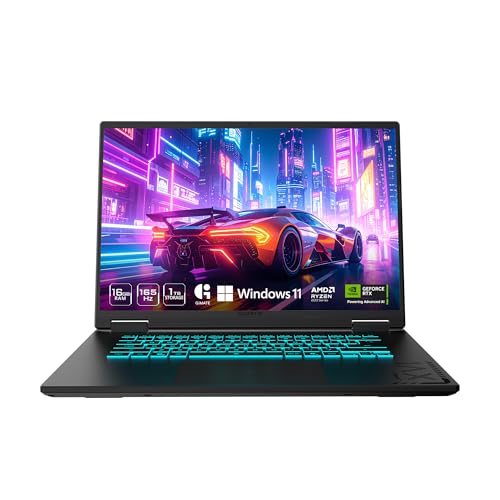
The ASUS TUF Gaming A16 is a budget-friendly gaming laptop designed for PC gamers, streamers, and students who want reliable performance without breaking the bank. It combines an AMD Ryzen 7 processor with an NVIDIA RTX 4050 graphics card, making it suitable for esports titles, AAA games at medium settings, and content creation tasks.
With the hexa-core Ryzen 7 7445HS and RTX 4050, this laptop handles games like Fortnite, Valorant, and Apex Legends well above 60 fps on high settings. The 144Hz WUXGA display ensures smooth motion and reduces screen tearing, which is a big plus for competitive gamers. The 16GB of DDR5 RAM keeps system responsiveness snappy, and the 512GB SSD provides fast boot and load times, though you may want to add external storage for larger libraries.
The laptop feels sturdy thanks to the TUF series' military-grade build certification, and the 1-zone RGB backlit keyboard adds a touch of gaming flair. Port selection is generous, including two USB-A, one USB-C with USB4, and HDMI 2.1 FRL, so connecting peripherals and external monitors is easy. The built-in AI noise cancellation works well for filtering background noise during Discord calls or streaming.
Setting up the laptop is straightforward: it comes with Windows 11 pre-installed, and all drivers are ready to go. The chassis has decent ventilation to keep thermals in check during long sessions, though you will likely want to use it on a hard surface for optimal airflow. Cleaning is simple, and the keyboard is spill-resistant for added peace of mind.
The main limitations are the storage capacity and webcam quality. 512GB fills up quickly with modern games, so plan to use an external SSD. The 720p webcam is adequate for casual video calls but not great for professional streaming. Battery life is average for a gaming laptop, around 5-6 hours of mixed use.
Overall, the ASUS TUF Gaming A16 offers excellent value for its price. It is a smart choice for college gamers, casual streamers, and anyone building a budget gaming setup. If you prioritize portability and performance without paying a premium, this laptop is worth considering.
The ASUS TUF Gaming A16 delivers a satisfying gaming experience for its class. The Ryzen 7 7445HS and RTX 4050 combo can run popular esports titles like CS2 and Valorant at over 120 fps on high settings. More demanding games like Cyberpunk 2077 or Starfield will need to dial settings to medium or use DLSS for playable frame rates.
The 144Hz display is a big advantage over standard 60Hz laptops, providing smoother gameplay and reduced eye strain. The RTX 4050 also supports NVIDIA Reflex for lower latency in competitive games. Thermal management is handled by dual fans and heat pipes; during extended sessions, the keyboard deck stays warm but not uncomfortable.
Overall, this laptop is capable of handling the vast majority of current games at 1080p with good settings. For those who want to stream or record, the dedicated GPU and CPU can handle encoding without sacrificing too much performance.

Pros
- Excellent 1080p gaming performance with ray tracing and DLSS
- Quiet operation with fan stop mode under low load
- Compact size fits most cases, including smaller form factors
- Solid build quality with stainless steel bracket and dust-resistant fans
- Affordable entry point for RTX features and modern gaming
Cons
- 6GB VRAM may limit texture quality in demanding titles at higher settings
- Not suitable for 1440p high-refresh gaming or heavy content creation
- No RGB lighting for those wanting aesthetic customization
The ASUS Dual GeForce RTX 3050 6GB OC Edition is a graphics card designed for gamers who want to step into ray tracing and DLSS without breaking the bank. It targets the sweet spot of 1080p gaming, making it a great choice for budget-conscious PC gamers, casual streamers, and those building compact gaming rigs. With its dual-fan cooling and 2-slot profile, this card fits neatly into smaller cases while still delivering solid performance for modern titles.
In real-world gaming, the RTX 3050 handles popular esports titles like Fortnite, Valorant, and Apex Legends at high settings with smooth frame rates. It also brings ray tracing to more affordable builds, letting you enjoy reflections and lighting effects in games like Cyberpunk 2077 and Control, especially with DLSS enabled. The 6GB of GDDR6 memory is enough for most 1080p gaming scenarios, though you may need to dial back textures in the most demanding AAA releases. For competitive gamers, the low-latency performance and G-SYNC support ensure a responsive, tear-free experience.
Build quality is a strong point here. ASUS uses a stainless steel bracket that resists corrosion, and the dual Axial-tech fans feature a smaller hub for longer blades and increased downward air pressure. The card also carries an IP5X dust resistance rating, which helps keep the fans running smoothly over time. The 2-slot design and 20 cm length mean it fits in a wide range of cases, from mid-towers to smaller SFF builds. Installation is straightforward, and since this model draws power solely from the PCIe slot (no extra cables needed), it's a breeze to set up in prebuilt or older systems.
Thermal performance is impressive for the size. The fans use 0dB technology, so they stop completely under low loads, making the card silent during web browsing or light productivity. Under gaming load, the fans spin up quietly and keep temperatures in check. The Auto-Extreme automated manufacturing process adds to reliability by reducing thermal stress during assembly. While there's no RGB lighting, the clean black shroud and steel bracket give it a professional look that suits any build.
One realistic limitation is the 6GB VRAM. While fine for 1080p today, future games may push past that buffer, forcing lower texture settings. Also, this card isn't meant for 1440p high-refresh gaming or heavy video editing; it's squarely a 1080p performer. For streamers, it can handle basic encoding, but for serious streaming or content creation, a higher-tier card would be better. Overall, the ASUS Dual RTX 3050 6GB OC Edition is a practical choice for anyone building a budget gaming PC or upgrading an older system. It offers a reliable mix of performance, silence, and modern features at a reasonable price point.


Pros
- Excellent cooling performance with axial-tech fan design and 0dB mode for quiet operation
- Dual BIOS switch offers flexibility between silent and high-performance modes
- Dual ball bearings provide enhanced durability versus standard sleeve bearings
- Compact 2.5-slot size fits a wide range of PC cases without sacrificing cooling
- 16GB VRAM is great for 1440p gaming, streaming, and light content creation
Cons
- No RGB lighting for those who want customizable aesthetics in their build
- May be more power than needed for 1080p-only gaming setups
- Limited availability at launch could make it harder to find at MSRP
The ASUS Dual Radeon RX 9060 XT 16GB is a performance-oriented graphics card built for PC gamers, streamers, and esports players who prioritize smooth gameplay and quiet operation. As part of ASUS's Dual series, it focuses on delivering strong cooling and reliability without unnecessary frills, making it a practical choice for mid-range to high-end gaming rigs.
Gaming performance is where this card shines. With 16GB of GDDR6 memory and support for PCIe 5.0, it handles modern titles at 1440p with high settings and solid frame rates. Whether you're playing competitive shooters like Valorant or open-world adventures, the card maintains responsiveness and low latency. The dual-fan axial-tech design, featuring a smaller hub and barrier ring, pushes air directly onto the heatsink for efficient thermal management, even during extended sessions.
Build quality is a strong point. The 2.5-slot design keeps the card compact enough for most cases while still allowing room for airflow. Dual ball fan bearings are rated to last twice as long as sleeve bearings, so you won't have to worry about fan failure over time. The card also includes a dual BIOS switch, letting you choose between a quiet profile for less demanding use or a performance profile for maximum cooling under load.
Setup is straightforward: the card uses a standard PCIe 5.0 slot and requires two 8-pin power connectors. It's compatible with most modern motherboards and cases thanks to its moderate dimensions. Windows users can install AMD's Adrenalin software for driver updates and performance tuning, though the card works well out of the box.
One realistic limitation is the lack of RGB lighting, which might disappoint builders who want a fully lit rig. Also, while the card is capable of 1440p gaming, it may struggle with 4K at ultra settings in demanding titles. But for its price point, it strikes a great balance between performance and affordability.
Overall, the ASUS Dual Radeon RX 9060 XT 16GB is a reliable choice for gamers and streamers building a mid-range PC with an emphasis on quiet cooling and solid frame rates. It fits well in dorm rooms, home offices, or dedicated gaming setups where noise matters. If you don't need RGB and want a card that just works, this is worth considering.


Pros
- Ultra-fast Thunderbolt 5 bandwidth ensures low latency and high performance for gaming and content creation
- Wide GPU compatibility – supports most NVIDIA and AMD cards up to 4 slots wide
- Tool-free modular design allows easy upgrades or reuse of existing GPU and PSU
- True plug-and-play with no driver hassle on compatible Windows laptops and devices
Cons
- Requires a separate GPU and ATX power supply (not included), adding to the total cost
- Compatibility depends on your laptop – must have a Thunderbolt 4/5 or USB4 port with eGPU support
- Not supported on Mac devices with M1 or newer chips, limiting platform options
The Razer Core X V2 is an external graphics enclosure that gives compatible laptops – whether Thunderbolt 4, Thunderbolt 5, or USB4 – a huge boost in graphical power. It's essentially a desktop GPU dock that lets you plug in a full-size graphics card and use it via a single cable. This is perfect for PC gamers who want desktop-level performance on their laptop, streamers who need extra GPU muscle for encoding, content creators working with 3D rendering or video editing, and even college gamers who want a single laptop that doubles as a powerful desktop when docked.
Performance-wise, the Core X V2 benefits from Thunderbolt 5's massive 80 Gbps bandwidth – double that of Thunderbolt 4. This means lower latency and smoother gaming, especially in demanding AAA titles. You can install the latest NVIDIA GeForce or AMD Radeon cards (up to 4 slots wide) and get near-desktop frame rates. The enclosure also delivers up to 140W power delivery to your laptop, so you can game and charge simultaneously. Setup is a breeze: just plug the included Thunderbolt 5 cable into your device, and the eGPU is recognized without a reboot – perfect for quick transitions between on-the-go and docked use.
Build quality is solid. The steel chassis is vented for maximum airflow, and the built-in 120mm fan automatically adjusts speed based on temperature to keep things quiet during light use and ramps up under load. You can even customize fan curves through Razer Synapse software. The interior is modular – you can swap the GPU and ATX power supply tool-free using thumbscrews. This gives you flexibility to upgrade later or reuse parts from an older desktop build. The enclosure's dimensions (16.59 x 8.51 x 7.76 inches) are compact enough for most desks but leave room for a large GPU.
One practical consideration: the Core X V2 does not come with a GPU or power supply, so you'll need to budget for those separately. Also, not every Thunderbolt 4 or USB4 device supports external graphics – always check your laptop manufacturer's documentation. Mac users with M1 or newer chips are out of luck, as those don't support eGPUs. But for Windows gaming laptops and handhelds (like certain USB4 gaming handhelds), it's a game-enhancing accessory.
In a setup, the Core X V2 is a clean addition. Its black steel finish matches most gaming gear, and the single cable reduces clutter. The 140W power delivery means you might not need a separate charger for your laptop. For streamers, pairing this with a high-end GPU can handle 1440p or 4K gaming while streaming at the same time. For content creators, GPU-accelerated tasks like video rendering and 3D modeling get a massive boost. The fan and PSU can be customized to match your performance needs and noise tolerance.
Overall, the Razer Core X V2 is a great investment for anyone who wants desktop-class graphics in a laptop-centric lifestyle. It's best suited for PC gamers who travel but still want high-end gaming at home, streamers or creators who need extra GPU power on demand, and laptop users who want to future-proof their setup with GPU upgrades. Just make sure your device is compatible and be ready to invest in a GPU and PSU. The convenience and performance make it a smart upgrade for many gamers and power users.
With Thunderbolt 5 bandwidth up to 80 Gbps, the Razer Core X V2 can handle demanding titles without bottlenecking most modern GPUs. You can expect smooth frame rates in games like Cyberpunk 2077, Call of Duty, and Forza Horizon at high settings. The enclosure supports both NVIDIA and AMD graphics cards up to 4 slots wide, so you can drop in a flagship card like the RTX 4090 or RX 7900 XTX. Active cooling with a 120mm fan keeps temperatures in check during long sessions. Since the GPU is fully inside the enclosure, you'll get desktop-grade performance with minimal compromise, especially when connecting an external monitor directly to the GPU.
The Core X V2 works with Windows laptops and devices that have a Thunderbolt 4, Thunderbolt 5, or USB4 port with eGPU support. It's also compatible with select USB4 gaming handhelds. Check your device manufacturer's documentation to ensure eGPU support. The enclosure supports most NVIDIA and AMD PCIe graphics cards up to 4 slots wide and any standard ATX power supply (sold separately). Note that Mac devices with M1 or later chips do not support eGPUs. The included Thunderbolt 5 cable is USB-C to USB-C, and the enclosure requires Windows 10 or 11 for full functionality.
Frequently Asked Questions
Can I upgrade the GPU in a standard laptop?
No, most gaming laptops have soldered graphics cards that cannot be swapped. The GPU is integrated directly onto the motherboard, making it a permanent part of the system. If you need more power later, an external enclosure is your only viable upgrade path.
Is an external GPU enclosure worth the cost?
It depends on your need for portability versus raw power. Enclosures like the Razer Core X V2 allow you to use desktop-class cards, offering significant performance boosts. However, you must own a compatible laptop with Thunderbolt 4 or USB 4 ports to make this work effectively.
What is the difference between RTX 3050 and 4050?
The RTX 4050 uses newer architecture with improved efficiency and AI features. It generally offers better performance per watt compared to the older RTX 3050. For new purchases, the 4050 is usually the better long-term value due to its modern driver support and lower power consumption.
Do I need 16GB of RAM for gaming?
Yes, 16GB is the current minimum standard for modern titles. Many games now recommend 16GB to ensure smooth background task handling. If you plan to stream or edit video while gaming, 32GB is a safer choice to prevent bottlenecks.
Which brand offers the best cooling for laptops?
ASUS and msi both offer robust cooling solutions in their respective lines. The specific model matters more than the brand, as chassis design dictates airflow. Check for multi-fan setups and vapor chamber technology if thermal management is your top priority for sustained loads.
Can I use a desktop GPU in a laptop?
Not directly, but you can via an external GPU enclosure. Devices like the Razer Core X V2 connect to compatible laptops via Thunderbolt. This setup allows you to plug in a full-size desktop card for heavy workloads, then unplug it for travel when you need portability.
For more options on portable setups, check out our guide to value picks to find the right balance of price and performance for your budget.



Write Your Review
No reviews yet. Be the first to share your experience!