


Balancing Hardware Performance and Realistic Budgets
Matching hardware capabilities with your actual gaming library often creates confusion when shopping across different tier brackets. A machine with an entry-level graphics chip might handle casual titles easily, but heavier modern releases demand greater video memory and advanced thermal dissipation. Evaluating the best gaming laptops by price helps you determine whether an accessible entry setup or a mid-range configuration delivers the right value for your specific computing needs. Buyers looking for capable hardware without overspending can inspect options like affordable gaming laptops under 700 dollars to see how starter components compare against higher-tier models.
Hardware balance matters just as much as raw clock speeds. Pairing a modern Intel Core i5 or AMD Ryzen 7 processor with sufficient DDR4 or DDR5 RAM ensures that system background processes do not choke active gameplay. Display quality also shapes the daily experience, where high-refresh panels running at 144Hz or 180Hz keep action fluid during competitive matches. If you plan to play multiplayer titles, learning how to optimize your gaming laptop for esports can help you extract stable performance from your hardware configuration.

Pros
- Excellent value for 144Hz gaming at this price point, delivering smooth visuals in popular esports titles.
- Upgradeable RAM (up to 64GB) and storage (up to 2TB) allows future-proofing as your library grows.
- Reliable build and thermal design keep the system stable during extended gaming sessions without excessive fan noise.
- Wi-Fi 6 and USB 3.0 ports offer modern connectivity for peripherals and high-speed internet.
- Windows 11 Pro adds business-grade features like BitLocker and Remote Desktop for versatile use.
Cons
- Battery life drops significantly under gaming load, typical for budget gaming laptops; expect around 2-3 hours of intense use.
- Some units may ship with the RTX 3050 4GB variant instead of the advertised 6GB, so verify your specific configuration.
- The 144Hz panel is decent but not the brightest; outdoor or brightly lit rooms may cause glare.
The HP Victus 15.6" gaming laptop is an entry-level to mid-range option designed for PC gamers who want solid 1080p performance without breaking the bank. It's best suited for casual and competitive gamers, college students, streamers just starting out, and anyone building a budget gaming setup that needs portability. With an Intel Core i5-12450H processor and an NVIDIA GeForce RTX 3050 graphics card, this machine handles most modern titles at medium to high settings.
In real-world gaming, the 144Hz display offers a significant advantage in fast-paced shooters like Call of Duty or Overwatch, providing smoother motion and reduced input lag. The 16GB of DDR4 RAM ensures that you can keep Discord, Spotify, or OBS running in the background without stuttering. The 512GB PCIe SSD loads games quickly, though you may want to upgrade storage if you plan to install multiple AAA titles. According to user feedback, the laptop performs reliably for games such as Fortnite and Apex Legends at 60-90 FPS on high settings.
Build quality is typical for the HP Victus line: a sturdy plastic chassis with a blue finish that looks sleek on a desk. The backlit keyboard is comfortable for typing, though not mechanical, and the trackpad is adequate. The laptop weighs 5.1 pounds, making it easy to take to a dorm room or LAN party. Cooling is handled by dual fans that keep temperatures in check during long sessions, but the fans do become audible under load. Battery life is a limitation: you'll get around 5-6 hours for light use, but expect only 2-3 hours while gaming, which is common among budget gaming laptops.
Setup is straightforward out of the box, but if you want more RAM or storage, the bottom panel is easy to remove for upgrades. Some users noted that the advertised 6GB VRAM may actually be 4GB on their unit, so double-check your specific model before buying. This is a realistic caveat but doesn't diminish the laptop's overall value. The included Wi-Fi 6 and USB 3.0 ports give you fast networking and peripheral connectivity, and the micro-edge display minimizes bezels for a more immersive look.
Limitations include the aforementioned battery life and a display that isn't very bright (around 250 nits), which can be a problem in well-lit rooms. Additionally, the RTX 3050 is best for 1080p gaming; don't expect to run demanding titles at 1440p. For content creators, the laptop can handle light video editing in DaVinci Resolve, but heavier workloads may require a more powerful GPU. Overall, the HP Victus is a practical recommendation for budget-conscious PC gamers who need a portable, capable machine for school, work, and play.
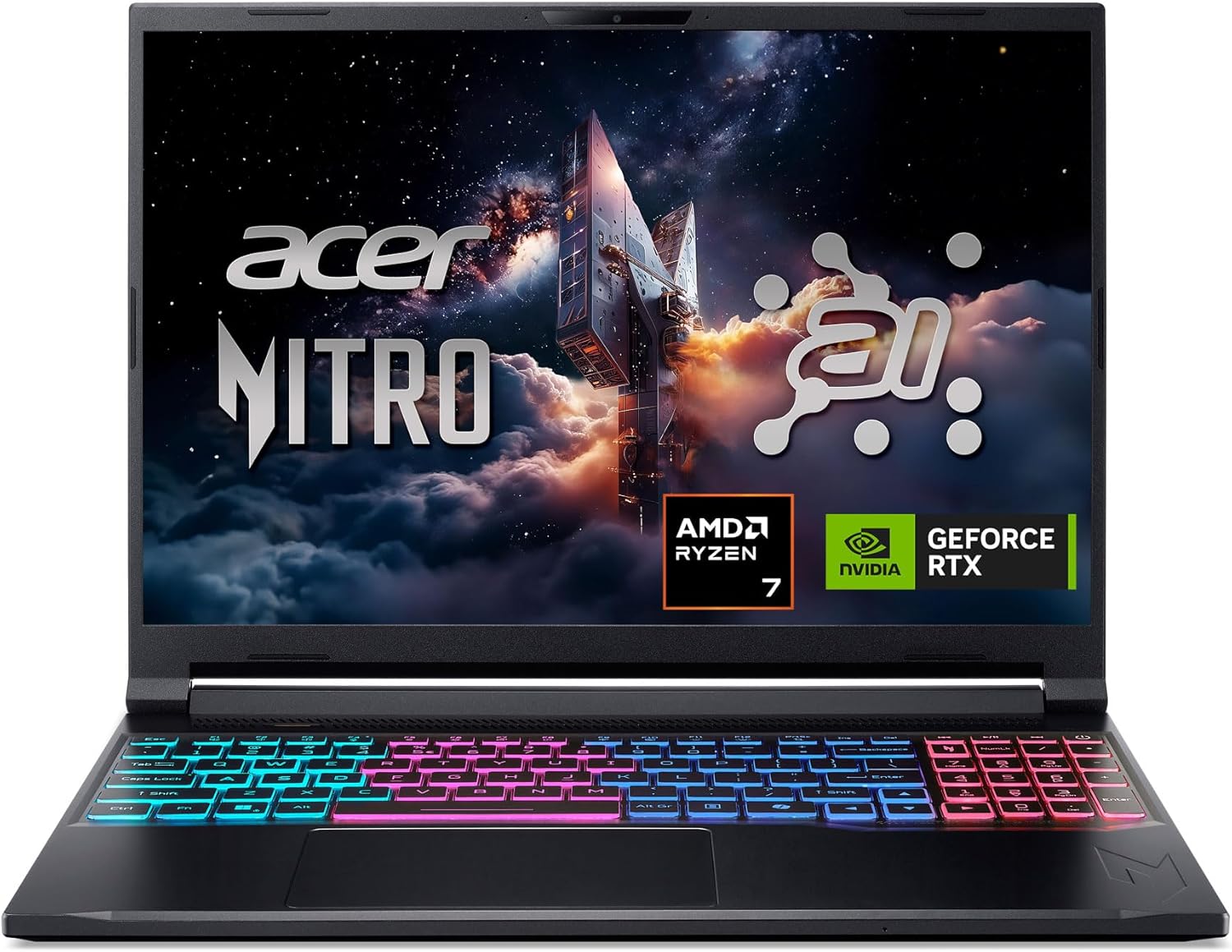
Pros
- Powerful AI-optimized CPU and GPU combination for demanding games and creative apps
- Excellent 32GB DDR5 RAM and fast 1TB Gen 4 SSD out of the box reduce need for upgrades
- High 180Hz refresh rate with good color accuracy enhances visual clarity and responsiveness
- Compact and relatively lightweight chassis (4.63 lbs) makes it portable for gamers on the go
- Robust cooling solution with quad air intakes and dual fans keeps thermals under control during intense sessions
Cons
- Maximum RAM is 32GB with no expansion slots available after purchase, limiting future upgrade potential
- Battery life may be typical for a gaming laptop and could require frequent charging during extended unplugged use
- Integrated webcam quality not specified; users may want an external camera for streaming
The Acer Nitro V 16S AI is a mid-range gaming laptop built around the latest AMD Ryzen 7 260 processor and NVIDIA GeForce RTX 5060 GPU. It's designed for PC gamers who want a balance of performance and portability, as well as content creators and streamers who can leverage the AI capabilities for tasks like upscaling, background effects, and faster encoding. With a 16-inch 180Hz display and 32GB of DDR5 RAM, this laptop aims to deliver smooth gameplay and efficient multitasking right out of the box.
When it comes to real-world gaming performance, the RTX 5060 with DLSS 4 and full ray tracing support gives you high frame rates in modern titles at 1080p or 1200p resolution. The 180Hz refresh rate makes fast action in FPS and racing games feel buttery smooth, while the 100% sRGB coverage ensures vibrant colors for open-world adventures. The AMD Ryzen 7 260's AI TOPS also help with background tasks, voice commands, and optimizing settings in supported software, giving an edge in competitive scenarios.
Build quality is typical for the Nitro line: a black plastic chassis with a clean, understated look. At 4.63 pounds, it's slim enough to slip into a backpack for college or LAN parties. The dual-fan quad-intake cooling keeps temperatures reasonable under load, though you'll still hear the fans ramp up during extended gaming sessions. The keyboard includes a backlit numeric keypad, and the touchpad is responsive for everyday use. Port selection is solid with USB4, two USB 3.2 Gen 2, HDMI 2.1, and Ethernet, making external monitor or dock setups easy.
Setting up the laptop is straightforward: it runs Windows 11 Home, and the pre-installed NitroSense software gives you control over fan speeds, power profiles, and system monitoring. The Acer PurifiedView and PurifiedVoice 2.0 features handle webcam background blur and noise reduction during Discord calls or streams. There are two M.2 SSD slots (one free) for storage expansion, but note that the RAM is soldered and maxes out at 32GB, so choose your capacity wisely at purchase.
One realistic limitation is that while the laptop includes a USB4 port, you'll need an external GPU dock if you ever want more graphics power - but for most users the RTX 5060 is plenty. Battery life is average for a gaming laptop; expect around four to five hours of light use. Also, the 1080p webcam isn't specified, but many laptops in this range offer only basic 720p or 1080p sensors, so external webcams are still recommended for professional streaming.
Overall, the Acer Nitro V 16S AI is a well-rounded portable gaming machine that hits a sweet spot for price-conscious PC gamers, esports players, and content creators. If you value high-refresh-rate gaming, AI-assisted performance, and decent portability without breaking the bank, this laptop is worth considering. It also comes with a three-month PC Game Pass trial to get you started with hundreds of games on day one.
The RTX 5060 laptop GPU with 572 AI TOPS and DLSS 4 Multi Frame Generation provides a significant boost in supported games. You can expect high settings at 1080p with smooth frame rates in titles like Call of Duty, Fortnite, and Cyberpunk 2077. The 180Hz display minimizes motion blur and screen tearing, while the AMD Ryzen 7 260 processor handles CPU-intensive simulations and background tasks without stutter. Gamers who play competitive esports titles will appreciate the low-latency response and Killer Ethernet for stable online play.
Despite being a slim 0.79-inch profile, the Nitro V 16S AI packs a dual-fan, quad-intake, quad-exhaust cooling system. This design pushes heat out efficiently, keeping the CPU and GPU within safe operating temperatures during long gaming sessions. The chassis is made of durable plastic with a matte finish that resists fingerprints. The hinge feels sturdy, and the weight of 4.63 pounds makes it manageable for daily carry. The backlit keyboard has a numeric keypad and decent key travel, suitable for both gaming and typing.
Frequently Asked Questions
What hardware differences should you expect when comparing the Best Gaming Laptops By Price?
Higher price tiers generally offer faster discrete graphics cards, newer memory standards, and higher display refresh rates. For instance, entry configurations typically feature components like the NVIDIA GeForce RTX 3050 and DDR4 memory, which target standard 1080p gaming. Stepping up to mid-range configurations often provides GPUs like the NVIDIA GeForce RTX 5060 alongside faster DDR5 memory and displays reaching up to 180Hz. Evaluating these tiers helps you determine whether extra graphical fidelity and smoother visuals justify the higher investment.
Is 16GB of RAM sufficient for gaming laptops in 2026?
Yes, 16GB of RAM remains the standard baseline for most contemporary games. It allows you to run modern titles smoothly while keeping standard operating system background tasks active. However, systems equipped with 32GB of memory provide extra breathing room for heavy multitasking, content creation, and future game updates that demand greater system resources. Checking the listed memory capacity before purchasing ensures the machine matches your planned workloads.
How does screen refresh rate affect gaming across different price brackets?
A higher screen refresh rate reduces motion blur and displays frame updates more frequently during fast action. Entry models often include 144Hz displays, which deliver a noticeably smoother experience than standard 60Hz office screens. Higher-tier models may feature 180Hz panels with wider color gamut coverage like 100% sRGB for improved visual clarity. Gamers who prioritize fast-paced action often explore laptops built for high frame rates to pair high-refresh screens with capable GPUs.
Can you upgrade internal storage on portable gaming laptops?
Storage upgradeability depends strictly on the specific laptop chassis and available motherboard slots. Some configurations provide an extra M.2 PCIe slot, allowing you to install a second solid-state drive as your game library expands. Other laptops may feature a single populated slot, requiring a complete drive replacement to expand capacity. Reviewing the manufacturer specifications confirms whether an additional drive slot is accessible before you buy.
Does an AI-powered processor improve standard gaming performance?
Dedicated AI processing units primarily assist with background system tasks, audio noise filtering, and neural rendering tools rather than direct frame generation. Modern processors with integrated neural engines support features like automated webcam adjustments and advanced upscaling algorithms. While raw gaming frame rates still depend heavily on the dedicated graphics card, these auxiliary processors help streamline system efficiency during multitasking sessions.


Write Your Review
No reviews yet. Be the first to share your experience!