


Upgrading your laptop memory can feel like a gamble when you are unsure if your machine even supports a 64GB configuration. Many owners discover too late that their device has soldered RAM or a maximum capacity limit that prevents such a large upgrade. This uncertainty often leads to wasted money on incompatible modules or unsupported speeds. Finding the best 64gb ram for laptop requires careful attention to the specific DDR generation and form factor your system demands. You need to verify if your laptop uses DDR4 or DDR5, as these are not interchangeable. The wrong choice can result in the computer failing to boot entirely. It is a common frustration for users who want to maximize multitasking capabilities without risking system stability or voiding their warranty.
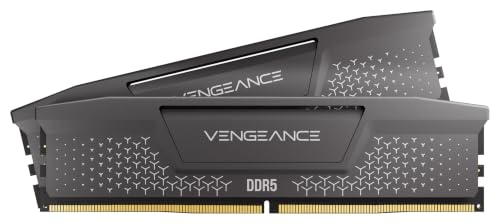
Before purchasing, you must confirm that your laptop has enough physical slots to accommodate the required module count. A 64GB setup usually requires two 32GB sticks, which means you need two available SODIMM slots. If your device only has one slot, you are limited to a single 64GB module, which is rare and expensive. The product listing specifies the exact data rate and voltage, which must match your motherboard’s supported range. For example, DDR5 modules operate at 1.1V, while DDR4 typically runs at 1.2V. Mixing these generations will not work and can damage your hardware. You should also check if your BIOS supports the advertised speed, as some systems will downclock faster memory to a lower stable rate. This ensures you get the performance you expect without compatibility headaches.


Frequently Asked Questions
Can I use DDR5 RAM in a DDR4 laptop?
No, DDR5 and DDR4 are not compatible due to different pin layouts and voltage requirements. The SODIMM form factor differs physically, preventing insertion into the wrong slot. Always verify the memory generation in your laptop’s manual before buying.
Do I need a matched kit for 64GB?
Yes, a matched kit is best for stable dual-channel performance. While mixing similar modules is possible, it often causes instability. Matched kits are tested together to ensure consistent timings and voltage behavior.
What if my laptop only has one slot?
You need a single 64GB module if only one slot is available. These are rare and significantly more expensive than kits. Check your laptop’s maximum supported capacity per slot before purchasing.
Will my laptop run the advertised RAM speed?
Not always, as the system may downclock to a supported rate. The CPU and motherboard dictate the maximum stable speed. Check the manufacturer’s QVL list to confirm supported data rates for your specific model.
Is ECC memory required for laptops?
Most consumer laptops use non-ECC memory, which is standard for this category. ECC is typically found in enterprise or workstation devices. Ensure the module matches your laptop’s ECC support status to avoid boot issues.




Write Your Review
No reviews yet. Be the first to share your experience!