


A sluggish frame rate often stems from an overworked CPU struggling to feed data to your graphics card. Balancing high core counts against single-core clock speed determines whether your PC stutters during action scenes or maintains smooth frame pacing across high refresh monitors. Gamers looking for a dependable upgrade need the best gaming desktop processor configuration that minimizes hardware bottlenecks and manages system thermals effectively. Modern desktop systems pair efficient processors with fast DDR5 memory, ensuring background operating system processes never interrupt competitive play.
Selecting a balanced desktop configuration depends on your target games, daily workloads, power supply capacity, and cooling setup. High-wattage processors require liquid cooling or multi-fan airflow to prevent thermal throttling under sustained gaming loads. For gamers who broadcast matches while playing, reviewing the best desktop for streaming and gaming options clarifies proper core allocation for live video encoding. Checking listed motherboard chipsets, power supplies, and memory standards ensures your desktop PC remains capable and ready for future hardware upgrades.

Pros
- High-end specs at a competitive price point for a pre-built desktop.
- Excellent thermal management with four fans and an ARGB air cooler.
- Generous 32GB DDR5 RAM and 2TB NVMe SSD provide ample speed and storage.
- User-friendly RGB customization through MSI Center software.
- Compact tower design (16 x 8.38 x 19 inches) fits well on most desks.
Cons
- Limited upgradeability due to potential proprietary components common in pre-built systems.
- No mention of integrated Wi-Fi or Bluetooth in the specifications - may require a USB adapter.
- RGB lighting may not appeal to users who prefer a minimalist or stealth look.
The MSI Codex Z2 (model A8NVP-436US) is a pre-built gaming desktop that brings together a potent combination of components for PC gamers, competitive players, streamers, and content creators. At its core, it features an AMD Ryzen 7-8700F processor and an NVIDIA GeForce RTX 5070 graphics card, paired with 32GB of DDR5 RAM and a 2TB NVMe SSD. This setup is designed to tackle modern games at high settings, handle streaming workloads, and support virtual reality experiences right out of the box.
When it comes to real-world gaming performance, the RTX 5070 and Ryzen 7-8700F deliver strong results for 1440p and even 4K gaming in many titles. The 32GB of DDR5 memory ensures smooth multitasking whether you are gaming, streaming, or running creative applications. The 2TB NVMe SSD provides lightning-fast load times for games and applications, reducing downtime and keeping you in the action. As a VR-ready system, it is also well-suited for immersive experiences like Half-Life: Alyx or Beat Saber.
Cooling is handled by an ARGB air cooler paired with four system fans: three in the front pulling in cool air and one in the rear exhausting heat. This configuration helps maintain stable temperatures during long gaming sessions, which is critical for both performance and component longevity. The built-in RGB lighting can be cycled using the MSI LED button on the chassis or customized further through MSI Center software, allowing you to match the look of your gaming desk setup.
Build quality is solid for a pre-built system. The case dimensions (16 x 8.38 x 19 inches) are relatively compact for a desktop with these components, and the 21.3-pound weight makes it manageable to move if needed. Setup is straightforward: connect your monitor, keyboard, mouse, and power, and Windows 11 Home is ready to go. The inclusion of a USB-C port provides modern connectivity for peripherals and external drives. Cable management inside the case appears tidy based on the product description, but as with many pre-built PCs, some users may find internal access limited for future upgrades.
One realistic limitation is that pre-built desktops often use proprietary motherboards, power supplies, or cooling mounts, which can make it harder to upgrade individual parts down the line. The product data does not specify wireless networking, so users who need Wi-Fi or Bluetooth may need to add a USB adapter or PCIe card. Additionally, the RGB lighting is present but is not as extensive as fully customizable RGB setups in enthusiast-level cases.
Overall, the MSI Codex Z2 is a strong recommendation for gamers who want high performance without the hassle of building a PC. It works well for competitive gaming (thanks to the fast CPU and GPU), casual gaming, streaming, and even light content creation. If you value convenience, strong out-of-box performance, and a cohesive aesthetic, this desktop is worth considering for your gaming setup.
The combination of the AMD Ryzen 7-8700F and NVIDIA RTX 5070 provides excellent gaming performance for both competitive and single-player titles. In games like Call of Duty: Warzone, Fortnite, and Apex Legends, you can expect high frame rates at 1440p with medium to high settings. The 32GB of DDR5 memory helps prevent stutters during intense scenes or when running background apps like Discord or streaming software. The 2TB NVMe SSD ensures maps and levels load quickly, giving you an edge in fast-paced games. For ray tracing and DLSS supported titles, the RTX 5070 delivers crisp visuals while maintaining smooth gameplay.
The MSI Codex Z2 uses a four-fan cooling setup with an ARGB air cooler on the CPU. Three front intake fans draw cool air across the components, while one rear exhaust fan pushes hot air out. This design helps keep temperatures manageable even during extended gaming sessions. The ARGB cooler adds a touch of style while ensuring the processor stays within safe operating limits. Users who plan to push the system hard may still want to monitor CPU and GPU temperatures, but the overall airflow configuration is effective for a pre-built system in this class.
Pros
- Excellent multi-core performance for gaming and productivity workloads
- Integrated graphics provide useful backup for troubleshooting or light tasks
- Unlocked multiplier for easy overclocking with compatible Z-series motherboards
- Good compatibility with both DDR4 and DDR5 memory platforms
- Backward compatible with many LGA1700 motherboards with BIOS update
Cons
- Runs hot under load, requiring a high-end air or liquid cooler for optimal performance
- Power draw can be high, especially when overclocked or under sustained workloads
- May require BIOS update for older 600-series chipset motherboards
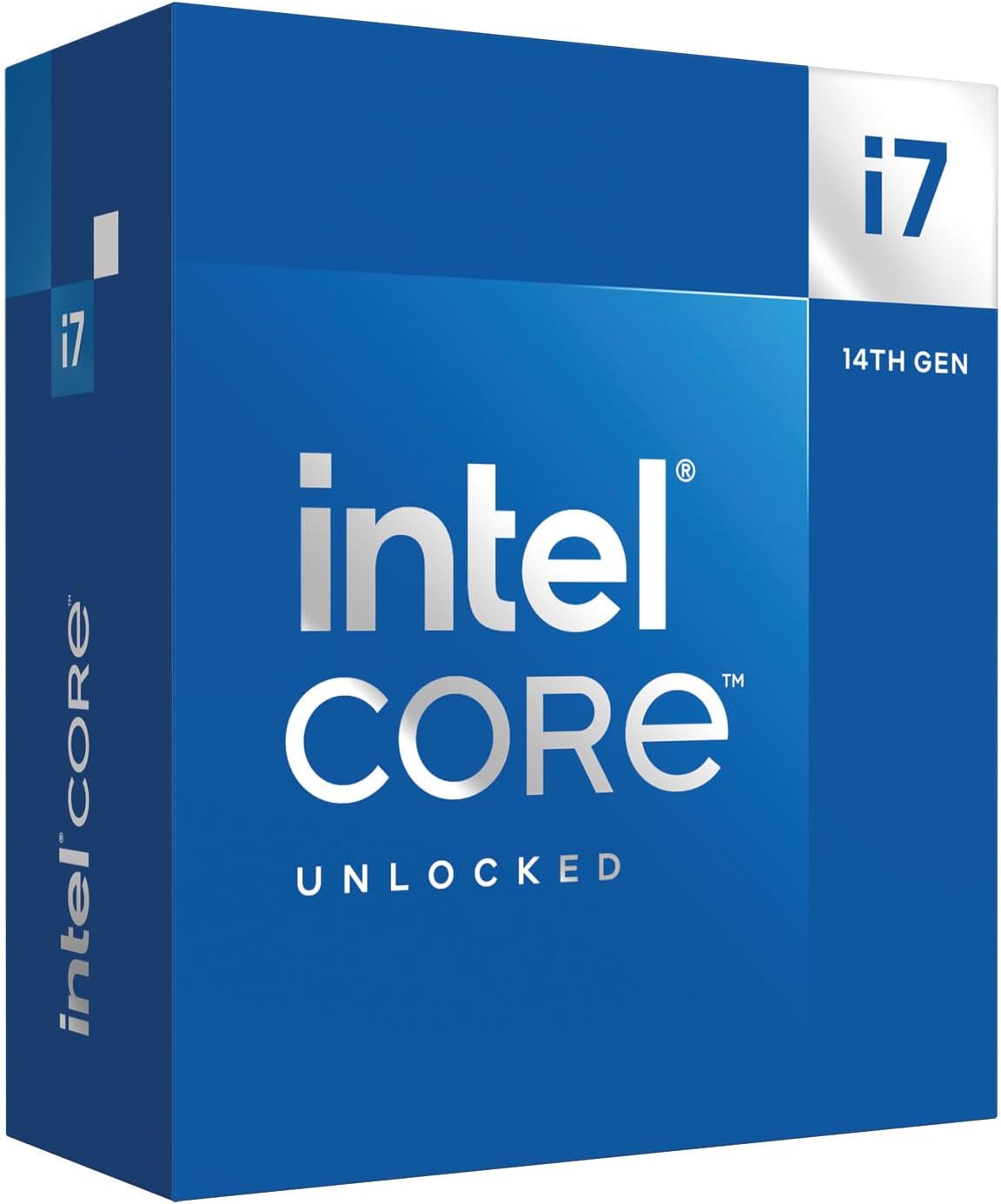
The Intel Core i7-14700K is a 14th-generation desktop processor that blends high-performance P-cores with efficient E-cores, giving PC gamers and content creators a versatile chip for demanding workloads. With 8 performance cores and 12 efficiency cores for a total of 20 cores and 28 threads, it offers strong multi-threaded performance for gaming while streaming, video editing, or running productivity tasks in the background. This processor is designed for the LGA1700 socket and works with both Intel 600 and 700 series motherboards, though a BIOS update may be needed for older boards.
This CPU is best suited for PC gamers who want high frame rates in modern titles, competitive esports players who need consistent responsiveness, streamers who multitask during broadcasts, and content creators who edit video or render 3D assets. Its hybrid architecture allows demanding games to run on the performance cores while background apps like Discord, OBS, or Chrome tabs are handled by the efficient cores, keeping your gameplay smooth and your stream stable. The unlocked multiplier also appeals to enthusiasts who want to push clock speeds beyond stock with adequate cooling.
When it comes to gaming, the i7-14700K delivers strong single-core performance for snappy responsiveness in fast-paced shooters like Valorant, CS2, and Call of Duty, as well as in CPU-intensive titles like Cyberpunk 2077 and Microsoft Flight Simulator. Users report noticeable gains over previous-gen i7s, especially in games that benefit from higher core counts and faster cache. The 33 MB Intel Smart Cache helps reduce latency, while support for PCIe 5.0 and DDR5 memory means this chip can take full advantage of the latest GPUs and fast RAM kits for even better frame rates.
Cooling is a critical consideration with this processor. Under full load, the i7-14700K can draw significant power and generate substantial heat. Most builders will want at least a quality 240mm AIO liquid cooler, and a 360mm AIO or custom loop is recommended for sustained all-core workloads. Undervolting is a popular technique among enthusiasts to reduce temperatures without sacrificing much performance, as noted in user feedback. A good contact frame for the LGA1700 socket can also help with even thermal paste spread and lower temps.
Setup is straightforward if you have a compatible motherboard and a BIOS updated to support 14th-gen chips. The processor integrates Intel UHD Graphics 770, which is handy for troubleshooting or basic display output without a dedicated GPU. Overclocking headroom is available for those who want to push frequencies further, though the stock Turbo Boost performance is already strong for most gaming scenarios. The chip works with both DDR4 and DDR5 memory, giving builders the option to save money with existing DDR4 kits or invest in faster DDR5 for future-proofing.
Realistically, the i7-14700K sits in a sweet spot for high-end gaming builds where you want strong multi-core performance without stepping up to the i9 price tier. It handles gaming, streaming, and productivity tasks simultaneously without breaking a sweat, making it a versatile choice for a gaming PC that also doubles as a workstation. Just be ready to invest in adequate cooling and a quality power supply, as this chip pulls significant power under load. For gamers building a new rig or upgrading from a 12th-gen or earlier platform, this CPU offers a compelling balance of price and performance.
In gaming scenarios, the i7-14700K delivers excellent single-core performance thanks to its high boost clock and Intel Turbo Boost Max Technology 3.0. This translates to high frame rates in competitive shooters like Valorant and CS2, where CPU speed often dictates performance. The 8 P-cores handle the game logic while the 12 E-cores manage background tasks like Discord, streaming software, and game launchers, resulting in smoother gameplay with fewer stutters. Users report strong performance in AAA titles at 1440p and 4K when paired with a modern GPU, with the CPU rarely becoming the bottleneck.
For streaming, the hybrid architecture lets you game on the P-cores while encoding and streaming tasks run on the E-cores, keeping in-game performance consistent. The integrated graphics are not intended for gaming but provide a useful fallback for troubleshooting or basic display output. Overclockers will appreciate the unlocked multiplier and robust VRM support on Z790 boards, though thermal headroom varies by silicon quality.

Pros
- Powerful CPU and GPU combo handles modern games at high settings.
- Plentiful 32GB RAM supports heavy multitasking for gaming and streaming.
- Effective liquid cooling with customizable ARGB lighting adds visual appeal.
- Large 1TB NVMe SSD provides fast load speeds and ample storage.
- Easy plug-and-play setup with Windows 11 pre-installed.
Cons
- Reviews mention potential reliability issues after extended use.
- Some users may find the stock graphics card brand varies, which can affect performance consistency.
- Limited upgrade room for high-end GPUs due to the 650W power supply.
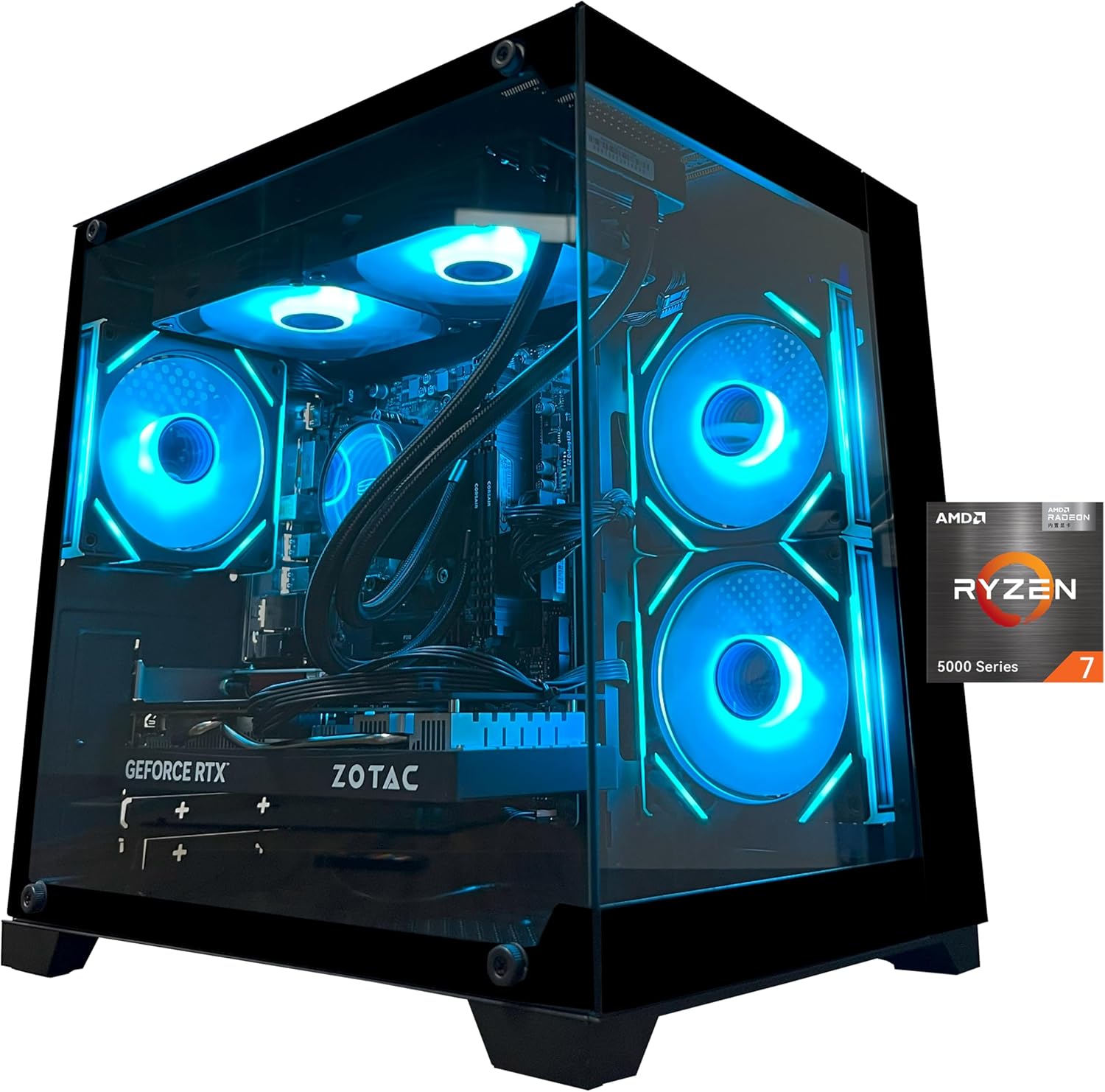
The YAWYORE gaming PC desktop is a pre-built tower designed for gamers, streamers, and content creators who want strong performance without the hassle of building their own rig. It packs an AMD Ryzen 7 5700X CPU, an NVIDIA GeForce RTX 5060 GPU, 32GB of DDR4 RAM, and a 1TB NVMe SSD into a stylish case with liquid cooling and ARGB fans. This setup targets a wide audience, from competitive esports players to casual gamers and even those who need a versatile machine for work-from-home or college tasks.
In real-world gaming, the RTX 5060 with 8GB of GDDR7 memory and DLSS 4 support delivers smooth frame rates in modern titles at 1080p and even 1440p with some settings adjustments. The Ryzen 7 5700X’s eight cores handle multitasking well, allowing you to stream or run Discord alongside gameplay without noticeable stutter. User feedback highlights quiet operation during sessions, which is a plus for immersive gaming or content creation. The included 240mm liquid cooler and three ARGB fans keep temperatures in check, even during extended use, and the lighting can be controlled with a remote for easy desktop customization.
Build quality appears solid, with an MSI B550M-A PRO motherboard that offers good stability and upgrade paths. The case has a tempered glass side panel, though not explicitly stated in specs, typical for this price range. The 650W 80 Plus Bronze power supply is sufficient for the current components but may limit future GPU upgrades to mid-range options. Setup is straightforward: Windows 11 is pre-installed, and the system boots quickly thanks to the NVMe SSD. However, the product description advises removing internal foam padding upon arrival, which adds a small initial step.
One limitation noted in user reviews is mixed reliability. While many users praise the performance and appearance, some report issues after a few months, with one reviewer experiencing a system failure after two months. This suggests that while the PC offers great value on paper, quality control may vary. Also, the graphics card brand may differ from what’s listed, which could affect performance consistency. The 650W PSU might struggle with future high-end upgrades, so buyers should plan accordingly.
For desk setup, the tower is relatively compact for a liquid-cooled system, and the RGB fans add flair to any gaming station. Cable management inside appears tidy based on user images. The included WiFi and Bluetooth eliminate the need for dongles, simplifying connectivity. Overall, this PC is well-suited for gamers who want a ready-to-run machine with strong out-of-box performance and visual appeal, especially those building their first gaming setup or upgrading from a laptop. However, those seeking long-term reliability might want to consider extended warranty options or build their own system for more control.


Frequently Asked Questions
How do clock speeds and core counts affect gaming performance?
High clock speeds drive rapid game calculations, while core counts handle multitasking. Modern games benefit greatly from single-core turbo frequencies that keep frame rates steady. Extra cores prevent background streaming or chat apps from reducing gaming performance. Examining the Ryzen 5 7600X gaming performance shows how balanced architectures maintain smooth frame rates.
What cooling solution does a performance desktop CPU need?
Performance desktop CPUs typically require a 240mm liquid cooler or a multi-heatpipe air cooler. Unlocked chips generate substantial heat during intense gaming sessions and need continuous airflow. A chassis with multiple intake fans helps maintain safe temperatures. Verify that your PC case has sufficient clearance for your chosen cooling setup.
How much memory should accompany the best gaming desktop processor in 2026?
A setup with 16GB of RAM is standard, but 32GB of DDR5 or DDR4 provides ideal headroom. Adequate system memory ensures your best gaming desktop processor in 2026 accesses game assets without stuttering. Dual-channel memory setups also maximize processor throughput during fast-paced scenes while supporting background applications.
How do you prevent CPU bottlenecks when selecting a graphics card?
Pairing your processor with an equivalent graphics card keeps both components operating efficiently. A capable multi-threaded processor ensures the GPU receives instructions quickly to maintain high frame rates. Analyzing whether a chip like the Ryzen 9 5900X for gaming matches your setup helps prevent performance bottlenecks.
Can a desktop processor with integrated graphics run modern games?
Integrated graphics processors can run esports titles, older releases, and everyday media at modest display settings. Graphically demanding modern titles, however, need a dedicated graphics card for acceptable frame rates. Desktop APUs offer an affordable entry point for everyday computing, provided your motherboard includes an open PCIe slot for future GPU upgrades.



Write Your Review
No reviews yet. Be the first to share your experience!