

Balancing Graphic Performance and Storage for Creative Workloads
Video editors and content creators face unique hardware bottlenecks when attempting to balance timeline scrubbing, multi-layer rendering, and fast gameplay. A capable machine requires both a strong discrete graphics chip to accelerate export times and ample system memory to keep preview windows smooth. Securing the best gaming laptop video editing configuration means evaluating how processors, graphic processing units, and high-speed storage work together under continuous thermal loads. Machines equipped with an NVIDIA GeForce RTX 5060 laptop GPU provide dedicated ray tracing and hardware encoding that benefit both 3D rendering and creative production suites.
Display quality and overall system throughput dictate daily comfort during intensive creative sessions. While the Alienware 16 Aurora Laptop AC16250-16-inch 16:10 delivers a crisp 16-inch WQXGA panel with a 16:10 aspect ratio and Intel Core 7 processing, the larger ASUS TUF A18 Gaming Laptop supplies an 18-inch workspace paired with 32GB of system memory for massive video timelines. Complementing these rigs with dedicated solid-state drives such as the Samsung 990 PRO SSD 2TB NVMe M.2 PCIe Gen4 ensures that 4K footage caches load rapidly without saturating primary system storage. Creators prioritizing rapid workflow expansion often check for a gaming laptop with Thunderbolt 3 or Thunderbolt 4 ports to connect external scratch disks and high-resolution monitors easily.

Pros
- Extremely fast read/write speeds that significantly reduce loading times in games and applications.
- Excellent power efficiency and thermal management for sustained performance under heavy loads.
- Reliable Samsung build quality and robust software support via Samsung Magician.
- Capacities up to 4TB provide ample space for large game libraries and creative projects.
Cons
- Premium pricing compared to some Gen3 or budget Gen4 SSDs, though performance justifies the cost.
- Requires a PCIe 4.0 compatible motherboard to achieve full speed; works in Gen3 slots but at reduced speeds.
- Some users may want to add a third-party heatsink for optimal thermal performance in compact builds.
The Samsung 990 PRO 2TB NVMe M.2 PCIe Gen4 SSD is a high-performance internal solid-state drive designed for gamers, content creators, and professionals who demand the fastest storage speeds available. As Samsung's flagship Gen4 drive, it pushes the limits of PCIe 4.0 with sequential read speeds up to 7,450 MB/s and write speeds up to 6,900 MB/s, making it one of the fastest consumer SSDs on the market. Whether you are loading massive open-world games, editing 4K video, or running virtual machines, this drive is built to handle the most demanding tasks without bottlenecking your system.
This SSD is best suited for PC gamers who want near-instant game launches and level loads, competitive gamers who need fast asset streaming for an edge in fast-paced titles, and content creators who work with large files in applications like Adobe Premiere or DaVinci Resolve. It is also an excellent choice for gaming setup builders looking to future-proof their rig with PCIe 4.0 storage, and for streamers who need quick access to their game libraries and streaming software. The 990 PRO's power efficiency is a bonus for laptop gamers or those concerned about heat, as it delivers up to 50% better performance per watt than the 980 PRO.
In real-world gaming, the 990 PRO delivers noticeably faster load times in titles like Cyberpunk 2077, Call of Duty: Modern Warfare II, and Starfield, reducing wait times to just a few seconds. Its random read/write performance is over 55% better than the 980 PRO, which translates to smoother texture streaming and less stutter in open-world environments. For competitive esports players, the drive's low latency ensures that game assets load quickly, giving you a slight but meaningful advantage. The drive also handles multitasking with ease, allowing you to switch between games, streaming software, and Discord without slowdowns.
Build quality is typical of Samsung's PRO line: a single-sided M.2 2280 form factor with a nickel-coated controller and a heat spreader to manage thermals. While the drive includes basic thermal management, many users in reviews recommend adding an aftermarket heatsink with a fan for sustained heavy workloads, as the drive can throttle under extreme heat. The Samsung Magician software is a standout feature, offering firmware updates, performance benchmarking, and health monitoring that makes maintenance simple even for less technical users. Installation is straightforward: just slot it into an M.2 slot on your motherboard (PCIe 4.0 recommended for full speed) and secure it with the included screw.
One realistic limitation is the price: the 990 PRO is more expensive than many Gen3 or budget Gen4 SSDs. However, for users who need the absolute best performance, the cost is justified by the speed and reliability. Another consideration is that you need a PCIe 4.0 compatible motherboard and CPU to achieve the advertised speeds; if you are using an older system, the drive will still work but at Gen3 speeds (around 3,500 MB/s). Some users also note that the drive can run hot without proper cooling, especially in compact builds or laptops, so plan your cooling accordingly.
Overall, the Samsung 990 PRO 2TB is a top-tier NVMe SSD that delivers exceptional performance for gaming, content creation, and heavy-duty workstations. If you are building a high-end gaming PC or upgrading your current setup and want the fastest storage available, this drive is an excellent investment. Its combination of speed, efficiency, and Samsung's proven reliability makes it a safe choice for anyone who values performance and long-term dependability. For most gamers and creators, the 2TB capacity hits a sweet spot between price and space, but the 4TB version is also available for those with massive libraries.
Pros
- Powerful Intel Core 7 and RTX 5060 deliver excellent 1080p/1440p gaming performance
- Bright, high-resolution 16:10 display with 120Hz refresh rate for smooth visuals
- User-upgradeable RAM and storage for future-proofing
- Effective cooling keeps thermal throttling at bay during extended play
- Premium build quality with anodized aluminum and comfortable keyboard/palm rest
Cons
- Heavier than some competitors at 5.49 pounds, less ideal for frequent travel
- Reports of occasional firmware/driver issues that may require manual updates
- Can get warm on the lap during intensive gaming, so desk use is recommended
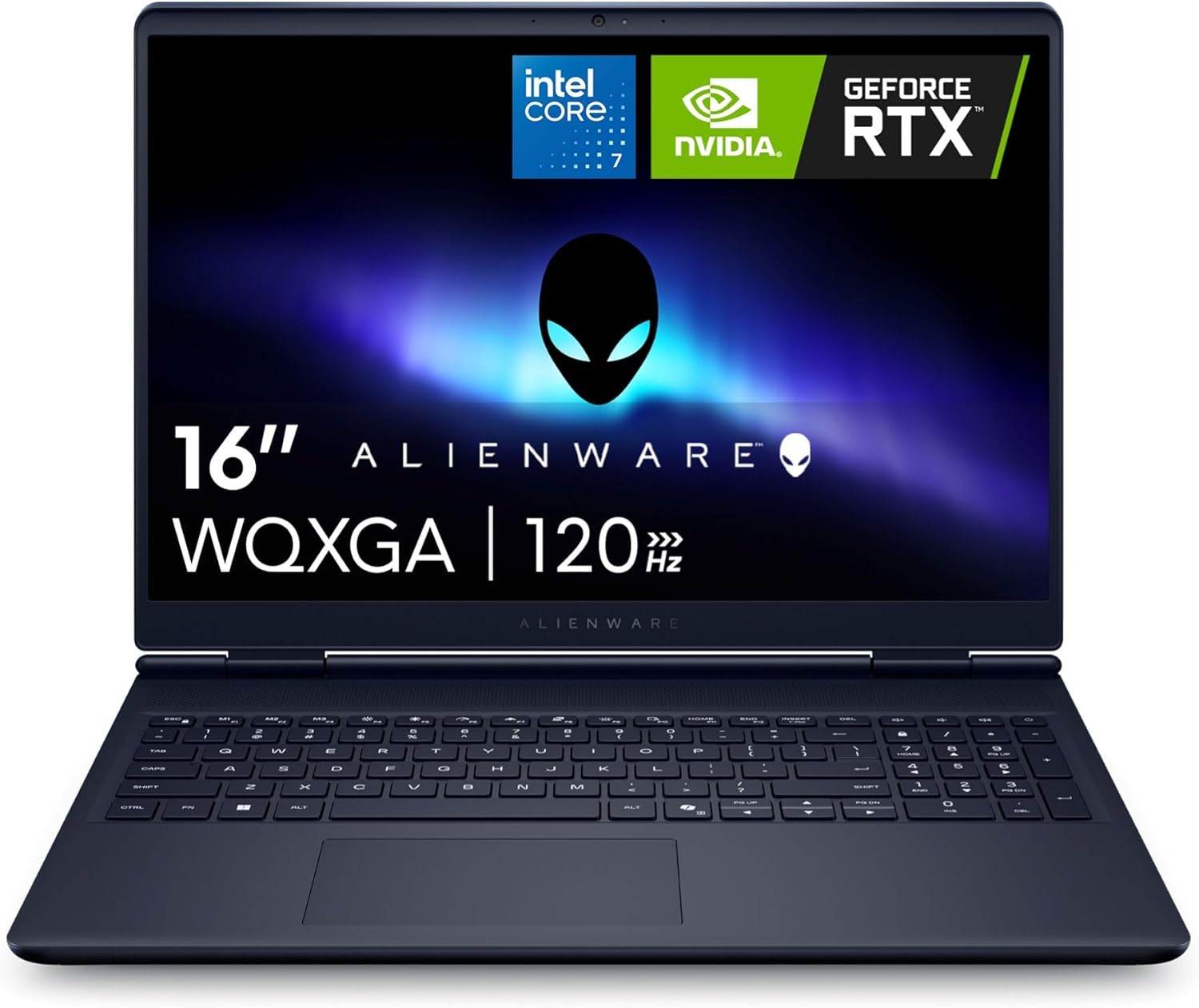
The Alienware 16 Aurora is a gaming laptop that aims to balance raw performance with everyday portability. Powered by an Intel Core 7 processor and NVIDIA GeForce RTX 5060 graphics with 8GB of GDDR7 VRAM, this machine is built to handle modern titles at high settings. The 16-inch WQXGA display runs at 120Hz and uses an anti-glare IPS panel with ComfortView Plus, making it suitable for both competitive gaming and content creation. Based on user feedback, the laptop delivers solid frame rates in games like Crusader Kings 3 and iRacing, though some have noted that it performs best when kept on a desk rather than a lap due to heat output under load.
This laptop targets a wide audience: PC gamers, streamers, esports enthusiasts, college gamers, and work-from-home users who need a single device for gaming and productivity. The RTX 5060 GPU supports DLSS 4 and Nvidia Reflex 2, which can reduce latency and boost framerates in supported titles. The 16GB of DDR5 RAM and 1TB NVMe SSD provide a responsive experience out of the box, and both are user-upgradeable thanks to two SODIMM slots and two M.2 slots. This flexibility means buyers can extend the laptop's lifespan as their needs grow.
Build quality is a highlight. The anodized aluminum lid with an iridescent Alienware logo and magnesium alloy interior give the laptop a premium feel. The chassis measures just 0.89 inches thick and weighs 5.49 pounds, which is reasonable for a 16-inch gaming laptop. The keyboard features a comfortable, pillowed palm rest and a full numeric keypad, making it practical for both gaming and typing. Alienware's Cryo-Tech cooling uses dual fans and three copper heat pipes to keep temperatures in check, and user reviews often praise the system's ability to stay quiet and cool during moderate gaming.
Connectivity is generous, with two USB-A ports, two USB-C ports (one with DisplayPort), HDMI 2.1, an RJ-45 Ethernet jack, and a global headset jack. The inclusion of Wi-Fi 7 (802.11be) ensures fast wireless speeds for online play and streaming. Setting up the laptop is straightforward, with Windows 11 Home pre-installed. Some users reported needing to update drivers manually for sound and drawing tablets, but once updated, the system ran reliably. The 1-year onsite service from Dell adds convenience if hardware issues arise.
However, the laptop has realistic limitations. At 5.49 pounds, it is heavier than many 16-inch ultrathins, making it less ideal for daily commuting. A few reviewers experienced a complete failure after a firmware update, though others found the machine stable after driver updates. The battery life is decent for light tasks but will be shorter during gaming. The RTX 5060 is a capable mid-range GPU, but it won't max out every AAA title at native resolution with full ray tracing. Buyers should temper expectations for ultra settings on the most demanding games.
Overall, the Alienware 16 Aurora is a well-rounded gaming laptop that offers strong performance, upgradeability, and a comfortable design. It is best suited for gamers who want a portable rig for moderate to high settings at 1440p or 1080p, as well as streamers and students who need a reliable workhorse. If you can catch it on sale, the value improves significantly. Just be prepared for a heavier carry and the occasional need to tinker with drivers. For anyone seeking a stylish, capable gaming machine that can grow with them, this Alienware is a worthy contender.
The Alienware 16 Aurora's gaming performance hinges on the Intel Core 7 Processor 240H (10 cores, 16 threads) and the NVIDIA GeForce RTX 5060 with 8GB GDDR7. According to user reports, this combination handles most modern games at 1080p and 1440p with high settings. The 120Hz display pairs well with the GPU, providing smooth motion in fast-paced titles like first-person shooters and racing games. DLSS 4 support helps boost frame rates in ray-traced games, and Nvidia Reflex 2 reduces input latency for a more responsive feel. The 110W total performance power (65W TGP + 45W TDP) ensures the system can maintain solid frame rates without excessive throttling, aided by the effective Cryo-Tech cooling.
The Alienware 16 Aurora uses a refined Cryo-Tech cooling system with dual ultra-thin fans, three copper heat pipes, and four exhaust vents. Air is drawn in through the keyboard and bottom vents, then exhausted out the sides and rear. This design helps keep the CPU and GPU cool during extended gaming sessions. Users report that fan noise is manageable, especially in Quiet Mode activated via F7. However, the bottom can become quite warm when gaming on a lap, so using the laptop on a desk or cooling pad is recommended. The thermal solution appears well-balanced for sustained performance, and the lack of a rear thermal shelf makes the laptop easier to slip into a backpack.

Pros
- Large 18-inch 144Hz display with G-SYNC for smooth, immersive gaming.
- Powerful AMD Ryzen 7 260 processor outperforms many Intel i9 chips in multi-threaded tasks.
- Generous 32GB RAM and 1TB SSD for fast performance and ample storage.
- Effective cooling system keeps thermals in check during long sessions.
- RGB keyboard adds a customizable aesthetic for gaming setups.
Cons
- Runs hot under load; a cooling pad is recommended for optimal performance.
- Pre-installed bloatware may require cleanup for a streamlined experience.
- Display brightness could be better for use in brightly lit rooms.
The ASUS TUF A18 is a gaming laptop that aims to replace a bulky desktop setup with a single, portable machine. It's designed for PC gamers, competitive players, streamers, content creators, and even college gamers who need a powerful system for both work and play. With its 18-inch display and high-performance internals, it offers a desktop-like experience without the need for a permanent desk space.
At the heart of this laptop is the AMD Ryzen 7 260 processor, which, according to product specifications, beats the Intel i9-13905H in performance. Paired with the NVIDIA GeForce RTX 5060 GPU, it handles AAA titles at high settings, video editing, 3D modeling, and rendering with ease. The 32GB of DDR5 RAM and 1TB PCIe SSD ensure quick boot times, fast data access, and smooth multitasking, making it suitable for both gaming and productivity tasks.
The 18-inch FHD+ IPS display with a 144Hz refresh rate and G-SYNC technology provides smooth, tear-free visuals. This is a significant advantage for competitive gamers who need fluid motion in fast-paced games. The large screen also enhances immersion in open-world titles and makes multitasking easier for content creators. However, some user feedback suggests the display could be brighter, which might be a consideration for those who game in well-lit environments.
Build quality is solid, with a durable chassis that feels robust. The RGB backlit keyboard adds a customizable aesthetic, though one reviewer noted that the backlight control is managed by pre-installed software, which some may find unnecessary. The cooling system uses multiple vents and improved airflow to keep the laptop stable during intense gaming sessions, but users report that the exhaust air can get quite hot, so a cooling pad is recommended for extended use.
Connectivity is comprehensive, with Wi-Fi 6E, Bluetooth 5.3, USB 4, USB-C, and an RJ45 LAN port, allowing for fast networking and easy connection to external monitors and peripherals. The laptop also includes an FHD IR camera for Windows Hello, which is convenient for quick logins. The pre-installed bloatware is a minor annoyance, but it can be removed to streamline the experience.
Overall, the ASUS TUF A18 is a strong choice for gamers and creators who want a large-screen laptop that can handle demanding tasks. It's particularly well-suited for those who need a portable powerhouse for gaming, streaming, and content creation. While it runs hot and has some software quirks, its performance, display quality, and build make it a reliable investment for anyone looking to upgrade their gaming setup.
Frequently Asked Questions
How much RAM is needed for video editing on a gaming laptop?
At least 16GB of RAM is standard, though 32GB is recommended for complex 4K projects. While 16GB allows smooth playback of standard timeline footage, higher capacities prevent caching slowdowns when running video editors alongside background applications. The ASUS TUF A18 provides 32GB of installed memory out of the box, whereas models with 16GB may require future memory expansion depending on project complexity.
Does a dedicated graphics card improve video editing export speeds?
Yes, a discrete GPU significantly accelerates rendering and export times in modern editing suites. Creative applications utilize hardware encoders inside GPUs like the NVIDIA GeForce RTX 5060 to process video effects and compress exports faster than integrated graphics alone. Selecting a model among the Best Gaming Laptop Video Editing options ensures that the GPU handles intensive timelines without overburdening the central processor.
Why is high-speed solid-state storage important for video editing?
Fast NVMe storage prevents dropped frames and reduces file transfer bottlenecks when working with uncompressed footage. Internal solid-state drives such as the Samsung 990 PRO achieve sequential read speeds up to 7,450 MB/s, which drastically cuts timeline scrub lag. Fast storage also helps users who review budget gaming laptops identify where drive speed compromises might impact overall creative productivity.
What screen size works best for mobile video editing and gaming?
A display measuring 16 inches or larger provides the necessary screen area for comfortable timeline management. The Alienware 16 Aurora offers a 16:10 WQXGA panel that provides extra vertical room for editing tracks, while the 18-inch ASUS TUF A18 delivers maximum visual space. Larger panels reduce the need for an external monitor, though they add overall chassis weight and reduce portability.
Can you optimize thermal performance during prolonged video rendering?
Yes, maintaining adequate airflow and clean ventilation vents keeps sustained component clocks stable under heavy rendering loads. High-draw tasks generate substantial heat across both the CPU and GPU, which triggers thermal throttling if cooling chambers are obstructed. Users looking to improve stability can learn how to optimize a gaming laptop to balance power profiles, fan curves, and background task consumption during 2026.





Write Your Review
No reviews yet. Be the first to share your experience!