


Hardware Balance and Portable Play
Hardware specifications can easily mislead buyers when basic productivity notebooks share similar marketing labels with performance gaming machines. A portable computer might feature a modern multi-core processor, yet struggle with modern titles if it relies solely on integrated graphics chips. Identifying the best gaming windows laptop requires balancing processing tiers, discrete graphics hardware, and display refresh rates to match your exact gaming library. Entry-level machines handle casual or esports titles with ease, whereas graphically demanding releases demand robust thermal designs and dedicated video memory.
Display quality plays an equally vital role in day-to-day visual immersion. Opting for a gaming laptop with a 144Hz display or higher ensures smoother animation delivery during fast-paced competitive matches. Meanwhile, system memory and storage capacities dictate how reliably your machine juggles background programs and modern game installations. Reviewing these hardware configurations before buying helps prevent frustrating thermal throttling and hardware bottlenecks down the road.

Pros
- Excellent value for 144Hz gaming at this price point, delivering smooth visuals in popular esports titles.
- Upgradeable RAM (up to 64GB) and storage (up to 2TB) allows future-proofing as your library grows.
- Reliable build and thermal design keep the system stable during extended gaming sessions without excessive fan noise.
- Wi-Fi 6 and USB 3.0 ports offer modern connectivity for peripherals and high-speed internet.
- Windows 11 Pro adds business-grade features like BitLocker and Remote Desktop for versatile use.
Cons
- Battery life drops significantly under gaming load, typical for budget gaming laptops; expect around 2-3 hours of intense use.
- Some units may ship with the RTX 3050 4GB variant instead of the advertised 6GB, so verify your specific configuration.
- The 144Hz panel is decent but not the brightest; outdoor or brightly lit rooms may cause glare.
The HP Victus 15.6" gaming laptop is an entry-level to mid-range option designed for PC gamers who want solid 1080p performance without breaking the bank. It's best suited for casual and competitive gamers, college students, streamers just starting out, and anyone building a budget gaming setup that needs portability. With an Intel Core i5-12450H processor and an NVIDIA GeForce RTX 3050 graphics card, this machine handles most modern titles at medium to high settings.
In real-world gaming, the 144Hz display offers a significant advantage in fast-paced shooters like Call of Duty or Overwatch, providing smoother motion and reduced input lag. The 16GB of DDR4 RAM ensures that you can keep Discord, Spotify, or OBS running in the background without stuttering. The 512GB PCIe SSD loads games quickly, though you may want to upgrade storage if you plan to install multiple AAA titles. According to user feedback, the laptop performs reliably for games such as Fortnite and Apex Legends at 60-90 FPS on high settings.
Build quality is typical for the HP Victus line: a sturdy plastic chassis with a blue finish that looks sleek on a desk. The backlit keyboard is comfortable for typing, though not mechanical, and the trackpad is adequate. The laptop weighs 5.1 pounds, making it easy to take to a dorm room or LAN party. Cooling is handled by dual fans that keep temperatures in check during long sessions, but the fans do become audible under load. Battery life is a limitation: you'll get around 5-6 hours for light use, but expect only 2-3 hours while gaming, which is common among budget gaming laptops.
Setup is straightforward out of the box, but if you want more RAM or storage, the bottom panel is easy to remove for upgrades. Some users noted that the advertised 6GB VRAM may actually be 4GB on their unit, so double-check your specific model before buying. This is a realistic caveat but doesn't diminish the laptop's overall value. The included Wi-Fi 6 and USB 3.0 ports give you fast networking and peripheral connectivity, and the micro-edge display minimizes bezels for a more immersive look.
Limitations include the aforementioned battery life and a display that isn't very bright (around 250 nits), which can be a problem in well-lit rooms. Additionally, the RTX 3050 is best for 1080p gaming; don't expect to run demanding titles at 1440p. For content creators, the laptop can handle light video editing in DaVinci Resolve, but heavier workloads may require a more powerful GPU. Overall, the HP Victus is a practical recommendation for budget-conscious PC gamers who need a portable, capable machine for school, work, and play.

Pros
- Exceptional gaming performance with high frame rates and smooth 240Hz display.
- Large 18-inch screen with excellent color accuracy and brightness for immersive gaming and creative work.
- Solid build quality and lightweight design (6.83 lbs) for a desktop replacement laptop.
- Ample storage (2TB NVMe) and memory (32GB DDR5) out of the box, with upgrade potential.
Cons
- Runs hot under sustained gaming loads; a cooling pad is recommended for extended sessions.
- Battery life is limited, as typical for high-performance gaming laptops, so expect to stay plugged in during gaming.
- Some users report driver conflicts with third-party peripherals (e.g., Razer) and pre-installed MSI software that may need removal for optimal performance.
The MSI Crosshair 18 HX AI is a top-tier gaming laptop designed for PC gamers who want desktop-level performance without being tied to a desk. It's best suited for competitive gamers, streamers, content creators, and college gamers who need a powerful machine for both gaming and productivity. With an 18-inch QHD+ 240Hz display, Intel Core Ultra 9 275HX processor, and NVIDIA RTX 5070 graphics, this laptop aims to deliver high frame rates and stunning visuals in the latest titles.
In real-world gaming, the combination of the 240Hz refresh rate and RTX 5070 ensures smooth, tear-free gameplay in fast-paced shooters like Valorant or Call of Duty, while the 100% DCI-P3 color gamut makes open-world adventures like Cyberpunk 2077 look vibrant. The 32GB of DDR5-5600 RAM handles multitasking with ease, whether you're streaming on Twitch, running Discord, or editing video. The 2TB NVMe SSD provides lightning-fast load times, so you're never waiting long to jump into a match. However, users report that the laptop gets hot during extended gaming sessions, so investing in a quality cooling pad is wise for maintaining performance and comfort.
Build quality is solid, with a sleek black chassis that feels premium despite being relatively lightweight at 6.83 pounds for an 18-inch machine. The SteelSeries keyboard offers 24-zone RGB lighting and anti-ghost keys, providing responsive feedback for both gaming and typing. The Dynaudio speakers deliver surprisingly rich audio with clear mids and decent bass, though for competitive gaming you'll still want a dedicated headset. Connectivity is generous: Thunderbolt 4 USB-C, HDMI 2.1 for external monitors, RJ45 Ethernet, and Wi-Fi 6E ensure you can hook up all your peripherals and networks without adapters.
Setup is straightforward: Windows 11 Home comes pre-installed, and the laptop is ready to use out of the box. Some users suggest removing MSI's preloaded software to avoid potential driver conflicts, especially with third-party gaming mice or headsets. The 720p webcam with privacy shutter is adequate for video calls but not ideal for streaming. The laptop's dimensions are large, so it will take up considerable desk space, but the 18-inch screen makes it a true desktop replacement.
Realistic limitations include the battery life, which is typical for a gaming powerhouse—expect only a couple of hours for light tasks and significantly less during gaming. The heat output is notable, and you'll likely need a cooling pad for marathon sessions. Additionally, the premium price tag reflects the high-end specs, but it offers solid long-term value given the upgradeable RAM and storage (two SSD slots).
Overall, the MSI Crosshair 18 HX AI is an excellent choice for competitive PC gamers, streamers, and content creators who need a portable yet powerful gaming setup. It shines in desktop-replacement scenarios where you prioritize performance over battery life, and it's well-suited for dorm rooms, home offices, or LAN parties. If you can handle the heat and the upfront cost, this laptop delivers an impressive gaming experience that rivals many desktop rigs.

Pros
- Powerful Intel Core 7 and RTX 5060 deliver excellent 1080p/1440p gaming performance
- Bright, high-resolution 16:10 display with 120Hz refresh rate for smooth visuals
- User-upgradeable RAM and storage for future-proofing
- Effective cooling keeps thermal throttling at bay during extended play
- Premium build quality with anodized aluminum and comfortable keyboard/palm rest
Cons
- Heavier than some competitors at 5.49 pounds, less ideal for frequent travel
- Reports of occasional firmware/driver issues that may require manual updates
- Can get warm on the lap during intensive gaming, so desk use is recommended
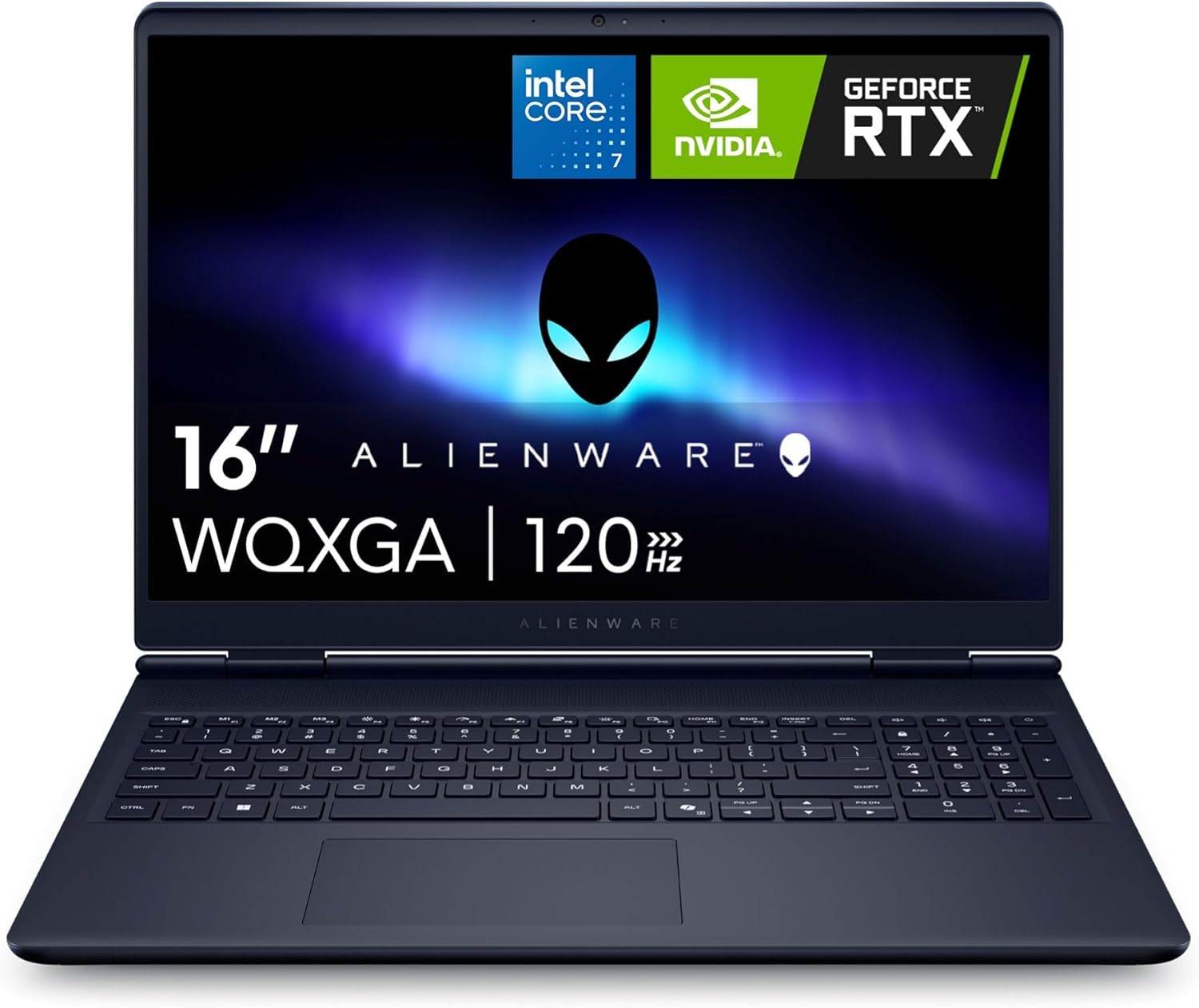
The Alienware 16 Aurora is a gaming laptop that aims to balance raw performance with everyday portability. Powered by an Intel Core 7 processor and NVIDIA GeForce RTX 5060 graphics with 8GB of GDDR7 VRAM, this machine is built to handle modern titles at high settings. The 16-inch WQXGA display runs at 120Hz and uses an anti-glare IPS panel with ComfortView Plus, making it suitable for both competitive gaming and content creation. Based on user feedback, the laptop delivers solid frame rates in games like Crusader Kings 3 and iRacing, though some have noted that it performs best when kept on a desk rather than a lap due to heat output under load.
This laptop targets a wide audience: PC gamers, streamers, esports enthusiasts, college gamers, and work-from-home users who need a single device for gaming and productivity. The RTX 5060 GPU supports DLSS 4 and Nvidia Reflex 2, which can reduce latency and boost framerates in supported titles. The 16GB of DDR5 RAM and 1TB NVMe SSD provide a responsive experience out of the box, and both are user-upgradeable thanks to two SODIMM slots and two M.2 slots. This flexibility means buyers can extend the laptop's lifespan as their needs grow.
Build quality is a highlight. The anodized aluminum lid with an iridescent Alienware logo and magnesium alloy interior give the laptop a premium feel. The chassis measures just 0.89 inches thick and weighs 5.49 pounds, which is reasonable for a 16-inch gaming laptop. The keyboard features a comfortable, pillowed palm rest and a full numeric keypad, making it practical for both gaming and typing. Alienware's Cryo-Tech cooling uses dual fans and three copper heat pipes to keep temperatures in check, and user reviews often praise the system's ability to stay quiet and cool during moderate gaming.
Connectivity is generous, with two USB-A ports, two USB-C ports (one with DisplayPort), HDMI 2.1, an RJ-45 Ethernet jack, and a global headset jack. The inclusion of Wi-Fi 7 (802.11be) ensures fast wireless speeds for online play and streaming. Setting up the laptop is straightforward, with Windows 11 Home pre-installed. Some users reported needing to update drivers manually for sound and drawing tablets, but once updated, the system ran reliably. The 1-year onsite service from Dell adds convenience if hardware issues arise.
However, the laptop has realistic limitations. At 5.49 pounds, it is heavier than many 16-inch ultrathins, making it less ideal for daily commuting. A few reviewers experienced a complete failure after a firmware update, though others found the machine stable after driver updates. The battery life is decent for light tasks but will be shorter during gaming. The RTX 5060 is a capable mid-range GPU, but it won't max out every AAA title at native resolution with full ray tracing. Buyers should temper expectations for ultra settings on the most demanding games.
Overall, the Alienware 16 Aurora is a well-rounded gaming laptop that offers strong performance, upgradeability, and a comfortable design. It is best suited for gamers who want a portable rig for moderate to high settings at 1440p or 1080p, as well as streamers and students who need a reliable workhorse. If you can catch it on sale, the value improves significantly. Just be prepared for a heavier carry and the occasional need to tinker with drivers. For anyone seeking a stylish, capable gaming machine that can grow with them, this Alienware is a worthy contender.
The Alienware 16 Aurora's gaming performance hinges on the Intel Core 7 Processor 240H (10 cores, 16 threads) and the NVIDIA GeForce RTX 5060 with 8GB GDDR7. According to user reports, this combination handles most modern games at 1080p and 1440p with high settings. The 120Hz display pairs well with the GPU, providing smooth motion in fast-paced titles like first-person shooters and racing games. DLSS 4 support helps boost frame rates in ray-traced games, and Nvidia Reflex 2 reduces input latency for a more responsive feel. The 110W total performance power (65W TGP + 45W TDP) ensures the system can maintain solid frame rates without excessive throttling, aided by the effective Cryo-Tech cooling.
The Alienware 16 Aurora uses a refined Cryo-Tech cooling system with dual ultra-thin fans, three copper heat pipes, and four exhaust vents. Air is drawn in through the keyboard and bottom vents, then exhausted out the sides and rear. This design helps keep the CPU and GPU cool during extended gaming sessions. Users report that fan noise is manageable, especially in Quiet Mode activated via F7. However, the bottom can become quite warm when gaming on a lap, so using the laptop on a desk or cooling pad is recommended. The thermal solution appears well-balanced for sustained performance, and the lack of a rear thermal shelf makes the laptop easier to slip into a backpack.


Frequently Asked Questions
Do you need a dedicated GPU for gaming on Windows?
Yes, modern 3D games generally require a dedicated graphics processor for stable frame rates. While modern integrated graphics can handle lighter titles and older releases, demanding games need dedicated video memory to render complex textures properly. Dedicated graphics cards also offload visual processing from the central processor, keeping system thermals more balanced.
How much RAM should you look for in 2026?
Sixteen gigabytes of RAM is the standard baseline for a modern Best Gaming Windows Laptop. Having 16GB allows the operating system, game assets, and background communication software to run without constant memory swapping. Heavier creative workloads or extreme multitasking may benefit from 32GB configurations. Many gaming models also allow users to expand memory later if dual slots are available.
How does display refresh rate impact the gaming experience?
Higher refresh rates allow the screen to show more frames per second, resulting in visibly smoother motion. A 144Hz or 240Hz screen reduces motion blur, which provides a noticeable clarity advantage in fast action scenes. This visual fluidity pairs well with hardware like gaming laptops with MUX switch support that route GPU frames directly to the display. Competitive multiplayer gamers notice the greatest benefit from these elevated refresh rates.
Can budget gaming laptops run major AAA games?
Budget laptops can run many modern games, but visual settings and resolution scaling often require compromise. Entry-tier configurations featuring integrated graphics or lower-wattage chips may need 720p or low graphics presets to maintain playable speeds. Exploring dedicated budget gaming laptop options ensures you have the graphics horsepower necessary for heavier titles. Checking manufacturer system requirements before purchasing helps align realistic expectations with hardware reality.
Does battery life hold up during intensive gaming sessions?
Battery life drops significantly when gaming because high-performance processors and GPUs draw substantial power under load. Most portable computers switch to lower performance profiles on battery power to conserve energy, which causes stuttering in demanding games. Connecting your laptop to its wall adapter remains essential for unlocking full clock speeds and peak display brightness. Expect portable runtimes to vary widely depending on general office tasks versus active 3D rendering.





Write Your Review
No reviews yet. Be the first to share your experience!