


Check laptop support before buying a two-stick kit
A two-module kit only makes sense if your laptop has upgradeable memory and supports both modules. Some systems have soldered RAM, limited slots, or a maximum capacity that rules out an otherwise suitable kit. Check the exact model’s documentation for its supported DDR generation, SODIMM form factor, slot count, capacity limit, and memory speed before ordering.
The best laptop ram upgrade kit with 2 sticks depends on those limits, not just the advertised speed or brand. The supplied listings include DDR3, DDR4, and DDR5 kits, with capacities from 8GB to 64GB and different SODIMM pin counts. DDR generations and form factors aren’t interchangeable, so match the laptop’s specifications first. For a broader look at laptop RAM replacement considerations and laptop memory upgrade specifications, use the linked guides alongside your manufacturer’s documentation.
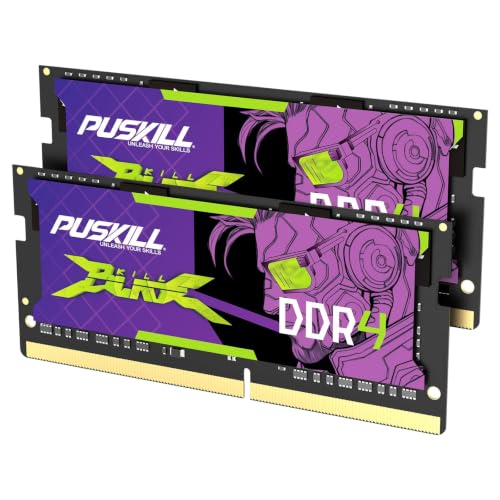
For example, the PUSKILL 32GB DDR4 3200MHz RAM (2x16GB) listing specifies DDR4 SODIMMs and CL22-22-22-52 timings. The A-Tech 32GB (2x16GB) DDR4 2666MHz PC4-21300 listing identifies 260-pin, 1.2V, non-ECC unbuffered modules. The Crucial 32GB DDR5 RAM Kit (2x16GB), by contrast, is a 262-pin DDR5 option. These details can narrow your choices, but they don’t establish compatibility with a particular laptop. Confirm your existing configuration and whether the kit’s total capacity is supported.


Pros
- Supplies two matched 16GB DDR4 SODIMM modules to populate dual memory slots simultaneously.
- Adheres to standard JEDEC 1.2V DDR4 specifications for broad plug-and-play non-ECC mobile system use.
- Operates at up to 2666MHz while maintaining backwards compatibility to downclock on slower DDR4 laptop motherboards.
- Includes manufacturer limited lifetime warranty coverage and technical assistance before and after purchase.
Cons
- Requires two physically accessible 260-pin slots and will not work in laptops with non-upgradeable soldered memory.
- Not compatible with systems requiring desktop DIMMs, DDR3 memory, or newer DDR5 laptop motherboards.
- Actual operating speed is constrained by the laptop memory controller and will not exceed the system hardware limit.
The A-Tech 32GB DDR4 memory kit is designed for laptop owners, mini PC users, and all-in-one desktop owners seeking a memory upgrade using standard mobile components. The package consists of two individual 16GB 260-pin SODIMM modules rated at 2666MHz (PC4-21300), operating at CL19 latency on standard JEDEC 1.2V power. Designed as non-ECC unbuffered RAM with either 1Rx8 or 2Rx8 rank architecture, this kit addresses systems that need straightforward replacement or expansion modules without requiring specialized voltage profiles or custom BIOS adjustments.
Before choosing any laptop RAM upgrade, verifying exact device compatibility is essential. This kit uses the DDR4 260-pin SODIMM form factor, which cannot be installed into older DDR3 slots or newer DDR5 slots due to physical key notches and electrical differences. Additionally, many ultra-thin laptops feature permanently soldered memory that cannot be upgraded, while others provide only a single removable slot. Shoppers must consult their laptop user manual or manufacturer specification sheet to ensure the specific model includes two user-accessible SODIMM slots and supports a total capacity of 32GB with 16GB per module.
Memory capacity and operating frequency are governed by the host computer rather than the module alone. While this A-Tech kit is rated to transfer data at up to 2666MHz, the actual operating frequency will depend entirely on the processor and motherboard chipset. If your laptop natively supports 2400MHz or 2133MHz DDR4, these modules are engineered to automatically downclock to match that lower supported threshold. Installing two identical modules from this kit also allows systems supporting multi-channel architectures to take advantage of dual-channel memory configurations, provided the host hardware supports that feature.
Physical installation requires careful handling and adherence to the host system service guidelines. Laptop owners should power off the device completely, disconnect the external power adapter, and follow the manufacturer instructions regarding internal battery disconnection before accessing memory slots. The modules should always be handled by their edges to avoid contact with the gold pins or surface-mounted components. Because laptop disassembly procedures vary widely by brand and model, following official service documentation ensures a safe upgrade process without causing hardware damage.
A primary consideration when purchasing laptop memory is avoiding assumptions about performance. Adding memory capacity does not increase storage drive space, nor does it guarantee faster processor performance or gaming frame rates on its own. Additional RAM is beneficial when a laptop is currently constrained by limited memory, which can lead to excessive pagefile use during heavy multitasking, browser tab sprawl, or productivity software execution. If your system is already meeting its workload needs without exhausting available memory, expanding capacity may produce little noticeable change.
This A-Tech 32GB kit represents a dependable, specification-compliant option for users whose laptop documentation explicitly verifies support for 16GB DDR4 260-pin SODIMMs. Provided your laptop has two available upgrade slots, supports the total capacity, and uses standard non-ECC unbuffered DDR4, this kit delivers a reliable way to equip an aging or memory-limited mobile workstation with plenty of operational headroom.
Compatibility for laptop memory depends on physical design, memory generation, and system firmware. This A-Tech kit utilizes standard 260-pin DDR4 SODIMM modules. It cannot be used in desktop computers requiring 288-pin DIMMs, nor can it fit into DDR3 or DDR5 sockets. Shoppers should verify that their computer specifies DDR4 SODIMM support before purchasing.
System capacity limits must also be checked directly with the hardware manufacturer. Some budget or older laptops cap total supported system memory at 16GB, meaning two 16GB modules would exceed the hardware or BIOS addressing limits. Verify whether your specific model supports 32GB in total and whether memory slots are open, partially occupied, or soldered directly to the motherboard.
A-Tech provides a limited lifetime warranty on these memory modules, which protects buyers against manufacturing defects under normal operating conditions. In addition, the manufacturer maintains a technical support team that can assist users with general questions before purchase or during troubleshooting if a system fails to recognize the newly installed memory.

Pros
- Two-module 32GB matched kit (2x16GB) allows dual-slot memory configurations without mixing disparate brands.
- Versatile speed support allows automatic downclocking to 5200MHz or 4800MHz if the laptop processor requires it.
- Supports both Intel XMP 3.0 and AMD EXPO profiles directly on the module.
- Standard 1.1V operating voltage adheres to baseline DDR5 power specifications for mobile systems.
- Built using non-ECC 1Rx8 memory architecture from an established semiconductor manufacturer.
Cons
- Incompatible with DDR4 laptop motherboards and laptops that utilize soldered or non-removable memory.
- Requires two vacant SODIMM slots; laptops with only one accessible slot cannot use both modules.
- Actual operating speed is dictated by the laptop motherboard and processor capabilities, not solely by the module rating.
The Crucial CT2K16G56C46S5 is a 32GB laptop memory kit consisting of two 16GB DDR5 SODIMM modules. Operating on the 262-pin SODIMM standard, this kit is engineered for modern notebook systems that accept removable DDR5 memory. With a rated data transfer rate of 5600MHz (PC5-44800) at 1.1V, this memory kit is designed for users who need additional memory headroom for intensive multitasking, content creation, software development, or gaming. It features a non-ECC, single-rank (1Rx8) configuration per module and provides integrated support for both Intel XMP 3.0 and AMD EXPO profiles.
Before considering this memory kit, thorough compatibility verification is essential. DDR5 SODIMMs are physically and electrically incompatible with older DDR4 slots, and they will not fit desktop memory slots. Laptop owners must check their device service manual or manufacturer specifications to confirm whether their exact model uses removable SODIMM memory or soldered RAM. Many ultraportable notebooks solder memory directly to the system board, leaving no open slots. Additionally, buyers should verify that their laptop supports 16GB module densities and at least 32GB of total system memory across two physical slots.
A critical consideration for laptop memory is the distinction between rated module speed and actual operating speed. This Crucial kit is rated for 5600MHz, but it includes internal profiles that allow it to downclock to 5200MHz or 4800MHz. If your laptop processor or motherboard chipset only supports 4800MHz or 5200MHz, the modules will operate at that lower threshold rather than 5600MHz. Installing a 5600MHz module does not force an unsupported laptop to run beyond its engineered platform limits. Operating speed and memory profile access depend entirely on the BIOS and processor specifications of your specific notebook.
In terms of configuration, this package contains two identical 16GB modules. Installing both modules enables two memory channels on supported motherboards, provided both SODIMM slots are populated. If your laptop already has one module soldered and only offers a single expansion slot, this two-module kit will leave you with an unused module. When replacing an existing memory setup, review the laptop manufacturer instructions regarding safety precautions, power disconnection, and proper seating of SODIMM retaining clips.
Realistic limitations must also be acknowledged. Adding memory cannot overcome bottlenecks caused by an underpowered processor, limited thermal headroom, or slow secondary storage. Memory upgrades help specifically when existing physical RAM is saturated by open applications and background processes. Furthermore, accessing internal laptop slots may require specific tools and careful handling, which varies by manufacturer and chassis model.
For owners of compatible DDR5-enabled laptops from Intel Core or AMD Ryzen platforms that have two empty or upgradeable SODIMM slots, this Crucial 32GB kit offers a standardized, specification-compliant solution. Verify your laptop model documentation, confirm that your system supports DDR5 SODIMMs at 1.1V, and verify slot accessibility before purchasing.
Compatibility for the Crucial CT2K16G56C46S5 depends on your laptop exact hardware specifications. This kit uses the 262-pin DDR5 SODIMM form factor, which has a distinct notch position and electrical design that prevents it from fitting into DDR4 or desktop DIMM slots. It cannot be used in systems built for previous DDR generations.
Shoppers must confirm whether their laptop memory is user-upgradeable. Laptops with soldered LPDDR5 or soldered DDR5 cannot accept SODIMM modules unless a separate SODIMM expansion slot is explicitly provided. Consult your laptop technical documentation to confirm slot counts, maximum supported capacity per slot, and system board limits before purchasing.
While this Crucial DDR5 kit carries a maximum rated speed of 5600MHz, system operating speed is determined by the laptop processor and BIOS configuration. The product includes support to downclock automatically to 5200MHz or 4800MHz to align with platform limits, such as those found on select 12th or 13th Gen Intel Core systems and AMD Ryzen mobile platforms.
The modules also incorporate Intel XMP 3.0 and AMD EXPO profile support. However, access to customized memory profiles requires compatible BIOS support from the laptop maker. Standard operation uses regular JEDEC platform profiles at 1.1V, ensuring broad operational stability even when user overclocking settings are not present in the laptop BIOS.
This product is supplied as a matched 32GB kit containing two individual 16GB modules. Each module is built with a single-rank 1Rx8 organization and operates non-ECC unbuffered memory architecture at standard 1.1V power consumption.
Using both modules simultaneously requires a laptop with two open 262-pin SODIMM slots. If your notebook only features a single upgrade slot alongside soldered onboard RAM, a two-module kit is not ideal, and a single-module configuration should be considered instead. Check your system hardware manual to confirm whether your laptop supports a dual 16GB arrangement.


FAQs
How can I tell whether my laptop supports a RAM upgrade?
Check the exact model’s service manual or manufacturer specifications. Confirm that memory isn’t fully soldered and review the available slots, supported DDR generation, maximum capacity, and memory speed.
Can I use DDR4 or DDR5 SODIMMs in any laptop?
No. The laptop must support the kit’s DDR generation and SODIMM type. DDR3, DDR4, and DDR5 modules aren’t interchangeable; pin count also differs between the listed DDR4 and DDR5 examples.
What does a two-stick kit’s capacity mean?
It’s the combined capacity of both modules. A 2x16GB kit totals 32GB, while a 2x32GB kit totals 64GB. Check the laptop’s maximum supported memory and available slots before selecting a capacity.
Will a kit run at its advertised speed in my laptop?
Not necessarily. The laptop’s supported memory speed determines the operating speed; listings for some DDR4 kits specify downclocking to supported rates. Verify the laptop documentation rather than assuming the advertised rate will apply.
Should I replace both modules or mix a kit with existing RAM?
A matched kit provides two modules with the listed capacity and specifications, but whether it’s appropriate depends on your laptop’s slots and configuration. Mixing memory can affect compatibility or operating speed, so check manufacturer guidance before combining modules.
Do ECC, voltage, and timings matter for these laptop kits?
They matter when matching the laptop’s requirements. The listings identify several options as non-ECC, and specify details such as 1.2V DDR4 or 1.1V DDR5 and particular timings. Compare those specifications with the laptop documentation; don’t assume every listed module suits your system.
What should I do before installing RAM?
Follow the laptop maker’s service instructions and safety guidance, and confirm the module orientation and slot arrangement in its manual. The DDR4 laptop memory guide may help you review DDR4 options, but your exact model’s requirements remain decisive.




Write Your Review
No reviews yet. Be the first to share your experience!