


Cramped desk surfaces and bulky desktop towers often force builders to compromise on airflow or component clearance. Selecting the best pc cases for small spaces requires balancing a compact footprint with sufficient interior volume for modern cooling hardware. Many builders face suffocated graphics cards or squeezed power supplies when downsizing their setup. Careful analysis of manufacturer chassis dimensions and intake designs shows that compact enclosures no longer demand thermal sacrifices. Models like the MasterBox Q300L and H5 Flow show how perforated airflow panels maintain low operating temperatures while saving workspace.
Evaluating clearance limits before buying hardware prevents frustrating assembly bottlenecks. You’ll want to verify maximum GPU length clearance and CPU cooler height tolerance, especially when installing liquid cooling radiators. Many compact chassis support modern graphics cards alongside standard ATX power supplies, making small desk setups remarkably capable. If you want an affordable setup, pairing a compact frame with a budget-friendly high airflow chassis from our budget airflow case guide stretches your budget further. Checking internal layouts and cable channels ensures your compact rig stays neat and well-ventilated.

Pros
- Excellent 270-degree visibility for showcasing hardware.
- Smart A/B cooling layout enhances airflow and reduces heat buildup.
- Includes three fans for immediate cooling out of the box.
- Compact size fits easily on desks or in tight spaces.
- Magnetic dust filter is easy to remove and clean.
Cons
- Limited to micro-ATX boards, no full ATX support.
- Only includes basic fans; may want to upgrade for high-end builds.
- Cable management might be tight in such a compact case.
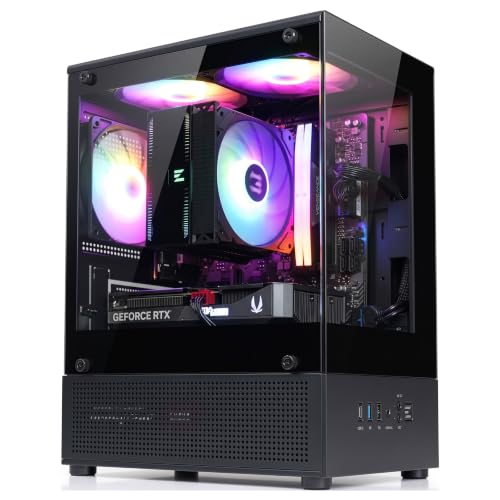
The MOROVOL V3 MATX PC Case is a micro-ATX tower that packs a visual punch with its 270-degree panoramic tempered glass panels. For U.S. PC gamers, streamers, and setup builders, this case offers an affordable way to showcase your build without sacrificing desk space. It's designed to fit compact gaming rigs while still supporting standard components like full-size GPUs and ATX power supplies.
This case is best suited for gamers who want a clear view of their hardware, especially those building RGB-heavy systems or themed setups. Whether you're a casual gamer, an esports player, or a college gamer setting up a dorm desk, the V3's small footprint (just over 13 inches tall) makes it easy to integrate into almost any workspace. The three pre-installed fans provide decent airflow for modest builds, and the A/B division cooling layout separates the power supply and hard drive zone from the motherboard area, which helps keep temps lower during long gaming sessions or streaming on Twitch.
Build quality is solid for the price point. The tempered glass panels feel sturdy, and the steel chassis offers enough rigidity for daily use. The magnetic top dust filter is a nice touch, letting you clean without tools. The IO panel includes one USB 3.0 and one USB 2.0 port, which is basic but functional for connecting a gaming mouse, keyboard, or headset. Cable management is doable but requires some patience due to the compact interior, and the included fans are basic 3-pin units, so upgrading to PWM fans would improve noise and control.
Setup is straightforward: the case accommodates standard M-ATX motherboards, and the power supply mounts behind the motherboard tray, which keeps the main chamber clean. However, if you're using a large CPU cooler or a long GPU, check clearance first based on the dimensions. The case supports up to 7 fans total, so you can add more for better cooling if needed. Maintenance is easy thanks to the removable dust filter and tool-free side panels.
A realistic limitation is that the case is only for micro-ATX or smaller boards. If you plan to upgrade to a full ATX motherboard later, you'll need a different case. Also, while the panoramic glass looks great, it does show fingerprints and dust quickly, so expect to wipe it down regularly. For the price, though, the MOROVOL V3 delivers impressive aesthetics and adequate cooling for mid-range gaming PCs, making it a strong choice for budget-conscious builders.
Overall, if you're a PC gaming enthusiast building a compact M-ATX system and want a stylish case that lets your components shine, the MOROVOL V3 is a solid bet. It's not for hardcore overclockers with massive cooling needs, but for everyday gaming, streaming, or workstation use, it offers great value and a clean, modern look that fits right in on any desktop or under a desk.
The MOROVOL V3 uses an A/B division cooling layout that separates the power supply and hard drive area from the motherboard and GPU chamber. This design helps reduce heat soak and keeps the main cavity cooler. The case includes three basic 3-pin fans (one rear exhaust and two top intake or exhaust depending on setup) and supports up to seven 120mm fans total. The top, rear, and bottom mesh areas provide plenty of ventilation. The magnetic dust filter on the top panel is easy to remove for cleaning. For best cooling performance, consider adding one or two front-mounted intake fans, as the case supports them. The included fans are adequate for entry-level to mid-range builds, but enthusiasts may want to upgrade to PWM fans with higher static pressure for better airflow through tight spaces.
The case features a steel frame with large tempered glass panels on the front and left side, giving a 270-degree view. The glass is thick and feels sturdy, though it does attract fingerprints. The chassis is surprisingly rigid for its lightweight design (about 10.7 pounds). The IO ports (one USB 3.0, one USB 2.0) are mounted on the top front edge, easy to access. The magnetic dust filter is well-designed and stays in place. The interior layout is clean, with the power supply mounted behind the motherboard tray to hide cables. However, the cable management space is limited, so using modular PSUs and slim cables is recommended. Overall, the build quality is impressive for a sub-$50 case, offering good value for budget-conscious gamers.

Pros
- Excellent airflow thanks to the perforated design on all sides, ideal for gaming sessions.
- Modular I/O panel offers multiple placement options for desk and setup flexibility.
- Magnetic dust filters are easy to remove and clean, keeping the interior dust-free.
- Compact size fits well on desks or in tight spaces while still supporting large GPUs and coolers.
- Transparent side panel lets you show off your gaming components and RGB lighting.
Cons
- The case includes only one pre-installed fan, so additional fans are recommended for optimal cooling.
- Cable management space is limited due to the compact size, requiring careful routing.
- The side panel is acrylic (not tempered glass), which may be less scratch-resistant over time.
The Cooler Master MasterBox Q300L is a Micro-ATX PC case designed for PC gamers, setup builders, and anyone looking to create a compact but capable gaming rig. It supports Micro-ATX and Mini-ITX motherboards, making it a versatile choice for both budget and mid-range builds. Whether you are a competitive gamer, casual player, or streamer, this case offers a solid foundation for a performance-focused gaming PC.
For gaming performance, the Q300L emphasizes airflow and cooling. Its perforated design on all sides promotes excellent heat dissipation, which is crucial for maintaining low temperatures during intense gaming sessions. The case can accommodate a 240mm liquid cooler and up to five fans, allowing you to build a system that stays cool even under heavy loads. The open thermal design helps reduce heat buildup, which can improve the longevity and stability of your components.
Build quality is practical and functional. The case features a sturdy steel frame with a transparent acrylic side panel, letting you show off your gaming hardware and RGB lighting. The magnetic dust filters are a nice touch, adding a distinctive look while keeping dust out, which reduces cleaning frequency. The modular I/O panel is a standout feature, allowing you to reposition it to the front, top, or bottom on either side. This flexibility is great for desk setups where cable routing or access needs vary.
Setup and maintenance are straightforward. The compact size (15.4 x 9.1 x 15 inches) means it fits well on desks or in tight spaces, though cable management can be a bit challenging due to limited space behind the motherboard tray. The case includes one pre-installed 120mm fan, but you will likely want to add more fans or a liquid cooler for optimal airflow. The magnetic dust filters are easy to remove and clean, making regular maintenance simple.
One realistic limitation is the single pre-installed fan, which may not be sufficient for high-heat gaming builds without additional cooling. Also, the acrylic side panel is more prone to scratches than tempered glass, so careful handling is recommended. The compact design also means less room for cable management, so plan your build accordingly.
Overall, the Cooler Master MasterBox Q300L is a practical choice for PC gamers, setup builders, and anyone building a compact gaming PC on a budget. It offers good airflow, modular I/O, and a clean look that fits well in most gaming setups. If you prioritize cooling flexibility and a compact footprint, this case is worth considering for your next gaming build.
The Cooler Master MasterBox Q300L is designed with an open thermal approach, featuring perforated panels on all sides to maximize airflow. This design helps dissipate heat effectively, keeping your gaming components cool during long sessions. The case supports a 240mm liquid cooler at the front and up to five 120mm fans, giving you plenty of options to customize your cooling setup. While it comes with one pre-installed 120mm fan, adding more fans or a liquid cooler is recommended for high-performance builds. The magnetic dust filters on the top and front panels add a distinctive look while preventing dust buildup, reducing maintenance frequency.
The MasterBox Q300L features a steel frame with a transparent acrylic side panel, offering a balance of durability and visibility. The acrylic panel is lighter than tempered glass but may be more susceptible to scratches, so handle with care. The case has a compact footprint (15.4 x 9.1 x 15 inches) and weighs just over a pound, making it easy to move or place on a desk. The magnetic dust filters are well-designed and easy to remove for cleaning. The modular I/O panel is a practical addition, allowing you to reposition the power button, USB ports, and audio jacks to suit your setup. Overall, the build quality is solid for its price point, with a focus on functionality and airflow.


Pros
- Excellent airflow design with mesh panels and perforated shroud for GPU cooling.
- Supports large radiators (360mm front, 240mm top) for liquid cooling enthusiasts.
- Pre-installed fans provide good starting airflow for most gaming configurations.
- Cable management system with channels and straps makes building and organizing easy.
- Tempered glass side panel showcases your build nicely.
Cons
- Bottom fan mounts for GPU cooling are not included, requiring additional fan purchases for optimal effect.
- Cable management space behind motherboard tray is somewhat limited due to compact size.
- Front panel I/O is basic (2x USB-A, no USB-C) – some users may want a USB-C port.
The NZXT H5 Flow 2024 is a compact ATX mid-tower PC case that prioritizes airflow and build convenience. It's designed for PC gamers and gaming setup builders who want a clean, high-performance foundation without taking up too much desk space. With its ultra-fine mesh panels and perforated PSU shroud, this case focuses on getting cool air to your components, especially your GPU.
For performance, the H5 Flow 2024 delivers impressive cooling potential right out of the box. It comes with two 120mm Quiet Airflow fans (one front, one rear) to get you started. But the real highlight is the support for up to a 360mm radiator in the front and a 240mm radiator on top, giving you plenty of room for liquid cooling setups. The perforated shroud allows two bottom 120mm fans (not included) to feed fresh air directly to your graphics card, which can make a noticeable difference in GPU temperatures during long gaming sessions or streaming.
Build quality is solid for the price point. The steel frame feels sturdy, the tempered glass side panel is clean and secure, and the mesh panels are fine enough to block dust while letting air pass through. Cable management is a strong point thanks to wide channels, Velcro straps, and pre-routed hooks. Even first-time builders will find it easy to keep things tidy. The compact dimensions still support full-size ATX power supplies and most graphics cards, but you'll want to double-check GPU length clearance if you plan to install a front radiator.
Ease of setup is above average – panels come off easily, and the included standoffs and screws are well-organized. The lack of a USB-C port on the front I/O might be a minor drawback for those with modern motherboards, but it's a common omission in this price range. The case also has a relatively small desk footprint, making it a good fit for dorm rooms, compact gaming desks, or home offices where space is tight.
One realistic limitation is that the bottom fan spots for GPU cooling aren't populated, so you'll need to grab a couple of extra fans to fully unlock that feature. Also, the cable management area behind the motherboard is a bit tighter than in larger cases, so you'll need to be deliberate with your cable routing. But for most users – whether you're a competitive gamer, a casual builder, or a streamer – the H5 Flow 2024 offers a very balanced mix of cooling, looks, and practicality.
Overall, this case is a great choice for anyone building a mid-range to high-end gaming PC on a budget. It works well for esports rigs, streaming PCs, and everyday gaming setups. If you value airflow and clean cable management without the extra bulk, the NZXT H5 Flow 2024 is definitely worth considering.
Frequently Asked Questions About Compact PC Cases
Can a Micro-ATX chassis fit a standard ATX power supply?
Yes, most Micro-ATX cases accommodate standard ATX power supplies, though depth clearance varies by chassis. Models like the Zalman CUBIX-G support units up to 140mm, while the MasterBox Q300L fits supplies up to 160mm. Non-modular power supplies with excess cabling can crowd the lower compartment if the internal drive cage is fixed. Choosing a modular power supply simplifies cable routing in compact enclosures.
What graphics card clearance is needed in the best pc cases for small spaces?
Aim for at least 300mm of GPU clearance to comfortably accommodate modern dual-fan and triple-fan graphics cards. The Cooler Master MasterBox Q300L supports GPUs up to 360mm, while the Lian Li V100 fits cards up to 420mm. Front-mounted liquid coolers reduce available GPU clearance by roughly 30mm to 55mm. Always subtract radiator and fan thickness from listed clearance before finalizing your parts.
Do compact PC cases cause thermal throttling during gaming?
No, compact enclosures do not cause thermal throttling if they feature perforated mesh panels and proper fan placement. Cases with fine mesh ventilation, such as the NZXT H5 Flow, direct intake airflow straight across critical components. Solid glass panels can restrict airflow if intake vents are too small, requiring exhaust fans to expel heat. Setting up balanced fan curves ensures components stay within safe operating ranges.
Can you install liquid cooling radiators inside a compact PC chassis?
Top and front radiator support depends heavily on chassis clearance and motherboard component height. The NZXT H5 Flow accommodates a 360mm radiator in front and a 240mm unit on top, while smaller towers typically max out at 240mm. Top-mounted coolers can sometimes collide with tall RAM heat spreaders or bulky motherboard heatsinks. Checking standoff offsets against radiator thickness avoids fitment issues during assembly.
Are panoramic glass panels practical for small gaming setups?
Yes, dual-glass enclosures offer full hardware visibility without demanding excessive desk real estate. The MOROVOL V3 utilizes a 270-degree panoramic glass design while keeping Micro-ATX dimensions compact. Builders seeking refined aesthetics can compare these cases with white showcase chassis designs to match their desktop theme. Separate rear power supply chambers and ventilated side panels ensure hardware receives fresh air despite the solid glass front.


Write Your Review
No reviews yet. Be the first to share your experience!