


For most modern titles, can gaming laptops compete with desktops is a question with a nuanced answer: high-end mobile units often deliver 80-90% of equivalent desktop performance, but with significant tradeoffs in sustained thermal output and upgradeability.
While a desktop PC built with the same generation of components will generally outperform a laptop due to better airflow and higher power limits, the gap has narrowed considerably in recent years. This difference is primarily driven by the Total Graphics Power (TGP) constraints of mobile GPUs and the physical size limitations of laptop cooling systems.
Many buyers hesitate to purchase a gaming laptop because they fear leaving performance on the table compared to a static tower. However, the convenience of a portable high-performance machine is a major benefit for students, professionals, and gamers who move between locations. Understanding the specific hardware limitations, such as thermal throttling and battery drain, helps you decide if the portability is worth the slight performance dip. The options listed below represent a range of configurations that illustrate these tradeoffs, from integrated graphics for light play to dedicated high-refresh setups for competitive gaming.


Pros
- Strong gaming performance for its price with i7 and RTX 4050
- 165Hz display with thin bezels provides immersive, fluid visuals
- Fast 1TB Gen 4 SSD and 16GB DDR5 RAM for quick boot and game loads
- Good connectivity including Thunderbolt 4, HDMI 2.1, and Wi-Fi 6
- Effective cooling system with customizable fan curves
Cons
- Battery life around 5 hours may require frequent charging during extended use
- Weighs 4.66 lbs, making it less portable than some ultrabooks
- Only 6GB VRAM on RTX 4050 may limit future AAA titles at high settings
The Acer Nitro V 15 (ANV15-52-76NK) is a dedicated gaming laptop that hits a sweet spot for PC gamers, competitive esports players, streamers, and content creators who need reliable performance without breaking the bank. Powered by an Intel Core i7-13620H processor and an NVIDIA GeForce RTX 4050 GPU, this machine is built to handle modern games, multitasking, and creative workloads like video editing or live streaming.
For gamers, the real highlight is the 15.6-inch Full HD IPS display with a 165Hz refresh rate. This means you get buttery-smooth motion in fast-paced shooters like Valorant or Call of Duty, with minimal ghosting and precise tracking. The 1920x1080 resolution keeps frame rates high, and the thin bezels offer an immersive 82.64% screen-to-body ratio. The RTX 4050 supports DLSS 3.5 and ray tracing, so even demanding titles like Cyberpunk 2077 can look stunning with AI-enhanced visuals.
Performance is backed by 16GB of DDR5 RAM (upgradeable to 32GB) and a 1TB PCIe Gen 4 SSD. Load times are snappy, and you can keep multiple apps open without lag. The laptop also includes Wi-Fi 6 and Killer Ethernet E2600 for low-latency online play, plus a Thunderbolt 4 port that supports fast charging, data transfer, and video output. The dual-fan cooling system with adjustable fan speeds helps keep the CPU and GPU cool during extended sessions, though the laptop does get warm under heavy load.
Build quality is solid with a black plastic chassis that feels durable, though it's not ultra-premium. The backlit keyboard includes a numeric keypad, making it practical for both gaming and productivity tasks. The 4.66-pound weight is manageable for moving between rooms but not ideal for daily commuting. The 5-hour battery life is typical for a gaming laptop, so expect to stay plugged in for gaming sessions.
Setting up the software is straightforward with Windows 11 pre-installed and Acer's NitroSense utility for monitoring performance and customizing fan curves. The AI-powered PurifiedView and PurifiedVoice features improve webcam and microphone quality for Discord calls or streaming, though the built-in webcam is only 720p. One limitation is the RTX 4050's 6GB VRAM, which may struggle with ultra textures in future AAA titles, but for 1080p gaming and most current releases, it's plenty capable.
Overall, the Acer Nitro V 15 is a practical recommendation for college gamers, work-from-home gamers, and anyone building a versatile setup that can handle both gaming and daily tasks. It offers strong value at its price point, and the 165Hz display combined with RTX 4050 makes it a reliable choice for competitive and casual gamers alike.
The combination of the Intel Core i7-13620H (10 cores, up to 4.9 GHz) and NVIDIA GeForce RTX 4050 (6GB GDDR6, 194 AI TOPS) delivers excellent 1080p gaming performance. In competitive titles like Fortnite and Apex Legends, you can expect well over 100 FPS at high settings, while more demanding games like Elden Ring or Assassin's Creed Mirage run smoothly with DLSS enabled. The 165Hz display ensures every frame looks fluid, giving you a clear edge in fast-paced shooters.
The 15.6-inch Full HD IPS panel offers vibrant colors and decent contrast with a 165Hz refresh rate. The 16:9 aspect ratio and thin bezels create an immersive gaming experience. Response times are good enough to minimize ghosting, and the 300-nit brightness works well indoors. For a gaming laptop at this price, the display is a strong selling point.
Port selection is generous: one Thunderbolt 4 (USB-C with 65W charging, DisplayPort), one USB 3.2 Gen 2 Type-C, two USB 3.2 Gen 1 Type-A, HDMI 2.1, Gigabit Ethernet, and a headphone jack. This setup supports dual external monitors, fast peripherals, and reliable wired networking. Wi-Fi 6 and Bluetooth 5.2 round out wireless connectivity.

Pros
- Strong price-to-performance ratio with RTX 4050 and 165Hz display
- AI-powered graphics and DLSS 3.5 support for modern games
- Easy RAM upgrade path to overcome the 8GB bottleneck
- Solid connectivity including Thunderbolt 4 and Wi-Fi 6
- Effective cooling system with customizable fan profiles
Cons
- 8GB RAM is insufficient for many modern AAA titles out of the box
- Some user reports of screen ghosting at high refresh rates
- Fan noise can be noticeable under heavy load in performance mode
The Acer Nitro V 15 (model ANV15-52-586Z) is a budget-friendly gaming laptop that aims to deliver solid performance without breaking the bank. It's powered by an Intel Core i5-13420H processor and an NVIDIA GeForce RTX 4050 laptop GPU, which together provide enough muscle for esports titles, popular battle royale games, and even some AAA experiences at medium settings. The 15.6-inch Full HD IPS display with a 165Hz refresh rate is a standout feature at this price point, offering smooth motion and decent color reproduction for both gaming and content consumption.
This laptop is best suited for PC gamers on a tight budget, college gamers looking for a portable rig, and casual gamers who want to play modern titles without spending a fortune. It also works well for light content creation or streaming, thanks to the RTX 4050's AI capabilities and DLSS 3.5 support. However, it's not a turn-key solution for demanding users right out of the box, as the 8GB of DDR5 RAM is a clear bottleneck. Many user reviews highlight that upgrading to 16GB or 32GB significantly improves performance and eliminates stuttering in games like Hogwarts Legacy.
In terms of real-world gaming performance, the RTX 4050 handles most games at 1080p with high settings, and the 165Hz screen makes fast-paced shooters feel responsive. The dual-fan cooling system does a good job keeping temperatures in check, though the fans get loud in performance mode. The keyboard is comfortable for gaming with a backlit layout and numeric keypad, but the spacebar lacks backlighting, which some users may find odd. Build quality is typical for this price range: mostly plastic with a sturdy feel, and the laptop weighs 4.66 pounds, making it portable enough for a backpack.
Connectivity is a strong point, with Thunderbolt 4, HDMI 2.1, three USB 3.2 Gen 1 ports, and Wi-Fi 6. This makes it easy to connect to external monitors, high-speed storage, or a gaming dock. The Acer PurifiedVoice noise reduction technology helps with in-game chat and Discord calls, though the built-in microphone is average. Setting up the laptop is straightforward, but you'll want to update drivers and consider a fresh Windows install if you encounter any pre-installed software issues, as some users reported.
The biggest limitation is the 8GB RAM, which causes stuttering and high memory usage even on the desktop. Upgrading the RAM is simple (two DDR5 slots), and many users recommend doing it right away. Another potential issue is screen ghosting at 165Hz, which may be noticeable in fast-paced games. Fan noise under load is also worth noting if you play in a quiet room. Despite these drawbacks, the Acer Nitro V 15 offers excellent value for its price, especially after a RAM upgrade.
If you're a budget-conscious gamer, a college student, or someone building their first gaming setup, this laptop is a practical choice. It's not perfect out of the box, but with a small investment in more RAM, it becomes a very capable machine for gaming, streaming, and everyday use. For esports players or those who prioritize competitive performance, the 165Hz display and RTX 4050 provide a smooth experience in games like Valorant, Fortnite, and Overwatch 2. Just be prepared to spend a little extra time and money to unlock its full potential.
The Acer Nitro V 15's RTX 4050 GPU and Intel i5 processor deliver solid 1080p gaming performance. In esports titles like CS:GO and Valorant, you can expect well over 100 FPS on high settings, taking full advantage of the 165Hz display. For more demanding games like Cyberpunk 2077, DLSS 3.5 and frame generation help maintain playable frame rates at medium settings. The 8GB RAM is a bottleneck here, causing occasional stutters in open-world games; upgrading to 16GB resolves this. The dual-fan cooling system keeps the CPU and GPU from throttling during long sessions, though the fans become audible in performance mode. Overall, this laptop offers great gaming value once you address the memory limitation.
The Acer Nitro V 15 features a dark, understated design with a glossy Acer logo on the lid and subtle gradient accents. The chassis is primarily plastic but feels sturdy enough for daily use. At 4.66 pounds and 0.93 inches thick, it's reasonably portable for a 15.6-inch gaming laptop. The keyboard includes a backlit layout with a numeric keypad, though the spacebar lacks illumination. The touchpad is responsive, but most gamers will use an external mouse. The display has thin bezels on the sides, giving an 82.64% screen-to-body ratio, and the hinge feels solid. Port placement is practical, with USB ports on both sides and the HDMI and Thunderbolt 4 on the rear. Overall, the build quality meets expectations for the price range, with no major creaking or flex during normal use.

Pros
- Exceptional gaming performance from the Intel Core i7 and RTX 5060, handling modern titles at high settings.
- 165Hz display with fast response time provides buttery-smooth gameplay in fast-paced shooters.
- Robust cooling solution keeps temperatures manageable during long sessions or heavy workloads.
- Plenty of storage and memory for gaming and content creation, with easy upgrade options.
- Customizable RGB adds flair to any gaming setup, with a stealth mode for professional environments.
Cons
- Battery life is limited (around 2 hours) under heavy use, so you'll need to stay plugged in for gaming.
- At 5.83 pounds, it's heavier than some competitors, making it less portable for daily carry.
- FHD+ resolution may not satisfy users seeking higher pixel density for content creation or AAA titles.
The ASUS ROG Strix G16 (2025) is a new 16-inch gaming laptop that packs a serious punch for its size. Powered by an Intel Core i7-14650HX processor and an NVIDIA GeForce RTX 5060 laptop GPU (based on the Blackwell architecture with DLSS 4), this machine is built for gamers who want desktop-level performance in a more portable package. It also comes with 16GB of DDR5-5600MHz RAM and a 1TB PCIe Gen 4 SSD, ensuring fast load times and smooth multitasking for both gaming and productivity.
This laptop is best suited for competitive gamers, esports players, and streamers who need high frame rates and low latency. The 16-inch FHD+ display offers a 165Hz refresh rate with a 3ms response time, making it ideal for fast-paced games like Valorant, Overwatch 2, or Apex Legends. The ACR film helps reduce glare and enhances contrast, so you can see enemies clearly even in bright environments. For content creators, the 16:10 aspect ratio gives a bit more vertical space for editing timelines or browsing documents.
In terms of real-world performance, the RTX 5060 with DLSS 4 delivers noticeable improvements in visual clarity and frame rates without sacrificing responsiveness. The keyboard is esports-ready with good key travel and responsive actuation, making it comfortable for extended gaming sessions. The Dolby Atmos audio provides immersive sound, though the built-in speakers are decent for casual listening—you'll likely want a dedicated gaming headset for competitive play. The cooling system uses a vapor chamber, tri-fan technology, and liquid metal on the CPU, which keeps the laptop cool and quiet even under heavy load, reducing thermal throttling during long gaming marathons.
Build quality is solid, with a durable chassis in Eclipse Gray that feels premium. The full-surround RGB light bar and Aura Sync compatibility let you customize the lighting to match your gaming setup. Stealth Mode is a nice touch for when you need to work or study without distraction. The laptop also offers tool-free access to the RAM and SSD, making upgrades a breeze if you need more storage or memory down the line. Connectivity is great with Wi-Fi 7 for lag-free online gaming and three USB 3.0 ports for peripherals.
Setup is straightforward: it comes with Windows 11 Home pre-installed and a 3-month PC Game Pass, so you can dive right into your library. The software (Armoury Crate) gives you control over performance profiles, cooling, and RGB lighting, though it can feel a bit cluttered initially. One limitation is the battery life—under gaming use, you'll get only around 2 hours, so you'll need to stay plugged in for serious sessions. The laptop is also a bit heavy at 5.83 pounds, which might not be ideal if you frequently move between classes or co-working spaces.
Overall, the ASUS ROG Strix G16 (2025) is a compelling choice for U.S. PC gamers who want a balanced mix of raw performance, fast display, and customizable aesthetics. It works well for competitive gaming, streaming, and even light content creation, thanks to the RTX 5060's encoder. While it has some portability trade-offs, the performance and cooling make it a strong contender for your next gaming laptop. If you're a competitive gamer or streamer looking for a solid mid-range upgrade, this model is worth considering.
The ASUS ROG Strix G16 (2025) is built around the Intel Core i7-14650HX and NVIDIA RTX 5060, a combination that handles modern titles at high to ultra settings with ease. For competitive games like Fortnite and CS2, you can expect well over 100 FPS at the native FHD+ resolution, thanks to the 165Hz display's fast response. The DLSS 4 support further boosts frame rates and image quality in supported games, making it a strong choice for esports and AAA gaming alike.
The laptop's chassis is made from durable materials with a sleek Eclipse Gray finish that resists fingerprints. The hinge is sturdy, and the keyboard deck doesn't flex under pressure. The tool-free access for RAM and SSD is a welcome practical touch, allowing easy upgrades without voiding the warranty. Overall, the build feels premium and capable of surviving daily transport between home, work, or a LAN party.
ROG's Intelligent Cooling system features a vapor chamber covering the CPU and GPU, tri-fan technology, and liquid metal applied to the chipset. This setup keeps temperatures under control even during extended gaming sessions, with fans that are audible but not overly loud. The design pulls air from the bottom and vents out the rear and sides, so ensure you have a clean desk surface for optimal airflow.
The 16-inch FHD+ (1920x1200) IPS-level display offers a 165Hz refresh rate and a 3ms response time, providing smooth visuals with minimal blur. The ACR film improves contrast and reduces reflections, making it easier to see details in bright rooms. The 16:10 aspect ratio gives extra vertical space, which is nice for productivity tasks. However, the resolution is FHD, so if you need higher pixel density for photo editing or 4K content, this may not be the best fit.
The ROG Strix G16 comes with Wi-Fi 7 for fast, low-latency wireless connections, plus Bluetooth for peripherals. It has three USB 3.0 Type-A ports, one USB-C port (likely with DisplayPort support), an HDMI 2.1 output, a 3.5mm audio jack, and an Ethernet port. This should cover most gaming setups, though you may want a USB hub if you need more ports for streaming gear or external drives.
Pros
- Powerful AI-optimized CPU and GPU combination for demanding games and creative apps
- Excellent 32GB DDR5 RAM and fast 1TB Gen 4 SSD out of the box reduce need for upgrades
- High 180Hz refresh rate with good color accuracy enhances visual clarity and responsiveness
- Compact and relatively lightweight chassis (4.63 lbs) makes it portable for gamers on the go
- Robust cooling solution with quad air intakes and dual fans keeps thermals under control during intense sessions
Cons
- Maximum RAM is 32GB with no expansion slots available after purchase, limiting future upgrade potential
- Battery life may be typical for a gaming laptop and could require frequent charging during extended unplugged use
- Integrated webcam quality not specified; users may want an external camera for streaming
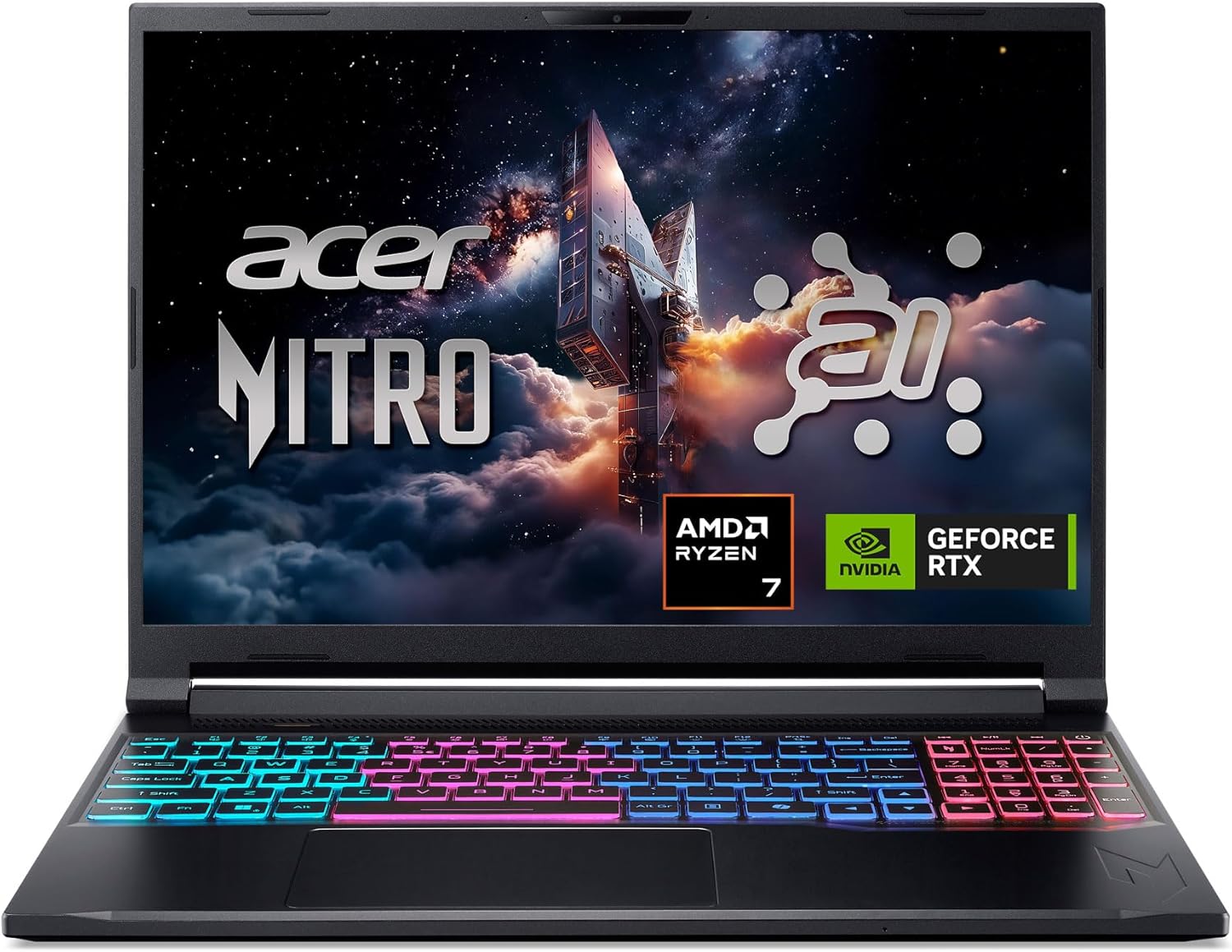
The Acer Nitro V 16S AI is a mid-range gaming laptop built around the latest AMD Ryzen 7 260 processor and NVIDIA GeForce RTX 5060 GPU. It's designed for PC gamers who want a balance of performance and portability, as well as content creators and streamers who can leverage the AI capabilities for tasks like upscaling, background effects, and faster encoding. With a 16-inch 180Hz display and 32GB of DDR5 RAM, this laptop aims to deliver smooth gameplay and efficient multitasking right out of the box.
When it comes to real-world gaming performance, the RTX 5060 with DLSS 4 and full ray tracing support gives you high frame rates in modern titles at 1080p or 1200p resolution. The 180Hz refresh rate makes fast action in FPS and racing games feel buttery smooth, while the 100% sRGB coverage ensures vibrant colors for open-world adventures. The AMD Ryzen 7 260's AI TOPS also help with background tasks, voice commands, and optimizing settings in supported software, giving an edge in competitive scenarios.
Build quality is typical for the Nitro line: a black plastic chassis with a clean, understated look. At 4.63 pounds, it's slim enough to slip into a backpack for college or LAN parties. The dual-fan quad-intake cooling keeps temperatures reasonable under load, though you'll still hear the fans ramp up during extended gaming sessions. The keyboard includes a backlit numeric keypad, and the touchpad is responsive for everyday use. Port selection is solid with USB4, two USB 3.2 Gen 2, HDMI 2.1, and Ethernet, making external monitor or dock setups easy.
Setting up the laptop is straightforward: it runs Windows 11 Home, and the pre-installed NitroSense software gives you control over fan speeds, power profiles, and system monitoring. The Acer PurifiedView and PurifiedVoice 2.0 features handle webcam background blur and noise reduction during Discord calls or streams. There are two M.2 SSD slots (one free) for storage expansion, but note that the RAM is soldered and maxes out at 32GB, so choose your capacity wisely at purchase.
One realistic limitation is that while the laptop includes a USB4 port, you'll need an external GPU dock if you ever want more graphics power - but for most users the RTX 5060 is plenty. Battery life is average for a gaming laptop; expect around four to five hours of light use. Also, the 1080p webcam isn't specified, but many laptops in this range offer only basic 720p or 1080p sensors, so external webcams are still recommended for professional streaming.
Overall, the Acer Nitro V 16S AI is a well-rounded portable gaming machine that hits a sweet spot for price-conscious PC gamers, esports players, and content creators. If you value high-refresh-rate gaming, AI-assisted performance, and decent portability without breaking the bank, this laptop is worth considering. It also comes with a three-month PC Game Pass trial to get you started with hundreds of games on day one.
The RTX 5060 laptop GPU with 572 AI TOPS and DLSS 4 Multi Frame Generation provides a significant boost in supported games. You can expect high settings at 1080p with smooth frame rates in titles like Call of Duty, Fortnite, and Cyberpunk 2077. The 180Hz display minimizes motion blur and screen tearing, while the AMD Ryzen 7 260 processor handles CPU-intensive simulations and background tasks without stutter. Gamers who play competitive esports titles will appreciate the low-latency response and Killer Ethernet for stable online play.
Despite being a slim 0.79-inch profile, the Nitro V 16S AI packs a dual-fan, quad-intake, quad-exhaust cooling system. This design pushes heat out efficiently, keeping the CPU and GPU within safe operating temperatures during long gaming sessions. The chassis is made of durable plastic with a matte finish that resists fingerprints. The hinge feels sturdy, and the weight of 4.63 pounds makes it manageable for daily carry. The backlit keyboard has a numeric keypad and decent key travel, suitable for both gaming and typing.

Performance Gaps and Hardware Realities
The primary reason desktops maintain an edge is power delivery. Desktop GPUs are not constrained by the same thermal envelopes as their mobile counterparts, allowing them to sustain higher clock speeds for longer periods. In a laptop, the chassis is compact, which limits the size of heat sinks and fan airflow.
Consequently, mobile GPUs often operate at lower wattages to prevent overheating, a phenomenon known as thermal throttling. This means that while a laptop with a specific GPU model may match the name of its desktop equivalent, the actual performance output during extended gaming sessions can vary significantly based on the cooling solution used by the manufacturer.
| Component | Desktop Advantage | Laptop Constraint |
|---|---|---|
| Graphics Power | Higher TGP (150W+) | Limited TGP (45W-100W) |
| Memory | Easy upgradeability | Soldered or limited slots |
| Cooling | Large case airflow | Compact heat pipes/fans |
| Portability | Stationary only | Movable, battery powered |
When evaluating whether a laptop can handle your desired games, you must look beyond the GPU model number. The Total Graphics Power (TGP) is a critical specification that indicates how much power the graphics card can draw. A lower TGP means the card runs cooler but produces fewer frames per second.
For example, a mobile RTX 4050 with a 50W limit will perform differently than a desktop RTX 4050 with a 200W limit. Buyers should check the specific TGP of the laptop model they are considering, as manufacturers may tune the power limits differently for thin-and-light designs versus thicker, performance-focused chassis.
- Check the TGP rating of the specific GPU model in the laptop you are considering.
- Compare the cooling design, such as the number of fans and heat pipes, between models.
- Review user feedback on fan noise levels and surface temperatures during long sessions.
- Determine if the RAM is soldered or if there are open slots for future upgrades.
Thermal Management and Sustained Performance
Thermal management is the defining factor in how well a gaming laptop performs over time. Modern laptops use advanced cooling systems, including vapor chambers and liquid metal thermal interface materials, to dissipate heat more effectively. The ASUS ROG Strix G16, for instance, features an end-to-end vapor chamber and tri-fan technology, which helps maintain consistent frame rates during intense workloads.
However, even with these advanced systems, laptops will inevitably run hotter than desktops because the heat is concentrated in a smaller volume. This can lead to a slight reduction in performance as the system throttles to protect its components.
For users who play for several hours at a time, the impact of thermal throttling becomes more noticeable. Desktops, with their larger cases and higher airflow, can sustain maximum boost clocks for much longer periods. Laptops, on the other hand, may see a drop in frame rates after 10-15 minutes of heavy gaming.
This is not a failure of the hardware but a safety feature designed to prevent damage. To mitigate this, many laptops offer performance modes that increase fan speed and power delivery, though this comes at the cost of higher noise levels and faster battery drain. It is essential to balance these settings based on your environment and tolerance for fan noise.
The cooling design also affects the physical dimensions of the laptop. Thinner laptops generally have less space for cooling components, which can limit their performance potential. The Acer Nitro V 16S AI Gaming Laptop, for example, uses a dual-fan, quad-intake, and quad-exhaust cooling architecture to push heat out efficiently.
This design allows it to maintain stable performance during extended gaming marathons, but it is still not as robust as the cooling system in a full-sized desktop tower. Buyers should consider whether they prioritize a slim, portable design or maximum sustained performance when making their choice.
Memory, Storage, and Upgradeability
One of the most significant differences between gaming laptops and desktops is upgradeability. Desktops allow users to easily swap out RAM, add multiple storage drives, and replace graphics cards. Laptops, however, often have limited upgrade options. Many modern gaming laptops have soldered RAM, meaning you cannot add more memory after purchase. Others may have only one open slot, limiting the maximum memory capacity. This is a critical consideration for buyers who plan to use their laptop for several years, as games and applications continue to demand more resources over time.
Storage is another area where laptops and desktops differ. Most gaming laptops come with a single NVMe SSD, which is fast but limited in capacity. While you can often add a second SSD in laptops with multiple M.2 slots, this is not always possible.
Desktops, on the other hand, typically have multiple drive bays and slots, allowing for extensive storage expansion. For gamers with large game libraries, this can be a significant advantage for desktops. However, the convenience of a single, portable device with sufficient storage may outweigh the need for massive capacity for many users.
The Acer Nitro V Gaming Laptop with the Intel Core i7-13620H processor, for example, includes 16GB of DDR5 memory with two slots, allowing for upgrades up to 32GB. This flexibility is a plus for buyers who want to future-proof their purchase.
In contrast, some thinner models may have soldered memory, which limits your options. When comparing laptops, always check the memory configuration to ensure it meets your current and future needs. If you plan to stream or run multiple applications alongside your game, having upgradeable memory is highly recommended.
Display Quality and Refresh Rates
The display is another key area where gaming laptops have improved significantly. Modern gaming laptops often feature high-refresh-rate displays, such as 144Hz, 165Hz, or even 240Hz, which provide smoother motion and a competitive edge in fast-paced games.
The ASUS ROG Strix G16 features a 165Hz FHD+ display with a 3ms response time, which is well-suited for competitive gaming. These displays are comparable to those found in high-end desktop monitors, offering a similar visual experience. However, laptop screens are generally smaller than desktop monitors, which may be a drawback for users who prefer a larger field of view.
Panel quality also varies between laptop and desktop displays. Many gaming laptops use IPS panels, which offer good color accuracy and wide viewing angles. Some higher-end models may feature OLED or mini-LED displays, which provide even better contrast and brightness. Desktop monitors, on the other hand, offer a wider range of panel types and sizes, allowing for more customization.
If display quality is a priority, it is worth comparing the specific panel type and specifications of the laptop against the desktop monitor you are considering. For many users, the built-in high-quality display of a gaming laptop is sufficient, especially if they plan to connect an external monitor for extended use.
Color coverage and brightness are also important factors to consider. The Acer Nitro V 16S AI Gaming Laptop features a 16-inch WUXGA display with 100% sRGB color coverage, which is ideal for both gaming and creative work. This level of color accuracy is comparable to many desktop monitors, making it a versatile choice for users who multitask between gaming and content creation.
When evaluating a laptop’s display, look for specifications on color coverage, brightness, and response time to ensure it meets your expectations. A high-quality display can significantly enhance the overall gaming experience, even if the performance is slightly lower than a desktop.
Portability and Battery Life Tradeoffs
The primary advantage of a gaming laptop is portability, allowing users to take their gaming setup to a friend’s house, a dorm room, or a coffee shop without the hassle of transporting a desktop tower, monitor, keyboard, and mouse.
- This flexibility is a major benefit for students and professionals who need to work and play in different locations.
- However, this portability comes with tradeoffs, particularly in terms of battery life, as gaming laptops are power-hungry.
- Their battery life is typically much shorter than that of standard laptops, lasting only 1-2 hours under heavy load.
For most gaming sessions, it is recommended to plug in the laptop to ensure maximum performance. Running a gaming laptop on battery power significantly reduces its performance, as the system limits power delivery to conserve energy. This means that if you plan to game on battery, you will likely see a substantial drop in frame rates.
The NIMO 15.6″ Light-Gaming-Laptop, for example, features a 53.58Wh battery, which is sufficient for light tasks and media consumption but not for extended gaming sessions. If you need to game away from an outlet, consider a laptop with a larger battery capacity or plan to use a power bank with sufficient wattage.
Weight and thickness are also factors to consider when evaluating portability. High-performance gaming laptops tend to be heavier and thicker than standard laptops due to their powerful components and cooling systems. The Acer Nitro V 16S AI Gaming Laptop is marketed as a slim, portable option, but it is still heavier than a standard ultrabook.
If you plan to carry your laptop frequently, it is worth considering the weight and dimensions to ensure it fits into your daily routine. A lighter laptop may be more convenient to carry, but it may also have less powerful components or a smaller battery. Finding the right balance between performance and portability is key to choosing the right gaming laptop for your needs.
Cost-Effectiveness and Value
When comparing gaming laptops to desktops, cost-effectiveness is a crucial factor. For a given budget, a desktop PC typically offers more performance than a laptop. This is because laptops have higher manufacturing costs due to their compact design and integrated components.
However, the convenience and portability of a laptop may justify the higher price for many users. If you do not need to move your gaming setup, a desktop is generally the better value. But if you need a single device that can handle work, school, and gaming, a gaming laptop may be the more practical choice.
It is also important to consider the long-term cost of ownership. Desktops are generally easier and cheaper to upgrade, which can extend their useful life. Laptops, on the other hand, have limited upgrade options, which may require you to replace the entire device sooner.
Additionally, laptops are more prone to wear and tear due to their portability, which can lead to higher repair costs. When evaluating the value of a gaming laptop, consider not just the initial purchase price but also the potential costs of upgrades, repairs, and replacement over time.
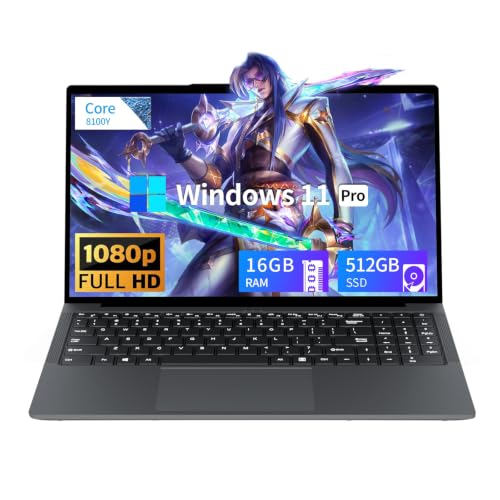
For budget-conscious buyers, there are gaming laptops available that offer decent performance at a lower price point. The Tunhail 15.6 inch Laptop, for example, is a lower-cost option that may suit users who play lighter games or need a versatile device for work and study.
While it may not compete with high-end desktops in terms of raw performance, it offers a good balance of features and price. When shopping for a gaming laptop, it is important to set a realistic budget and prioritize the features that matter most to you, whether that is performance, portability, or display quality.
Choosing the Right Setup for Your Needs
Deciding between a gaming laptop and a desktop ultimately comes down to your specific needs and lifestyle. If you are a competitive gamer who requires the highest possible frame rates and is willing to stay at a fixed location, a desktop is likely the better choice.
It offers superior performance, better cooling, and easier upgradeability. However, if you need a portable device that can handle gaming, work, and school in one package, a gaming laptop is the more versatile option. The key is to choose a laptop with specifications that meet your current needs while allowing for some future growth.
For users who are torn between the two, consider a hybrid approach. You can purchase a mid-range gaming laptop for portability and use it for casual gaming and work. Then, if you need more performance for competitive gaming or content creation, you can invest in a desktop or an external GPU enclosure.
This approach allows you to have the best of both worlds, with the convenience of a laptop and the power of a desktop. Many modern laptops support external GPUs via Thunderbolt or USB4, which can significantly boost their performance when connected to a desktop-class graphics card.
Before making your decision, it is worth checking if a specific laptop model can run your desired games at your preferred settings. Use online tools and reviews to compare the performance of different laptop models against desktop equivalents. Pay attention to the TGP of the GPU, the cooling design, and the user feedback on thermal performance.
By doing your research, you can make an informed decision that balances performance, portability, and cost. The gaming laptop market is evolving rapidly, with new models offering better performance and features each year. Staying informed about the latest trends and technologies will help you choose the right device for your needs.
In the end, the question of whether gaming laptops can compete with desktops depends on how you define competition. For raw, sustained performance, desktops still hold the advantage. But for versatility, portability, and convenience, gaming laptops offer a compelling alternative that has never been closer to desktop performance. By understanding the tradeoffs and choosing a model that fits your specific requirements, you can enjoy a high-quality gaming experience without being tethered to a desk. The right choice is the one that aligns with your lifestyle, budget, and gaming preferences.






Write Your Review
No reviews yet. Be the first to share your experience!