


Evaluating modern display hardware often means weighing established brands against new competitors offering aggressive memory allocations and competitive hardware encoders. When exploring affordable resolution scaling, PC builders frequently wonder whether is intel arc graphics good for gaming under modern rendering demands. The graphics landscape has expanded beyond the long-standing duopoly, introducing dedicated architectural designs alongside enhanced integrated graphics engines. Finding the right balance between raw rasterization throughput and driver reliability remains essential, especially when comparing newly released cards against existing budget GPU alternatives in entry-level categories.
Modern Intel graphics span discrete add-in boards powered by the Alchemist and Battlemage architectures as well as integrated Xe solutions embedded into mobile and mini PC processors. Sustaining smooth framerates and stable frametimes depends heavily on modern low-level graphics APIs, sufficient video memory buffers, and specific motherboard firmware configurations. Pairing these graphics solutions with balanced gaming CPU pairings ensures that internal graphics queues remain populated without artificial CPU pipeline stalls. Understanding how these components behave across various game genres allows buyers to make informed upgrade choices without facing unexpected technical compromises.


Evaluating Intel Arc Architecture and Real-World Gaming Viability
Answering whether is intel arc graphics good for gaming requires separating historical impressions from current architectural capabilities. Intel entered the discrete gaming market with its Xe-HPG Alchemist architecture and expanded the lineup through Xe2-HPG Battlemage cards and integrated mobile processors. These graphics solutions provide exceptional modern API support, generous memory configurations, and dedicated AI upscaling pipelines. However, overall gaming viability depends significantly on platform hardware support, graphics API choices, and realistic user performance expectations.
Discrete Desktop Cards Versus Integrated Mobile Xe Implementations
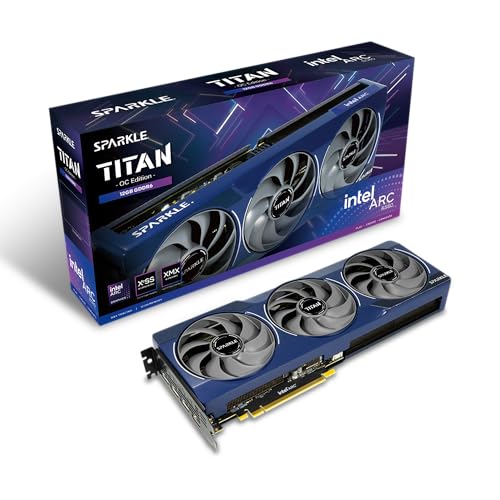
Distinguishing between discrete add-in boards and integrated processor graphics is the first step in assessing gaming viability. Discrete graphics cards like the Sparkle Intel Arc B580 Titan OC, Intel Arc A750 Limited Edition, and Sparkle Intel Arc A580 ORC OC feature dedicated silicon dies and discrete GDDR6 memory channels. These desktop cards operate within substantial board power budgets and utilize full desktop PCIe slots to deliver competitive 1080p and 1440p gaming experiences. They feature multi-fan cooling solutions, thick aluminum fin stacks, and dedicated power connectors to sustain high clock speeds during continuous gameplay.
Integrated solutions found inside mini PCs and laptops function under entirely different thermal and power constraints. Systems like the GEEKOM Mini PC IT12 MAX, GMKtec K17 Mini PC, and ASUS NUC 14 Pro leverage integrated Intel Arc graphics embedded directly within Core Ultra processors. These platforms share system memory via high-speed unified LPDDR5X or DDR5 interfaces rather than using dedicated VRAM. While integrated Arc graphics handle casual gaming, indie titles, and lightweight esports at modest 1080p or 720p settings, discrete Arc cards remain necessary for demanding modern AAA titles.
The Critical Role of Resizable BAR and Platform Compatibility
The single most important technical requirement for desktop Intel Arc graphics cards is Resizable BAR support. Traditional PCIe architectures restrict the CPU to accessing GPU memory in small 256-megabyte chunks, creating significant bottlenecks during intensive asset streaming. Resizable BAR enables the processor to negotiate direct access to the entire GPU frame buffer simultaneously across the PCIe bus. When installing discrete Arc hardware, verifying proper motherboard PCIe slot compatibility and enabling Resizable BAR within the UEFI BIOS is mandatory for achieving playable framerates.
Running an Intel Arc graphics card on a legacy system lacking Resizable BAR results in severe performance penalties. Frametimes become highly erratic, and average framerates can drop significantly below the card’s rated capabilities. Modern platforms built on recent AMD AM4, AM5, or Intel LGA1200 and LGA1700 sockets fully support this feature. Builders using older platforms without BIOS updates for ReBAR should upgrade their core components before investing in a discrete Arc GPU to avoid crippling their graphics subsystem.
API Performance Dynamics: DirectX 12 and Vulkan Versus Legacy Engines
Intel designed the Xe architecture from the ground up for modern, low-overhead graphics application programming interfaces. Modern game engines built around native DirectX 12 and Vulkan allow Intel Arc cards to demonstrate their true computational strengths. In these modern titles, the command processors and execution units maintain high utilization without unnecessary driver overhead. Games developed on modern engines frequently run exceptionally well on cards like the Sparkle Intel Arc B580 Titan OC, delivering smooth frametime delivery and responsive controls.
Legacy titles utilizing DirectX 9 and DirectX 11 historically presented substantial performance hurdles for early Arc drivers. Older graphics APIs rely heavily on driver-level management to optimize draw calls and pipeline state changes. Intel addressed these bottlenecks by implementing translation layers such as DXVK and rebuilding their internal DirectX 11 driver pipeline. While modern driver updates have eliminated many early stutters in older games, Intel Arc still exhibits its best relative performance in contemporary modern titles.
VRAM Buffer Capacities and Memory Bus Bandwidth
A primary competitive advantage of discrete Intel Arc graphics cards is their generous video memory allocation. Modern games frequently demand large frame buffers for high-resolution texture packs, volumetric fog, and ambient lighting buffers. The Sparkle Intel Arc B580 Titan OC delivers a massive 12GB GDDR6 buffer, while the Sparkle Intel Arc B570 Guardian OC provides 10GB of high-speed memory. Even mid-tier models like the Sparkle Intel Arc A580 ORC OC and Intel Arc A750 Limited Edition provide 8GB GDDR6 memory on wide bus interfaces.
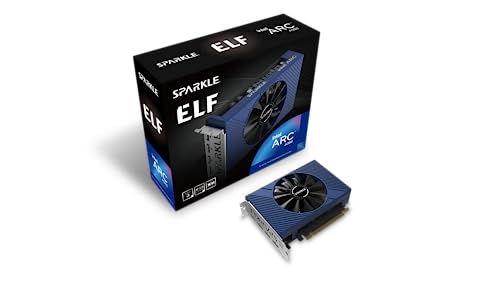
Generous VRAM capacity protects PC gamers from severe microstutter and texture pop-in that plague competing cards restricted to smaller memory buffers. When a graphics card exhausts its physical VRAM, it must swap data across the system PCIe bus, causing noticeable frametime spikes. Intel cards maintain comfortable memory headroom at 1080p and 1440p resolutions, ensuring visual consistency even in demanding environments. Compact entry models like the Sparkle Intel Arc A380 ELF supply 6GB GDDR6 memory, setting a solid baseline for entry-level desktop systems.
Upscaling Efficiency with Intel XeSS and Hardware Ray Tracing
Modern gaming performance relies increasingly on intelligent upscaling technologies to balance graphical fidelity with high refresh rates. Intel Arc graphics include dedicated matrix engines called Xe Matrix Extensions, known as XMX, which accelerate Intel XeSS machine learning algorithms. XeSS reconstructs lower-resolution input frames into sharp, high-resolution outputs with remarkable edge stability and minimal temporal ghosting. Because XMX hardware handles this workload directly on the silicon, XeSS provides higher visual fidelity and faster execution on Arc cards compared to generic shader fallbacks.
Ray tracing capability is another area where Intel engineered robust silicon support from the beginning. Discrete Arc graphics processors integrate dedicated hardware Ray Tracing Units within every Xe-core. These specialized units handle complex bounding volume hierarchy calculations and ray-triangle intersection tests directly in hardware. As a result, enabling ray-traced shadows or reflections on cards like the Intel Arc A750 Limited Edition causes less relative performance degradation compared to competing entry-level alternatives.
Driver Stability, Arc Control Software, and Clean Installation
Software driver maturity remains a primary consideration for any PC builder investing in new graphics architecture. Intel has maintained a rapid driver release schedule, deploying consistent updates that deliver substantial performance increases and game optimizations. The bundled Intel Arc Control software provides performance monitoring, automatic driver updates, and fan profile adjustments without requiring account registration. While early adopters encountered intermittent software quirks, current driver packages deliver consistent desktop stability and reliable game launches across popular titles.
Upgrading to an Intel Arc card from an existing graphics card requires proper software preparation to avoid registry conflicts. Remnants of legacy display drivers from competing hardware vendors can trigger false driver timeouts and black screen crashes. Running Display Driver Uninstaller in Windows Safe Mode ensures that older registry entries and background display services are completely removed. Performing this clean software sweep before installing the latest Intel graphics driver establishes a clean foundation for optimal gaming stability.
Power Delivery, Thermal Management, and Aftermarket Cooling
Desktop graphics cards require reliable electrical power and effective cooling systems to maintain continuous boost frequencies. When connecting higher-wattage models like the Sparkle Intel Arc B580 Titan OC, builders should utilize dedicated PCIe power cable connections directly from the power supply. Avoiding daisy-chained pigtail splitters ensures that transient power spikes are distributed safely across dedicated internal rails. A quality power supply with adequate continuous 12V delivery prevents unexpected system reboots during sudden GPU load transitions.
Thermal management plays a direct role in maintaining sustained performance and acoustic comfort inside the chassis. Board partner designs such as the Sparkle Torn Cooling 2.0 system incorporate custom axial fans, dense aluminum fin arrays, and rigid metal backplates. The metal backplate enhances structural rigidity, preventing PCB flex and protecting surface-mount components from mechanical strain over time. High-quality thermal pads and efficient heat pipe arrays keep GPU core and memory junction temperatures within safe operating limits under continuous gaming loads.
Content Creation Synergy and Hardware AV1 Video Encoding
Evaluating Intel Arc graphics solely on raw gaming framerates overlooks one of the architecture’s greatest practical strengths. Intel integrated full dual-engine hardware AV1 encoding and decoding directly into its discrete and mobile Arc graphics processors. The dedicated Intel QuickSync media engine accelerates video export times and live streaming tasks with exceptional efficiency. Content creators can record gameplay or stream to supported platforms using the modern AV1 format, achieving higher visual quality at lower bitrates than older codecs allow.
This robust media engine makes Intel Arc particularly appealing for hybrid users who balance gaming with video production or streaming. Applications like DaVinci Resolve and Adobe Premiere Pro leverage Intel deep link acceleration to split compute tasks across CPU and GPU hardware. Even compact systems like the GEEKOM Mini PC IT12 MAX and ASUS NUC 14 Pro benefit from hardware-accelerated media workflows. Gamers who also produce digital content receive substantial extra value that competing budget graphics cards rarely match.
Identifying the Right Buyer: When Intel Arc Makes Practical Sense
Choosing an Intel Arc graphics card is an excellent decision for budget-conscious gamers building modern desktop systems. If your primary focus is playing modern DirectX 12 and Vulkan titles at 1080p or 1440p resolutions, cards like the Sparkle Intel Arc B580 Titan OC and Intel Arc A750 Limited Edition provide outstanding value. Their generous memory buffers, capable ray tracing hardware, and advanced XeSS upscaling deliver visual fidelity that punches well above their price tier. The hardware makes complete sense as long as your motherboard supports Resizable BAR.
Conversely, certain player profiles may find competing alternatives more suitable for their specific needs. Competitive esports enthusiasts who prioritize ultra-high refresh rates in older DirectX 9 or DirectX 11 titles may prefer mature legacy driver stacks. Similarly, buyers targeting native 4K ultra gaming without upscaling will require higher-tier flagship graphics cards beyond Intel’s current product range. For everyday gamers and mainstream system builders seeking modern features, robust VRAM buffers, and strong modern API performance, Intel Arc stands as a genuinely viable gaming platform.
Determining whether Intel Arc graphics fits your gaming build ultimately comes down to matching your platform configuration with realistic gaming objectives. Enabling Resizable BAR in your motherboard BIOS, running clean display drivers, and focusing on modern game engines allows Intel Arc hardware to deliver satisfying visual fidelity and dependable framerate stability. When paired with capable platform components, Intel Arc represents an innovative and practical option in modern gaming hardware.





Write Your Review
No reviews yet. Be the first to share your experience!