

Unstable frame pacing ruins intense multiplayer firefights faster than almost anything else. You line up a shot, but a sudden hitch freezes your crosshair right when reaction time counts. Smooth gaming relies heavily on CPU cache efficiency, high clock speeds, and steady 1% low frame rates rather than sheer core count. Answering Which AMD CPU Is Best for Gaming? Top Picks means matching your graphics card with a processor that eliminates bottlenecks without overheating. Modern titles lean into massive L3 cache pools like AMD 3D V-Cache to keep frame delivery predictable during heavy skirmishes.
Platform longevity also shapes your decision because swapping motherboards every season gets expensive. The Socket AM5 ecosystem offers fast DDR5 support and future upgrades, while mature AM4 setups remain budget-friendly for 1080p and 1440p gaming. For builders weighing non-cache options, analyzing Ryzen 7 7700 gaming suitability offers clear perspective on standard Zen 4 value. Balancing silicon architecture, thermals, and platform cost guarantees dependable FPS for your budget.

Pros
- Excellent single-threaded performance for gaming at 1080p and 1440p
- Comes with a capable RGB cooler, reducing initial investment
- Easy drop-in upgrade for AM4 motherboards with a BIOS update
- Strong multitasking ability for streaming and productivity workloads
Cons
- Runs warmer than lower-TDP chips, requiring good case airflow or an aftermarket cooler for heavy loads
- Not the best value for pure gaming compared to X3D variants, which offer higher frame rates in some titles
- Lacks support for newer AM5 platform features like DDR5 memory and PCIe 5.0
The AMD Ryzen 7 5800XT is an 8-core, 16-thread desktop processor that brings the proven Zen 3 architecture to the AM4 platform. It's designed for PC gamers, streamers, content creators, and enthusiasts who want a performance boost without upgrading their motherboard and RAM. With a max boost clock of 4.8 GHz and unlocked multiplier, this CPU is ready for both high-FPS gaming and demanding multitasking.
For competitive gamers, the 5800XT delivers snappy responsiveness in fast-paced titles like FPS and MOBA games. User feedback highlights strong clock speeds between 4.2 and 4.5 GHz even without manual overclocking, ensuring smooth gameplay at 1080p and 1440p resolutions. The 36 MB cache helps reduce latency, which can translate to better frame rates in CPU-bound scenarios. Streamers and content creators will appreciate the 16 threads for handling encoding, editing, and live broadcasting simultaneously.
Build quality is solid, with AMD's reliable Zen 3 architecture and support for PCIe 4.0, allowing faster communication with modern GPUs and NVMe SSDs. The included Wraith Prism cooler features RGB lighting that adds visual appeal to any gaming setup, though some users note the cooler can be a bit tricky to install and the RGB defaults to on. For those seeking lower temperatures or quieter operation, an aftermarket cooler is a worthwhile consideration.
Setup is straightforward for an AM4 upgrade: a BIOS update on compatible B450, B550, or X570 boards is typically required before installation. The processor itself installs easily with standard socket alignment, and the cooler uses the existing AM4 mounting brackets. Cable management is simplified since the cooler's RGB cable can be connected to a motherboard header for software control, though some users may prefer to manage the extra wire.
One realistic limitation is that the 5800XT runs warmer than lower-TDP chips, especially under sustained loads. Users in warm climates or with compact cases may want to invest in a better cooler or ensure good case airflow. Additionally, while the 5800XT is a strong performer, the X3D variants offer higher gaming performance in many titles, and the AM5 platform provides DDR5 and PCIe 5.0 support for future-proofing.
Overall, the AMD Ryzen 7 5800XT is a practical choice for gamers and creators who want to extend the life of their AM4 build with a noticeable performance uplift. It's especially suitable for budget-conscious builders who already have DDR4 RAM and a compatible motherboard. If you're looking for a balanced CPU that handles gaming, streaming, and productivity without breaking the bank, this processor delivers reliable value.

Pros
- Excellent multi-core performance for gaming, streaming, and productivity
- Unlocked multiplier allows overclocking for extra performance
- High 72 MB cache improves gaming and application responsiveness
- Compatible with affordable DDR4 memory and AM4 motherboards
- Good price-to-core ratio for budget-conscious PC builders
Cons
- Cooler not included, requiring a separate purchase for cooling
- Requires a compatible AM4 motherboard with an updated BIOS
- Single-threaded performance may be slightly behind newer architectures like Zen 4
The AMD Ryzen 9 5900XT is a desktop processor designed to deliver serious multi-core performance for gaming, content creation, and streaming. With 16 cores and 32 threads based on the proven Zen 3 architecture, it's built for users who need to run demanding applications simultaneously without slowdowns. Whether you're a competitive gamer streaming your gameplay, a video editor rendering 4K footage, or a PC builder looking for a future-proof upgrade, this CPU offers a compelling mix of power and value.
For gamers, the 5900XT provides a strong foundation for high-frame-rate gaming, especially in titles that can leverage multiple cores. The 4.8 GHz max boost clock and 72 MB of cache help reduce latency and improve responsiveness in fast-paced games like FPS and MOBA titles. It also supports PCIe 4.0, allowing you to pair it with the latest graphics cards and NVMe SSDs for faster load times. Content creators will appreciate the 32 threads for rendering, encoding, and multitasking, making it a solid choice for streaming on Twitch or YouTube while gaming.
Build quality is typical of AMD's Ryzen lineup - the processor itself is robust and designed for long-term reliability. Keep in mind that this is a 'cooler not included' SKU, so you'll need to invest in a quality aftermarket air or liquid cooler to keep temperatures in check, especially if you plan to overclock. The AM4 socket compatibility is a major plus, as it works with many existing motherboards, though you may need a BIOS update for certain boards. This makes it a great upgrade option for users already on the AM4 platform.
Setup is straightforward if you have a compatible AM4 motherboard and a cooler. The processor is unlocked, so overclocking is accessible through the motherboard's BIOS or AMD's Ryzen Master software. However, due to the higher core count, it's wise to pair it with a robust cooling solution and a power supply that can handle the load. The 5900XT also supports DDR4-3200 memory, which is still widely available and cost-effective, keeping your overall build budget in check.
One realistic limitation is that the 5900XT is based on the Zen 3 architecture, which has been succeeded by newer generations. While it still offers excellent performance, single-threaded tasks may not be as fast as newer Ryzen 7000 series chips. Additionally, the lack of an included cooler means you'll need to factor that into your overall build cost. But for its price point, the core count and feature set make it a strong contender for gamers and creators who want high performance without jumping to a new platform.
Overall, the AMD Ryzen 9 5900XT is a smart choice for PC gamers, streamers, and content creators who need 16 cores for heavy workloads. It's particularly well-suited for users building a high-performance gaming rig or upgrading an existing AM4 system. If you're looking for a processor that balances multi-threaded muscle with gaming capability, and you're willing to supply your own cooler, the 5900XT delivers excellent value and long-term usability for your gaming setup.
Pros
- Outstanding gaming performance with smooth frame pacing and minimal stutter
- Runs cool and efficient, even with a mid-range air cooler
- Easy to install on AM5 motherboards with straightforward BIOS compatibility
- Great value for pure gaming builds compared to more expensive alternatives
Cons
- Not the best choice for heavy multi-threaded productivity workloads like video rendering or 3D modeling
- Requires a dedicated GPU for serious gaming; integrated graphics are basic
- Premium pricing may be overkill for casual gamers who don't play CPU-intensive titles
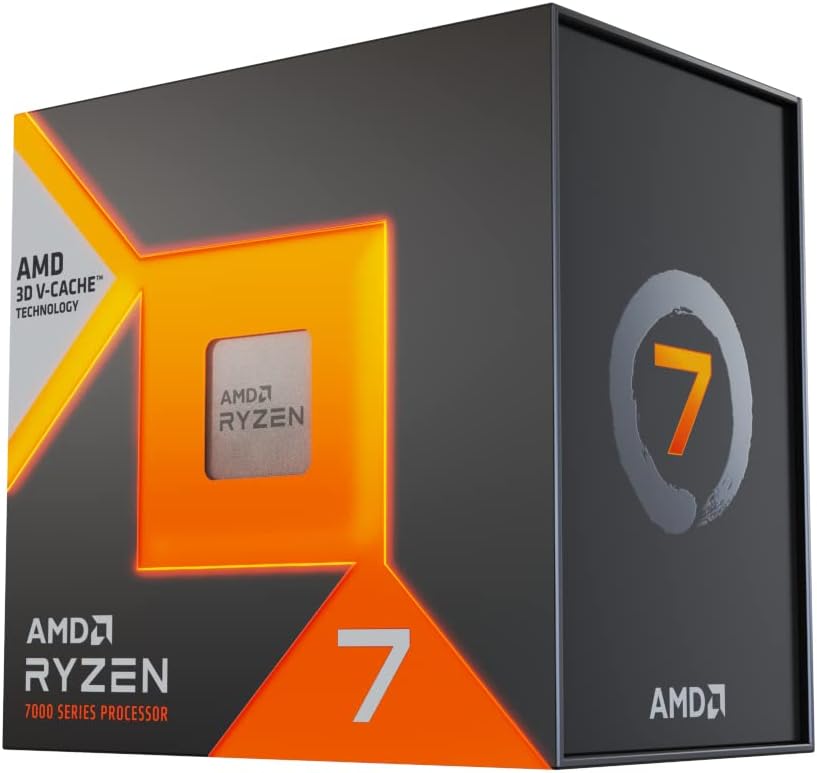
The AMD Ryzen 7 7800X3D is a desktop processor built specifically for gamers who demand the highest possible frame rates and the smoothest gameplay experience. It's an 8-core, 16-thread CPU based on AMD's Zen 4 architecture, but what sets it apart is the 3D V-Cache technology that stacks an extra 64MB of L3 cache on top of the standard 32MB, for a total of 96MB. This massive cache helps the CPU keep more game data close at hand, reducing the need to fetch data from slower system memory and dramatically improving performance in CPU-bound gaming scenarios.
This processor is best suited for PC gamers, competitive esports players, and streamers who want a no-compromise gaming experience. If you play fast-paced shooters like Valorant, Counter-Strike 2, or Rainbow Six Siege, the 7800X3D's cache helps maintain incredibly consistent frame times, even during intense firefights or when many objects are on screen. It also works well for casual gamers who enjoy open-world titles like Elden Ring or Cyberpunk 2077, where the extra cache can reduce stutter when loading new areas. Content creators who do light video editing or streaming alongside gaming will find the 8 cores and 16 threads sufficient, though heavy rendering workloads are better left to higher-core-count CPUs.
In real-world use, the 7800X3D delivers exceptional gaming responsiveness. User reviews consistently highlight how smooth and stutter-free games feel, with high 1% and 0.1% lows that keep gameplay fluid even when the action gets chaotic. The CPU runs surprisingly cool for its performance level, with many users reporting temperatures in the 60-75°C range under gaming load with a decent air cooler or AIO. This thermal efficiency means less fan noise and more headroom for your GPU to do its thing. The 4.2 GHz base clock and 5.0 GHz boost clock are more than enough for modern games, and the 5nm process keeps power draw reasonable.
Build quality is typical of AMD's Ryzen lineup: the processor itself is solid, and the IHS (integrated heat spreader) is flat for good thermal contact. Installation on an AM5 motherboard is straightforward, though you'll need to ensure your BIOS is updated for compatibility. The CPU supports DDR5 RAM, which is now widely available and offers good performance gains. Cable management is simplified because the CPU doesn't require any special power connectors beyond the standard motherboard power, and the AM5 socket's retention mechanism is easy to use. Software setup is minimal: just install the CPU, apply thermal paste, mount your cooler, and you're good to go. AMD's Ryzen Master utility can be used for monitoring and basic tuning, but most users won't need to tweak anything for excellent gaming performance.
One realistic limitation is that the 7800X3D isn't the best choice for pure productivity tasks like 3D rendering, video encoding, or scientific simulations. In those workloads, CPUs with more cores (like the Ryzen 9 7950X) will outperform it. Additionally, the integrated Radeon Graphics are basic and not suitable for gaming, so you'll need a dedicated graphics card. The price is also on the higher side, but for gamers who prioritize frame rates and smoothness, it's a worthwhile investment.
Overall, the AMD Ryzen 7 7800X3D is a fantastic choice for anyone building a gaming-focused PC. It offers best-in-class gaming performance, runs cool and quiet, and is easy to set up. If your primary use is gaming, and you want a CPU that will keep your system feeling snappy for years to come, this is one of the smartest purchases you can make. Pair it with a good B650 or X670 motherboard, fast DDR5 RAM, and a capable GPU, and you'll have a gaming rig that handles anything you throw at it.

Pros
- Exceptional gaming performance with massive L3 cache for reduced latency
- Significant IPC uplift over previous gen, boosting frame rates in CPU-bound titles
- Drop-in compatibility with Socket AM5 simplifies upgrades for existing users
- Improved thermal design allows higher sustained clock speeds under load
Cons
- Cooler not included, requiring separate purchase of an AM5-compatible cooler
- Premium pricing may be overkill for casual gamers or non-gaming workloads
- Limited to AM5 platform, requiring motherboard upgrade for AM4 users
The AMD Ryzen 7 9800X3D is a desktop processor designed specifically for PC gamers and performance enthusiasts who demand the absolute best in gaming performance. Built on AMD's latest Zen5 architecture and featuring next-generation 3D V-Cache technology, this CPU is marketed as the world's fastest gaming processor. With 8 cores and 16 threads, it's engineered to deliver exceptional responsiveness in both single-threaded and multi-threaded workloads, making it a strong choice for competitive esports players, streamers, and content creators who need reliable performance during intense gaming sessions or while multitasking with streaming software.
For gamers, the 9800X3D's key advantage lies in its massive 96MB L3 cache, which helps reduce memory latency and improve frame rates in CPU-intensive titles like first-person shooters, MOBAs, and open-world games. Users upgrading from previous generations can expect a noticeable uplift in gaming responsiveness, especially in scenarios where cache size matters. The processor also supports high-speed DDR5 memory and PCIe 5.0, ensuring compatibility with modern graphics cards and storage for a future-proof gaming setup. Its improved thermal performance allows for higher sustained clock speeds up to 5.2GHz, which can translate to smoother gameplay and lower input lag.
Build quality and practicality are typical of AMD's Ryzen lineup, with a focus on reliability and compatibility. The processor is drop-in ready for the Socket AM5 platform, meaning users with an existing AM5 motherboard can upgrade without needing a new board. However, it's important to note that a cooler is not included, so buyers will need to purchase an AM5-compatible air or liquid cooler separately. This adds to the overall cost but also gives users the flexibility to choose a cooling solution that fits their noise and performance preferences, whether for a quiet home office setup or a high-airflow gaming rig with RGB fans.
Setting up the 9800X3D is straightforward for anyone familiar with PC building. After installing the CPU into an AM5 motherboard, applying thermal paste, and mounting a cooler, users can update BIOS for optimal compatibility. The processor's power efficiency is a plus, as it generates less heat compared to some competing high-end CPUs, which can lead to lower fan noise and more comfortable long gaming sessions. For streamers and content creators, the 8-core/16-thread configuration provides enough muscle for encoding, editing, and running multiple applications simultaneously without stuttering.
One realistic limitation is that the 9800X3D's premium performance comes at a higher price point, which might not be necessary for casual gamers or those focused solely on productivity tasks like video editing that benefit more from higher core counts. Additionally, users on older AM4 platforms will need to invest in a new motherboard and potentially new DDR5 RAM, increasing the total upgrade cost. For those building a new gaming PC from scratch, however, this processor pairs excellently with high-end GPUs and fast memory to create a balanced, top-tier gaming machine.
In summary, the AMD Ryzen 7 9800X3D is a compelling choice for PC gamers, esports players, and streamers who want the fastest gaming performance available on the AM5 platform. Its combination of Zen5 architecture, large L3 cache, and efficient power usage makes it a strong contender for high-refresh-rate gaming and demanding multitasking. While the lack of an included cooler and premium pricing are factors to consider, users seeking a drop-in upgrade for their AM5 system or building a new high-performance gaming rig will find this processor delivers on its promise of exceptional gaming responsiveness.

Pros
- Excellent price-to-performance ratio for budget gaming builds.
- Unlocked overclocking headroom for extra performance.
- 6 cores and 12 threads handle modern games and multitasking smoothly.
- Included Wraith Stealth cooler is quiet and sufficient for stock operation.
- Compatible with existing AM4 motherboards and DDR4 RAM for easy upgrades.
Cons
- Requires a discrete graphics card; no integrated GPU for basic display output.
- L3 cache is reduced compared to other Ryzen 5000 models, which may impact performance in cache-sensitive tasks.
- Stock cooler is adequate but may limit overclocking potential; aftermarket cooling recommended for heavy OC.
The AMD Ryzen 5 5500 is a 6-core, 12-thread unlocked desktop processor designed specifically for gamers and PC builders who want strong performance without breaking the bank. As part of the Ryzen 5000 series, it brings Zen 3 architecture to the budget segment, delivering excellent gaming responsiveness and multitasking capability. This CPU is best suited for budget-conscious PC gamers, esports players, and streamers who plan to pair it with a dedicated graphics card.
Based on product specifications and user feedback, the Ryzen 5 5500 can deliver over 100 FPS in many popular titles when combined with a capable GPU like an RTX 3060 or RX 6600. The 4.2 GHz max boost clock ensures snappy responsiveness in fast-paced games, while the 12 threads handle background tasks like Discord, OBS, and browser tabs without stutter. For competitive gamers, the low-latency performance helps maintain smooth gameplay in FPS and MOBA titles.
Build quality is solid, with AMD's proven Socket AM4 platform offering broad compatibility with B450, B550, and X570 motherboards. The bundled Wraith Stealth cooler is a capable air cooler for stock operation, keeping temperatures in check during long gaming sessions. However, if you plan to overclock heavily, consider an aftermarket cooler. The processor itself features a compact ceramic gray design that fits easily into any ATX or mini-ITX build.
Setup is straightforward: simply install it into an AM4 motherboard, apply thermal paste (pre-applied on the cooler), and secure the cooler with the included mounting hardware. The unlocked multiplier allows easy overclocking through BIOS or Ryzen Master software, giving enthusiasts the ability to squeeze out extra performance. For most users, stock settings provide plenty of power.
A realistic limitation is the lack of integrated graphics, which means you must have a discrete GPU to get any display output. This isn't an issue for gamers who already own a graphics card, but it excludes budget builds that rely on integrated graphics for temporary use. Additionally, the Ryzen 5 5500 has a smaller L3 cache compared to the Ryzen 5 5600, which can affect performance in some cache-sensitive applications, though gaming remains strong.
Overall, the AMD Ryzen 5 5500 is a fantastic choice for budget gaming PC builders, esports players, and streamers who want reliable performance at a low cost. It pairs well with mid-range graphics cards and DDR4 memory, making it a practical foundation for a high-value gaming rig. For college gamers, work-from-home users, and casual builders, this CPU offers a smart balance of price, performance, and upgrade flexibility.
The Ryzen 5 5500 excels in gaming scenarios where a discrete GPU is present. Its 6 cores and 12 threads are well-matched for modern games, providing smooth frame rates in titles like Fortnite, Valorant, and Call of Duty Warzone. The 4.2 GHz boost clock ensures low input latency and responsive gameplay, crucial for competitive esports. With a compatible GPU, users can expect stable 100+ FPS at 1080p high settings, making it a solid choice for budget gaming setups.
Compatibility is a strong point for this AMD processor. It supports Socket AM4, which is compatible with a wide range of motherboards from B350 to X570 (with a BIOS update). DDR4-3200 RAM support ensures good memory bandwidth without needing expensive upgrades. The included Wraith Stealth cooler fits most standard cases, and the CPU works seamlessly with Windows 10 and 11. This broad compatibility makes it an easy drop-in upgrade for existing AM4 systems.

Pros
- Spectacular gaming performance that rivals the dedicated 9800X3D in most titles.
- Blazing multi-core throughput for video rendering, compiling, and streaming workloads.
- Runs significantly cooler than top-tier Intel alternatives under sustained load.
- Rock-solid stability with PBO and undervolting options for fine-tuning.
- Excellent value for a CPU that excels in both gaming and productivity.
Cons
- High idle and load power draw compared to the 9800X3D, especially with PBO enabled.
- Requires a robust cooling solution (360mm AIO recommended) to keep temps in check.
- Premium price may not justify upgrade if you only game and don't need the extra cores.
The AMD Ryzen 9 9950X3D is a desktop processor that straddles the line between hardcore gaming and serious content creation. With 16 cores and 32 threads based on the Zen 5 architecture, it pairs AMD's second-generation 3D V-Cache technology (stacking extra L3 cache) with high clock speeds up to 5.7 GHz. This CPU is designed for PC gamers who also stream, edit 4K video, or compile code. It's also a solid pick for gaming setup builders who want a single powerhouse that handles everything without compromise.
In real-world use, the 9950X3D delivers top-tier gaming responsiveness. User feedback indicates its gaming frame rates are nearly identical to the gaming-focused 9800X3D, yet it crushes productivity tasks by being roughly 75% faster in multi-threaded workloads. For esports players and competitive gamers, that means buttery-smooth 1080p high-refresh-rate gaming with low latency. For streamers and content creators, it translates to faster rendering times and smoother multitasking while broadcasting in 4K. Casual gamers will appreciate the effortless performance even in older titles, though they may find the cost hard to justify without productivity needs.
Build quality is typical AMD - reliable, well-packaged, and compatible with the AM5 socket. The CPU runs hot under full load, hitting up to 78C with a 360mm AIO according to reviewers, but stays reasonable around 60-65C during gaming. Power spikes can exceed 240W, so a strong motherboard with good VRM cooling and a high-end cooler are essential. The chip features Precision Boost Overdrive for easy overclocking, and many users report safe undervolts of 15-30mV to improve thermals without losing stability. It also supports up to 256GB of DDR5 RAM, though running four DIMMs may limit memory speeds - a consideration for memory-heavy workstation tasks.
Setup is straightforward for anyone familiar with building PCs: drop it into an AM5 board, apply thermal paste, mount a cooler, and update the chipset drivers to ensure the 3D V-Cache cores are correctly prioritized for gaming. The box includes only the processor, so you'll need a separate cooler. Cable management is unaffected, but you'll want good airflow in your case to keep the CPU and VRM cool. Maintenance is simple - dust your cooler periodically and reapply thermal paste every couple of years.
A realistic limitation is the price: at $669, it's $250 more than the 9800X3D, and for pure gaming at 4K, the difference may vanish depending on your GPU. Another reviewer noted that at 4K their 14600K performed similarly, cautioning that high-resolution gaming is often GPU-bottlenecked. Also, the CPU's higher power draw means your electricity bill and cooling system will feel the strain. For those building a 'monster PC' used for both gaming and serious work, however, there's no better AMD choice aside from the 9800X3D for pure gaming.
Overall, the Ryzen 9 9950X3D is a compelling buy for U.S. gaming PC buyers who need a jack-of-all-trades CPU. Streamers, content creators, and competitive gamers who multitask heavily will see the most benefit. Casual gamers or those on a tighter budget should look at the 9800X3D instead. If you're building a dream setup for a home office, dorm room, or RGB-rich esports station and you demand top performance in everything, this processor delivers without compromise.
Hardware Questions and Bottleneck Fixes for AMD Gamers
Stuttering frames and thermal spikes during intense raids leave players questioning their hardware. Evaluating Which AMD CPU Is Best for Gaming? Top Picks helps you balance core counts, cache sizes, and thermal headroom for competitive play.
Do AMD X3D processors require specialized cooling solutions?
Yes, X3D processors like the AMD RYZEN 7 9800X3D 8-Core benefit substantially from robust dual-tower air coolers or 240mm liquid AIOs. Vertically stacked 3D V-Cache concentrates heat near the silicon core, making efficient thermal transfer critical for sustaining 5.2 GHz boost clocks. The AMD Ryzen 7 7800X3D 8-Core maintains an 89°C maximum operating temperature, meaning reliable airflow keeps thermals well beneath throttle limits.
Can Socket AM4 processors still handle modern competitive gaming?
Yes, AM4 options like the AMD Ryzen 7 5800XT 8-Core easily deliver smooth frame rates across competitive multiplayer titles. This chip provides an 8-core, 16-thread Zen 3 layout boosting up to 4.8 GHz with 36 MB cache for responsive 1080p gaming. Combined with DDR4-3200 memory, it stands among the best upgrades for gaming PC owners looking to extend rig life affordably.
Is 16 cores necessary if your main focus is gaming?
No, 16-core chips like the AMD Ryzen 9 5900XT 16-Core or AMD Ryzen 9 9950X3D 16-Core Processor offer immense compute power, but most video games utilize only 6 to 8 cores. Extra processing threads primarily benefit live streaming, video editing, and background software. Dedicated 8-core X3D processors deliver higher in-game frame rates through their massive L3 cache pools rather than raw thread volume.
Does the AMD Ryzen 5 5500 require a dedicated graphics card?
Yes, the AMD Ryzen 5 5500 6-Core, 12-Thread Unlocked processor lacks integrated graphics and requires a discrete GPU for display output. This Zen 3 processor boosts up to 4.2 GHz across 6 cores and includes an AMD Wraith Stealth cooler. Pairing it with sensible options from our guide on what are the best graphics cards for gaming creates a low-cost, 100-plus FPS build.
What makes 3D V-Cache technology better for minimum frame rates?
A massive 96 MB L3 cache pool drastically reduces memory latency by cutting down trips to system RAM. Open-world games and large multiplayer lobbies make frequent asset calls that trigger micro-stutters when pulling from slower memory. Storing vital gaming data directly on the CPU die stabilizes 1% lows and keeps high-refresh motion exceptionally fluid.


Write Your Review
No reviews yet. Be the first to share your experience!