


High-refresh-rate monitors and demanding modern game engines expose processor limitations faster than almost any other component in a desktop rig. Even when paired with a potent graphics card, an unbalanced build often suffers from erratic 1% low frame rates and micro-stuttering during intense multiplayer firefights. PC builders frequently ask what is the best intel core for gaming when balancing single-thread boost speeds against heavy multitasking demands. Modern desktop architectures combine dedicated Performance cores with Efficient cores to handle background tasks like voice chat or streaming capture without slowing down rendering loops. Choosing the right tier ensures you get maximum frame consistency without overpaying for enterprise-level thread counts that games simply leave idle.
Finding the right silicon requires looking beyond raw clock frequencies to evaluate thermal demands, motherboard chipsets, and memory standards like DDR4 versus DDR5. While entry-level rigs benefit from exploring budget gaming processor options, higher tiers provide the sustained compute throughput needed to push ultra-high refresh rates in competitive shooters. Current options range from balanced unlocked i7 desktop processors to high-clocked i9 flagships and laptop-focused Core Ultra silicon. Evaluating platform total cost, socket longevity, and thermal headroom ensures your investment delivers stable frame pacing across all your favorite titles.
Pros
- Excellent multi-core performance for gaming and productivity workloads
- Integrated graphics provide useful backup for troubleshooting or light tasks
- Unlocked multiplier for easy overclocking with compatible Z-series motherboards
- Good compatibility with both DDR4 and DDR5 memory platforms
- Backward compatible with many LGA1700 motherboards with BIOS update
Cons
- Runs hot under load, requiring a high-end air or liquid cooler for optimal performance
- Power draw can be high, especially when overclocked or under sustained workloads
- May require BIOS update for older 600-series chipset motherboards
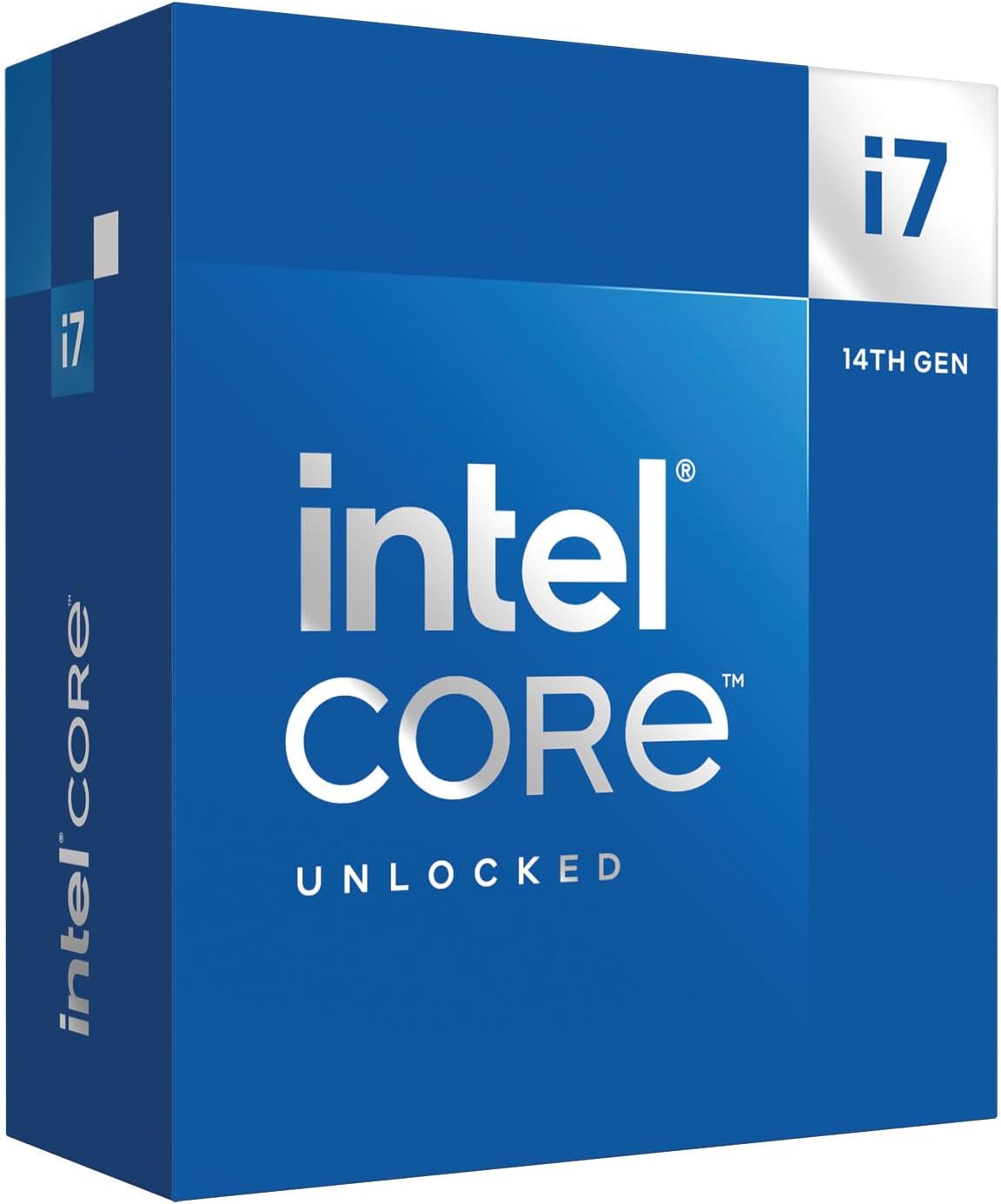
The Intel Core i7-14700K is a 14th-generation desktop processor that blends high-performance P-cores with efficient E-cores, giving PC gamers and content creators a versatile chip for demanding workloads. With 8 performance cores and 12 efficiency cores for a total of 20 cores and 28 threads, it offers strong multi-threaded performance for gaming while streaming, video editing, or running productivity tasks in the background. This processor is designed for the LGA1700 socket and works with both Intel 600 and 700 series motherboards, though a BIOS update may be needed for older boards.
This CPU is best suited for PC gamers who want high frame rates in modern titles, competitive esports players who need consistent responsiveness, streamers who multitask during broadcasts, and content creators who edit video or render 3D assets. Its hybrid architecture allows demanding games to run on the performance cores while background apps like Discord, OBS, or Chrome tabs are handled by the efficient cores, keeping your gameplay smooth and your stream stable. The unlocked multiplier also appeals to enthusiasts who want to push clock speeds beyond stock with adequate cooling.
When it comes to gaming, the i7-14700K delivers strong single-core performance for snappy responsiveness in fast-paced shooters like Valorant, CS2, and Call of Duty, as well as in CPU-intensive titles like Cyberpunk 2077 and Microsoft Flight Simulator. Users report noticeable gains over previous-gen i7s, especially in games that benefit from higher core counts and faster cache. The 33 MB Intel Smart Cache helps reduce latency, while support for PCIe 5.0 and DDR5 memory means this chip can take full advantage of the latest GPUs and fast RAM kits for even better frame rates.
Cooling is a critical consideration with this processor. Under full load, the i7-14700K can draw significant power and generate substantial heat. Most builders will want at least a quality 240mm AIO liquid cooler, and a 360mm AIO or custom loop is recommended for sustained all-core workloads. Undervolting is a popular technique among enthusiasts to reduce temperatures without sacrificing much performance, as noted in user feedback. A good contact frame for the LGA1700 socket can also help with even thermal paste spread and lower temps.
Setup is straightforward if you have a compatible motherboard and a BIOS updated to support 14th-gen chips. The processor integrates Intel UHD Graphics 770, which is handy for troubleshooting or basic display output without a dedicated GPU. Overclocking headroom is available for those who want to push frequencies further, though the stock Turbo Boost performance is already strong for most gaming scenarios. The chip works with both DDR4 and DDR5 memory, giving builders the option to save money with existing DDR4 kits or invest in faster DDR5 for future-proofing.
Realistically, the i7-14700K sits in a sweet spot for high-end gaming builds where you want strong multi-core performance without stepping up to the i9 price tier. It handles gaming, streaming, and productivity tasks simultaneously without breaking a sweat, making it a versatile choice for a gaming PC that also doubles as a workstation. Just be ready to invest in adequate cooling and a quality power supply, as this chip pulls significant power under load. For gamers building a new rig or upgrading from a 12th-gen or earlier platform, this CPU offers a compelling balance of price and performance.
In gaming scenarios, the i7-14700K delivers excellent single-core performance thanks to its high boost clock and Intel Turbo Boost Max Technology 3.0. This translates to high frame rates in competitive shooters like Valorant and CS2, where CPU speed often dictates performance. The 8 P-cores handle the game logic while the 12 E-cores manage background tasks like Discord, streaming software, and game launchers, resulting in smoother gameplay with fewer stutters. Users report strong performance in AAA titles at 1440p and 4K when paired with a modern GPU, with the CPU rarely becoming the bottleneck.
For streaming, the hybrid architecture lets you game on the P-cores while encoding and streaming tasks run on the E-cores, keeping in-game performance consistent. The integrated graphics are not intended for gaming but provide a useful fallback for troubleshooting or basic display output. Overclockers will appreciate the unlocked multiplier and robust VRM support on Z790 boards, though thermal headroom varies by silicon quality.

Pros
- Strong gaming performance for its price with i7 and RTX 4050
- 165Hz display with thin bezels provides immersive, fluid visuals
- Fast 1TB Gen 4 SSD and 16GB DDR5 RAM for quick boot and game loads
- Good connectivity including Thunderbolt 4, HDMI 2.1, and Wi-Fi 6
- Effective cooling system with customizable fan curves
Cons
- Battery life around 5 hours may require frequent charging during extended use
- Weighs 4.66 lbs, making it less portable than some ultrabooks
- Only 6GB VRAM on RTX 4050 may limit future AAA titles at high settings
The Acer Nitro V 15 (ANV15-52-76NK) is a dedicated gaming laptop that hits a sweet spot for PC gamers, competitive esports players, streamers, and content creators who need reliable performance without breaking the bank. Powered by an Intel Core i7-13620H processor and an NVIDIA GeForce RTX 4050 GPU, this machine is built to handle modern games, multitasking, and creative workloads like video editing or live streaming.
For gamers, the real highlight is the 15.6-inch Full HD IPS display with a 165Hz refresh rate. This means you get buttery-smooth motion in fast-paced shooters like Valorant or Call of Duty, with minimal ghosting and precise tracking. The 1920x1080 resolution keeps frame rates high, and the thin bezels offer an immersive 82.64% screen-to-body ratio. The RTX 4050 supports DLSS 3.5 and ray tracing, so even demanding titles like Cyberpunk 2077 can look stunning with AI-enhanced visuals.
Performance is backed by 16GB of DDR5 RAM (upgradeable to 32GB) and a 1TB PCIe Gen 4 SSD. Load times are snappy, and you can keep multiple apps open without lag. The laptop also includes Wi-Fi 6 and Killer Ethernet E2600 for low-latency online play, plus a Thunderbolt 4 port that supports fast charging, data transfer, and video output. The dual-fan cooling system with adjustable fan speeds helps keep the CPU and GPU cool during extended sessions, though the laptop does get warm under heavy load.
Build quality is solid with a black plastic chassis that feels durable, though it's not ultra-premium. The backlit keyboard includes a numeric keypad, making it practical for both gaming and productivity tasks. The 4.66-pound weight is manageable for moving between rooms but not ideal for daily commuting. The 5-hour battery life is typical for a gaming laptop, so expect to stay plugged in for gaming sessions.
Setting up the software is straightforward with Windows 11 pre-installed and Acer's NitroSense utility for monitoring performance and customizing fan curves. The AI-powered PurifiedView and PurifiedVoice features improve webcam and microphone quality for Discord calls or streaming, though the built-in webcam is only 720p. One limitation is the RTX 4050's 6GB VRAM, which may struggle with ultra textures in future AAA titles, but for 1080p gaming and most current releases, it's plenty capable.
Overall, the Acer Nitro V 15 is a practical recommendation for college gamers, work-from-home gamers, and anyone building a versatile setup that can handle both gaming and daily tasks. It offers strong value at its price point, and the 165Hz display combined with RTX 4050 makes it a reliable choice for competitive and casual gamers alike.
The combination of the Intel Core i7-13620H (10 cores, up to 4.9 GHz) and NVIDIA GeForce RTX 4050 (6GB GDDR6, 194 AI TOPS) delivers excellent 1080p gaming performance. In competitive titles like Fortnite and Apex Legends, you can expect well over 100 FPS at high settings, while more demanding games like Elden Ring or Assassin's Creed Mirage run smoothly with DLSS enabled. The 165Hz display ensures every frame looks fluid, giving you a clear edge in fast-paced shooters.
The 15.6-inch Full HD IPS panel offers vibrant colors and decent contrast with a 165Hz refresh rate. The 16:9 aspect ratio and thin bezels create an immersive gaming experience. Response times are good enough to minimize ghosting, and the 300-nit brightness works well indoors. For a gaming laptop at this price, the display is a strong selling point.
Port selection is generous: one Thunderbolt 4 (USB-C with 65W charging, DisplayPort), one USB 3.2 Gen 2 Type-C, two USB 3.2 Gen 1 Type-A, HDMI 2.1, Gigabit Ethernet, and a headphone jack. This setup supports dual external monitors, fast peripherals, and reliable wired networking. Wi-Fi 6 and Bluetooth 5.2 round out wireless connectivity.


Pros
- Excellent gaming performance with high clock speeds and hybrid core design.
- Unlocked multiplier for overclocking enthusiasts.
- Supports both DDR4 and DDR5 memory for flexible builds.
- Strong multitasking capabilities for streaming and content creation.
- Competitive price point for a high-end CPU.
Cons
- Requires discrete graphics card, no integrated GPU.
- Higher power draw under load may need robust cooling solution.
- Older platform compared to newer 13th and 14th gen options.
The Intel Core i9-12900KF is a desktop processor built for gamers, streamers, and content creators who want top-tier performance without compromise. As part of Intel's 12th Gen lineup, this CPU uses a hybrid architecture that combines 8 high-performance cores (P-cores) with 8 efficient cores (E-cores), totaling 16 cores and 24 threads. This design allows the processor to handle demanding games and background tasks like streaming or Discord calls simultaneously without stuttering.
For PC gamers, the i9-12900KF delivers impressive responsiveness in titles like Call of Duty, Fortnite, and Cyberpunk 2077. With a single P-core turbo speed up to 5.2 GHz and 30MB of Intel Smart Cache, you can expect low-latency performance and smooth frame rates, especially when paired with a fast GPU and DDR5 memory. The unlocked multiplier also gives overclocking enthusiasts room to push performance further, though a capable cooler is recommended due to the 125W base power and higher thermal output under load.
Streamers and content creators will appreciate the multitasking prowess. The E-cores handle encoding, chat, and browser tabs while the P-cores focus on gaming, thanks to Intel Thread Director technology that prioritizes workloads intelligently. This makes the i9-12900KF a solid choice for those who game and stream on Twitch or YouTube, or edit videos in between matches. Compatibility with PCIe Gen 5 and DDR5 ensures you can build a system that stays relevant for years.
Build quality is typical of Intel's desktop processors: reliable and well-engineered. The LGA1700 socket fits a wide range of Intel 600 and 700 series motherboards, giving you flexibility in choosing features like Wi-Fi 6E, Thunderbolt 4, and ample M.2 slots. Setup is straightforward if you're familiar with PC building, though you'll need to apply thermal paste and attach a compatible cooler. Cable management is simplified by the CPU's single power connector, but the lack of an integrated GPU means you must have a discrete graphics card for display output.
One realistic limitation is that the i9-12900KF is now a previous-generation chip, with newer 13th and 14th gen processors offering incremental improvements. However, its price has dropped significantly, making it a value option for high-end gaming builds. It also runs hotter than some competitors, so investing in a quality air or liquid cooler is wise for sustained performance. For casual gamers or those on a tighter budget, a Core i5 or i7 might be more practical, but for enthusiasts who want maximum gaming and multitasking muscle, the i9-12900KF remains a strong contender.
Overall, the Intel Core i9-12900KF is a powerful processor that excels in gaming, streaming, and content creation. It's best suited for PC gamers who want high frame rates, streamers who need smooth multitasking, and builders who value overclocking headroom. If you're assembling a gaming PC with a dedicated GPU and want a CPU that balances performance and price, this is a smart buy.

Pros
- Exceptional multi-core performance for gaming, streaming, and content creation
- Solid build quality with TUF military-grade components and comprehensive cooling
- Extensive connectivity options including Wi-Fi 6E, Bluetooth 5.3, and multiple USB ports
- DDR5 and PCIe 5.0 support ensures compatibility with the latest high-speed components
- User-friendly features like Q-LED troubleshooting, pre-mounted I/O shield, and M.2 Q-Latch simplify installation
Cons
- Premium price point may be overkill for casual gamers or budget-minded builders
- Some users have reported bent pins upon delivery, requiring careful inspection before installation
- Requires a compatible LGA 1700 CPU cooler, adding to overall build cost if upgrading from older platforms
This Micro Center bundle pairs Intel's flagship Core i9-14900K processor with the ASUS TUF Gaming Z790-Plus WiFi motherboard, creating a formidable foundation for high-end gaming PCs, streaming rigs, and content creation workstations. The i9-14900K features 24 cores (8 P-cores + 16 E-cores) and 32 threads, with a max turbo frequency of 6.0 GHz, delivering exceptional responsiveness for the most demanding games and multitasking scenarios. The TUF Z790 board complements this CPU with robust power delivery, extensive cooling, and a wealth of modern connectivity options.
For PC gamers, this combo excels at pushing high frame rates in competitive titles like Valorant, CS2, and Call of Duty, while easily handling simultaneous streaming, Discord, and background tasks. Streamers and content creators will appreciate the raw multi-core muscle for video editing, 3D rendering, and encoding, reducing render times significantly. The motherboard's DDR5 support (up to 7200 MHz OC) ensures snappy load times and smooth system responsiveness, while four M.2 slots with heatsinks allow for blistering-fast storage arrays.
Build quality is a standout feature of the ASUS TUF series. The motherboard uses military-grade TUF components, including reinforced PCIe slots (Safeslot), ESD guards, and a 16+1 DrMOS VRM with substantial heatsinks. This thermal design keeps the system stable during long gaming sessions, even when the i9-14900K is under heavy load. The board also includes dedicated M.2 heatsinks, a PCH fanless heatsink, and multiple fan headers with Fan Xpert 4 utility for customizable cooling curves.
Setup is made easier with thoughtful touches like a pre-mounted I/O shield, Q-LED diagnostic lights, and the M.2 Q-Latch tool-less design. The BIOS is intuitive, offering extensive overclocking options for both CPU and memory. However, some users have reported receiving units with bent CPU socket pins, so thorough inspection upon arrival is recommended. Once installed, the system is highly reliable and offers excellent longevity.
Connectivity is future-ready: Wi-Fi 6E and Bluetooth 5.3 provide low-latency wireless, while the 2.5Gb Ethernet port ensures stable wired networking. The back panel includes USB 3.2 Gen 2x2 Type-C, multiple USB 3.2 Gen 2 ports, and HDMI/DisplayPort outputs for integrated graphics use. Internal headers support USB 3.2 Gen 2, Thunderbolt 4, and addressable RGB, making it easy to expand and customize.
Overall, this Micro Center combo is an excellent choice for gamers, streamers, and professionals who demand top-tier performance and reliability. It's particularly well-suited for those building a high-end PC for competitive gaming, content creation, or a streaming setup. The only real downsides are its premium price and the potential for shipping damage, but careful purchasing from a reputable seller mitigates the latter. For anyone seeking a no-compromise foundation for a future-proof gaming rig, this bundle delivers outstanding value.
The Intel i9-14900K is currently one of the fastest gaming CPUs on the market, with a 6.0 GHz boost clock that translates to buttery-smooth frame rates in CPU-intensive titles. When paired with the TUF Gaming Z790-Plus WiFi, gamers can expect minimal input lag, high 1% lows, and excellent performance in esports titles like Overwatch 2, Apex Legends, and Fortnite. The motherboard's DDR5 support allows for low-latency memory kits, further reducing stutter in open-world games like Cyberpunk 2077 or Starfield. Additionally, PCIe 5.0 compatibility ensures that next-generation graphics cards can run at full bandwidth, future-proofing your system for years to come.
ASUS TUF Gaming motherboards are known for their ruggedness, and the Z790-Plus WiFi is no exception. It features a 16+1 DrMOS VRM with massive heatsinks, keeping power delivery cool even under heavy overclocking loads. The board also includes a dedicated VRM heatsink, PCH fanless heatsink, and multiple M.2 heatsinks to prevent thermal throttling on SSDs. With four chassis fan headers and a hybrid AIO pump header, builders have full control over their cooling setup via the Fan Xpert 4 utility. The military-grade TUF components (chokes, capacitors, and MOSFETs) provide long-term durability, making this motherboard a reliable choice for around-the-clock gaming or 24/7 operation.
The TUF Gaming Z790-Plus WiFi offers a comprehensive array of ports and slots. It includes four M.2 slots (all with heatsinks), four SATA 6Gb/s ports, and support for PCIe 5.0 on the primary x16 slot. Rear I/O features one USB 3.2 Gen 2x2 Type-C, three USB 3.2 Gen 2 ports (two Type-A, one Type-C), four USB 3.2 Gen 1 Type-A ports, DisplayPort and HDMI for integrated graphics, a Wi-Fi 6E module, and 2.5Gb Ethernet. Internal headers include USB 3.2 Gen 2, Thunderbolt 4, and addressable RGB headers (3x Gen 2, 1x Aura RGB). This level of connectivity makes the motherboard ideal for a high-end gaming setup with multiple peripherals, capture cards, and RGB lighting.

Pros
- Strong price-to-performance ratio with RTX 4050 and 165Hz display
- AI-powered graphics and DLSS 3.5 support for modern games
- Easy RAM upgrade path to overcome the 8GB bottleneck
- Solid connectivity including Thunderbolt 4 and Wi-Fi 6
- Effective cooling system with customizable fan profiles
Cons
- 8GB RAM is insufficient for many modern AAA titles out of the box
- Some user reports of screen ghosting at high refresh rates
- Fan noise can be noticeable under heavy load in performance mode
The Acer Nitro V 15 (model ANV15-52-586Z) is a budget-friendly gaming laptop that aims to deliver solid performance without breaking the bank. It's powered by an Intel Core i5-13420H processor and an NVIDIA GeForce RTX 4050 laptop GPU, which together provide enough muscle for esports titles, popular battle royale games, and even some AAA experiences at medium settings. The 15.6-inch Full HD IPS display with a 165Hz refresh rate is a standout feature at this price point, offering smooth motion and decent color reproduction for both gaming and content consumption.
This laptop is best suited for PC gamers on a tight budget, college gamers looking for a portable rig, and casual gamers who want to play modern titles without spending a fortune. It also works well for light content creation or streaming, thanks to the RTX 4050's AI capabilities and DLSS 3.5 support. However, it's not a turn-key solution for demanding users right out of the box, as the 8GB of DDR5 RAM is a clear bottleneck. Many user reviews highlight that upgrading to 16GB or 32GB significantly improves performance and eliminates stuttering in games like Hogwarts Legacy.
In terms of real-world gaming performance, the RTX 4050 handles most games at 1080p with high settings, and the 165Hz screen makes fast-paced shooters feel responsive. The dual-fan cooling system does a good job keeping temperatures in check, though the fans get loud in performance mode. The keyboard is comfortable for gaming with a backlit layout and numeric keypad, but the spacebar lacks backlighting, which some users may find odd. Build quality is typical for this price range: mostly plastic with a sturdy feel, and the laptop weighs 4.66 pounds, making it portable enough for a backpack.
Connectivity is a strong point, with Thunderbolt 4, HDMI 2.1, three USB 3.2 Gen 1 ports, and Wi-Fi 6. This makes it easy to connect to external monitors, high-speed storage, or a gaming dock. The Acer PurifiedVoice noise reduction technology helps with in-game chat and Discord calls, though the built-in microphone is average. Setting up the laptop is straightforward, but you'll want to update drivers and consider a fresh Windows install if you encounter any pre-installed software issues, as some users reported.
The biggest limitation is the 8GB RAM, which causes stuttering and high memory usage even on the desktop. Upgrading the RAM is simple (two DDR5 slots), and many users recommend doing it right away. Another potential issue is screen ghosting at 165Hz, which may be noticeable in fast-paced games. Fan noise under load is also worth noting if you play in a quiet room. Despite these drawbacks, the Acer Nitro V 15 offers excellent value for its price, especially after a RAM upgrade.
If you're a budget-conscious gamer, a college student, or someone building their first gaming setup, this laptop is a practical choice. It's not perfect out of the box, but with a small investment in more RAM, it becomes a very capable machine for gaming, streaming, and everyday use. For esports players or those who prioritize competitive performance, the 165Hz display and RTX 4050 provide a smooth experience in games like Valorant, Fortnite, and Overwatch 2. Just be prepared to spend a little extra time and money to unlock its full potential.
The Acer Nitro V 15's RTX 4050 GPU and Intel i5 processor deliver solid 1080p gaming performance. In esports titles like CS:GO and Valorant, you can expect well over 100 FPS on high settings, taking full advantage of the 165Hz display. For more demanding games like Cyberpunk 2077, DLSS 3.5 and frame generation help maintain playable frame rates at medium settings. The 8GB RAM is a bottleneck here, causing occasional stutters in open-world games; upgrading to 16GB resolves this. The dual-fan cooling system keeps the CPU and GPU from throttling during long sessions, though the fans become audible in performance mode. Overall, this laptop offers great gaming value once you address the memory limitation.
The Acer Nitro V 15 features a dark, understated design with a glossy Acer logo on the lid and subtle gradient accents. The chassis is primarily plastic but feels sturdy enough for daily use. At 4.66 pounds and 0.93 inches thick, it's reasonably portable for a 15.6-inch gaming laptop. The keyboard includes a backlit layout with a numeric keypad, though the spacebar lacks illumination. The touchpad is responsive, but most gamers will use an external mouse. The display has thin bezels on the sides, giving an 82.64% screen-to-body ratio, and the hinge feels solid. Port placement is practical, with USB ports on both sides and the HDMI and Thunderbolt 4 on the rear. Overall, the build quality meets expectations for the price range, with no major creaking or flex during normal use.

Pros
- Powerful CPU and GPU combination handles modern games, streaming, and content creation without breaking a sweat.
- Generous 32GB RAM and fast 1TB NVMe SSD offer ample storage and smooth multitasking for gamers and creators.
- Effective cooling system with 360mm AIO liquid cooler and ARGB fans keeps performance consistent during long sessions.
- Attractive white mesh case with great airflow and clean aesthetics that fits well in any gaming setup.
- Includes essential peripherals (keyboard and mouse) for immediate use, saving you time and money.
Cons
- CPU is from a previous generation (11th gen Intel), though still very capable for gaming and productivity.
- No user reviews yet, so real-world feedback is limited; it's a new product on the market.
- Mid tower case may be larger than some desk setups, so measure your space before purchasing.
If you're a PC gamer, streamer, or content creator looking for a pre-built desktop that can handle demanding tasks without the hassle of building your own, the AVGPC Blizzard Gaming PC is worth a close look. This system pairs an Intel Core i9-11900KF processor (with turbo speeds up to 5.3 GHz) with the brand-new NVIDIA GeForce RTX 5060 Ti GPU, featuring 8GB of GDDR7 memory. It's designed to deliver smooth, high-frame-rate gaming in titles like Fortnite, Call of Duty, and Apex Legends, while also handling streaming on Twitch or YouTube and video editing software with ease.
Performance-wise, the combination of the i9-11900KF and RTX 5060 Ti is excellent for 1440p gaming and even some 4K titles at high settings. The 32GB of DDR4 RAM ensures you can keep multiple applications open, like Discord, OBS, and a browser, without any slowdown. The 1TB NVMe SSD provides fast load times, so you'll spend less time waiting and more time playing. For competitive gamers, the low latency and high responsiveness of this setup will be a clear advantage, especially in fast-paced FPS games where every millisecond counts.
Cooling is a key strength of this build. The 360mm liquid cooler and ARGB fans work together to keep temperatures in check during intense gaming sessions or extended periods of rendering. The Cooler Master TD500 Mesh White case is designed for optimal airflow, with a mesh front panel and a tempered glass side that shows off the internal components. The included ARGB fans can be customized to match your preferred color scheme, making this a great choice for RGB setup enthusiasts who want a clean, coordinated look.
Build quality is solid, with a sturdy metal frame and a well-organized interior that supports cable management. The 850W Gold rated power supply provides reliable power delivery, even when you're pushing the system hard. Setting up the Blizzard is straightforward: just connect your monitor, peripherals, and power, and you're ready to go. The included keyboard and mouse are basic but functional, perfect for getting started immediately. For users who want to add their own keyboard and mouse, that's easy as well.
One realistic limitation is that the CPU is from the 11th generation, not the latest, but it still offers strong single-core performance that's more than enough for most games and creative work. Additionally, since this is a new product with no reviews yet, it's wise to consider the return policy and warranty. The mid tower case has a moderate footprint, so make sure your desk or gaming area can accommodate it.
Overall, the AVGPC Blizzard Gaming PC is a practical choice for PC gamers, streamers, and content creators who want a high-performance, aesthetically pleasing system without the complexity of building. It's particularly well-suited for those who value ready-to-use convenience, good cooling, and a clean white and RGB theme. If you're in the market for a pre-built gaming desktop that can handle both gaming and productivity, this is a solid option to consider.
Gaming performance is where the AVGPC Blizzard shines. The Intel Core i9-11900KF delivers high clock speeds that excel in CPU-bound games, while the RTX 5060 Ti with 8GB GDDR7 memory provides smooth frame rates at 1440p and even 4K with DLSS enabled. In titles like 'Cyberpunk 2077', 'Valorant', and 'Rainbow Six Siege', you can expect high to ultra settings with consistent 60+ FPS at 1440p. The 32GB of RAM ensures background tasks like streaming don't impact gameplay, and the 1TB NVMe SSD reduces load times significantly. For esports players, the low latency and high responsiveness give a competitive edge.
Keeping temperatures under control is critical for a high-performance gaming PC, and the Blizzard doesn't disappoint. The 360mm liquid cooler efficiently dissipates heat from the CPU, while the ARGB fans in the Cooler Master TD500 Mesh case ensure excellent airflow through the mesh front panel. During extended gaming sessions, the system remains stable and quiet, with no thermal throttling. The design also allows for positive air pressure, which helps reduce dust buildup. The included ARGB fans can be controlled via software to match your setup, adding both performance and style.
The AVGPC Blizzard is built with care, using a reinforced steel frame and a tempered glass side panel. The Cooler Master TD500 Mesh case is known for its sturdy construction and excellent cable management options. The interior is neatly organized, with pre-routed cables that make it easy to install additional drives or upgrade components later. The 850W Gold PSU from a reputable brand provides reliable power delivery. Overall, the build feels solid and durable, giving confidence that it will last for years.

Pros
- Outstanding raw performance for AAA gaming, esports, and creative workloads.
- High-refresh-rate 2.5K display with excellent color and contrast for both gaming and content creation.
- Robust cooling system that keeps thermals in check during extended sessions.
- Plenty of RAM and fast SSD storage for seamless multitasking and quick load times.
- Immersive RGB lighting with useful Stealth Mode for professional environments.
Cons
- Premium price point may not suit budget-conscious gamers.
- At 6.02 pounds, it is heavier than some ultraportable gaming laptops.
- Battery life may be limited under heavy gaming loads, typical for high-performance gaming laptops.
The ASUS ROG Strix G16 (2025) is a high-performance gaming laptop designed for PC gamers who demand top-tier speed and visuals. It is powered by an Intel Core Ultra 9 275HX processor and an NVIDIA GeForce RTX 5070 Ti laptop GPU, built on the Blackwell architecture with DLSS 4 and Max-Q technologies. This combination makes it a strong choice for competitive esports players, streamers, and content creators who need reliable power for gaming, editing, and multitasking.
In real-world gaming, the ROG Strix G16 excels with its 16-inch ROG Nebula display, which offers a 2560x1600 resolution and a blazing 240Hz refresh rate with a 3ms response time. The screen uses an ACR film to enhance contrast and reduce glare, providing clear visuals even in bright rooms. Whether you are playing fast-paced FPS games, exploring open-world titles, or editing video, the display delivers smooth motion and vibrant colors. The 32GB of DDR5-5600MHz RAM and 1TB PCIe 4.0 SSD ensure quick load times and seamless multitasking, so you can switch between games, streaming software, and productivity apps without lag.
Build quality is solid, with a sleek black chassis that feels durable and premium. The keyboard is designed for esports, with responsive keys and per-key RGB lighting that syncs with the full-surround light bar. You can customize the lighting through ASUS software, and the Stealth Mode turns off all lights for a more professional look in meetings or classes. The laptop measures 13.94 x 10.55 x 0.9 inches and weighs 6.02 pounds, which is typical for a gaming laptop of this power. It may not be the most portable option, but it fits well on a desk or in a backpack for occasional travel.
Cooling is handled by ROG Intelligent Cooling, which includes an end-to-end vapor chamber, tri-fan technology, and Conductonaut extreme liquid metal on the CPU. This system keeps temperatures under control during long gaming sessions, maintaining performance without excessive fan noise. The laptop also features Wi-Fi 7 for fast, low-latency online gaming and streaming, along with three USB 3.0 ports and other connectivity options for peripherals and external monitors.
Setting up the ROG Strix G16 is straightforward: it runs Windows 11 Home out of the box, and you can easily upgrade the RAM and SSD if needed. The included 3-month PC Game Pass gives you access to a library of games to test its capabilities. One limitation to consider is the premium price, which reflects the high-end components. Additionally, battery life will be shorter during heavy gaming, so you will likely want to keep it plugged in for extended sessions. Overall, this laptop is an excellent investment for gamers and creators who want a powerful, well-built machine that can handle demanding tasks and deliver an immersive gaming experience.
The ASUS ROG Strix G16 (2025) is built for serious gaming performance. The Intel Core Ultra 9 275HX processor and NVIDIA RTX 5070 Ti GPU provide ample power for modern AAA titles at high settings, as well as competitive esports games at maximum frame rates. The 240Hz display ensures smooth, tear-free visuals, while DLSS 4 and Max-Q technologies optimize performance and efficiency. Whether you are playing demanding open-world games or fast-paced shooters, this laptop delivers responsive, immersive gameplay.
The ROG Strix G16 features a robust black chassis that feels sturdy and well-constructed. The keyboard is designed for esports, with responsive keys and per-key RGB lighting. The full-surround RGB light bar adds a customizable aesthetic, and the Stealth Mode allows you to disable lighting for a more professional appearance. The laptop weighs 6.02 pounds and measures 0.9 inches thin, making it a solid but portable desktop replacement.
ROG Intelligent Cooling keeps the Strix G16 running cool under pressure. The system uses a vapor chamber, tri-fan technology, and liquid metal on the CPU to efficiently dissipate heat. This allows the laptop to maintain high performance during long gaming sessions without excessive fan noise or thermal throttling. The cooling design is a key advantage for users who push their hardware to the limit.
The 16-inch ROG Nebula display is a standout feature, offering a 2560x1600 resolution, 240Hz refresh rate, and 3ms response time. The ACR film enhances contrast and reduces glare, making it suitable for brightly lit rooms. Colors are vibrant, and motion handling is excellent for gaming and content creation. This screen is ideal for both competitive play and creative work.
The ROG Strix G16 includes Wi-Fi 7 for ultra-fast wireless connectivity, along with three USB 3.0 ports and other standard connections. This allows you to easily connect gaming mice, keyboards, headsets, and external monitors. The laptop also supports Bluetooth for wireless peripherals. Overall, connectivity is robust and future-proof for online gaming and streaming.

Pros
- Exceptional gaming performance with RTX 5080 and Intel Ultra 9, handling AAA titles at high settings with ease.
- Quiet operation even under load, thanks to liquid cooling and improved airflow design.
- Compact tower fits well on most desks, and clear side panel shows off internal components and RGB lighting.
- Alienware Command Center offers intuitive control over lighting, performance modes, and game profiles.
- Solid build quality with cable management and a robust power supply (1000W Platinum) ensures stability.
Cons
- Premium price compared to building a similar PC yourself, though GPU and RAM costs offset that for some buyers.
- Some users have reported startup issues that require a full discharge to resolve, which can be frustrating.
- Limited upgrade path due to proprietary motherboard and power supply connectors, though standard PCIe and RAM slots remain usable.
The Alienware Aurora ACT1250 is a top-tier gaming desktop built for PC gamers, streamers, and content creators who want a powerful system without the hassle of building their own. It combines an Intel Core Ultra 9 processor with an NVIDIA GeForce RTX 5080, delivering exceptional performance for 4K gaming, high-refresh-rate esports, and demanding creative workloads. The liquid-cooled CPU and carefully designed chassis keep things quiet and cool, even during marathon gaming sessions.
Based on product specifications and user feedback, this desktop excels in responsiveness and low-latency gaming. The RTX 5080 supports DLSS 4 and NVIDIA Reflex 2, which can dramatically boost frame rates in supported titles while reducing input lag. Many users report smooth gameplay in games like Cyberpunk 2077 and Escape from Tarkov at maximum settings. The Intel Core Ultra 9 with its 20 cores handles multitasking effortlessly, whether you're streaming, running Discord, or editing videos.
The build quality is solid: a matte black case with a clear side panel that shows off the internal components and customizable AlienFX lighting. The hexagonal side vents and top exhaust improve airflow without adding noise. Cable management is well-executed internally, keeping the system tidy and thermals efficient. The front I/O includes USB-C with Power Share, so you can charge devices even when the PC is off.
Set up is straightforward: plug in, power on, and Windows 11 Home takes care of the rest. The Alienware Command Center lets you tweak lighting, fan speeds, and performance presets - quiet, balanced, or performance mode. Some users noted that the included mouse and keyboard are basic, but most gamers will already have their own peripherals. The 1TB SSD is fast but may fill quickly with modern game libraries; you can add more drives via the two M.2 slots or a 3.5-inch bay.
Realistic limitations include the premium price - this is a significant investment. A few customers have experienced occasional startup glitches that require a full power discharge to fix, though this isn't widespread. Also, while the tower is compact, it's still a substantial piece of hardware that needs adequate desk space. The single HDMI port on the GPU might be an issue for those running multiple monitors, but the RTX 5080 typically has multiple DisplayPort outputs as well.
Overall, the Alienware Aurora ACT1250 is a strong choice for gamers who want a reliable, high-performance prebuilt with excellent cooling and quiet operation. It's especially well-suited for streamers, esports players, and anyone who values plug-and-play convenience over building their own rig. If you have the budget and prefer a polished experience, this desktop delivers.
The Alienware Aurora ACT1250 is powered by the NVIDIA GeForce RTX 5080, which brings the latest Blackwell architecture and features like DLSS 4 Multi Frame Generation. This allows for buttery-smooth frame rates in demanding titles, even at 4K resolution. Combined with the Intel Core Ultra 9, the system handles competitive games like Valorant and Call of Duty at high refresh rates with negligible input lag thanks to NVIDIA Reflex 2. According to user reviews, it easily pushes over 70 FPS in graphics-heavy games like Streets of Tarkov on ultra settings. The 32GB of DDR5 RAM ensures seamless multitasking while gaming and streaming.
The Alienware Aurora uses a 240mm liquid cooler for the CPU, supported by a smart thermal design that includes hexagonal side vents and a top exhaust. According to the product description, this results in 20% quieter operation and 7% lower temperatures compared to previous generations. The clear side panel lets you see the liquid cooling tubes and RGB lighting. The 1000W Platinum power supply ensures stable power delivery even under heavy loads. Users report that the system remains whisper-quiet during gaming and stays cool over extended sessions, making it suitable for both gaming rooms and open-plan setups.

Pros
- Exceptional multitasking performance with 24 cores and 32 threads
- Very high turbo clock speeds up to 6.0 GHz for gaming and productivity
- Unlocked multiplier for flexible overclocking with proper cooling
- Backward compatible with Intel 600 and 700 series motherboards
- Supports both DDR4 and DDR5 memory for upgrade flexibility
Cons
- High power draw and heat output require a robust liquid cooler or high-end air cooler
- No integrated graphics, so a discrete GPU is mandatory
- Some early stability issues reported, but BIOS updates have mitigated them
The Intel Core i9-14900KF is a desktop processor designed for PC gamers, streamers, content creators, and esports enthusiasts who demand top-tier performance. With 24 cores (8 Performance-cores and 16 Efficient-cores) and 32 threads, this unlocked CPU is built to handle intense multitasking while delivering smooth gaming experiences. It targets users who want the best of both worlds: high frame rates in competitive titles and the ability to run demanding creative workloads without slowing down.
In real-world use, the i9-14900KF shines in hybrid scenarios. Gamers can play demanding open-world games or fast-paced esports titles while streaming, recording, or running Discord in the background without noticeable lag. The P-cores handle the bulk of gaming tasks, while E-cores manage background applications, ensuring consistent performance. According to user feedback, frame rates are impressive in titles like Cyberpunk 2077 and Call of Duty, and multitasking feels snappy. However, for pure gaming, some reviews note that AMD's Ryzen 7 7800X3D may offer slightly higher average FPS in CPU-bound games due to its larger cache, but the i9-14900KF excels when productivity tasks are added to the mix.
Build quality and practicality are solid. The processor itself is a standard LGA1700 package, compatible with Intel 600 and 700 series motherboards. Setup requires a BIOS update on 600-series boards to ensure stability and fix early issues. A discrete graphics card is necessary since the KF model lacks integrated graphics. Cooling is critical - this chip runs hot under load, reaching 70-80 degrees Celsius with a good AIO liquid cooler, and can spike higher during stress tests. Users should invest in a 240mm or larger AIO, or a high-end air cooler, and ensure good case airflow. The unlocked nature allows overclocking via Intel's Extreme Tuning Utility, which is straightforward for enthusiasts.
Ease of setup is manageable for experienced builders. The processor installs easily into compatible motherboards, but proper cooling and power delivery (recommended Z790 or Z690 board) are essential. Maintenance involves periodic cleaning of the cooler and thermal paste replacement. Cable management considerations include routing the CPU power cable and AIO tubing neatly in the case. The chip's power draw is significant, so a quality power supply (850W or higher) is recommended.
Limitations include high heat output and power consumption, as well as the need for a discrete GPU. Some users reported initial stability issues, but these have been largely resolved with motherboard BIOS updates. The processor also does not include a stock cooler, so an aftermarket cooler is mandatory. Despite these points, the i9-14900KF offers compelling performance for those who need the extra cores for productivity alongside gaming.
Overall, the Intel Core i9-14900KF is a strong choice for PC gamers and content creators building a high-end rig focused on multitasking and maximum performance. It works well for streamers running OBS or Streamlabs alongside games, for esports players who want to keep their system responsive under load, and for casual gamers who also edit videos or work from home. If your primary use is pure gaming, you might prefer a chip like the 7800X3D, but for a versatile powerhouse that doesn't compromise on productivity, the i9-14900KF delivers excellent value.
The Intel Core i9-14900KF delivers outstanding gaming performance, especially in CPU-intensive titles. With single-core boost up to 6.0 GHz, games like Valorant, CS2, and Apex Legends see very high frame rates, reducing input lag and improving responsiveness. In open-world games like Cyberpunk 2077, the processor maintains stable FPS even with background tasks. However, for pure gaming, the additional cores may not provide a noticeable benefit over a 14th-gen i7 or AMD's 7800X3D, which often matches or slightly exceeds it in average FPS due to its larger L3 cache. Where the i9-14900KF pulls ahead is in multitasking while gaming - for example, streaming without sacrificing performance. According to user reviews, it handles demanding games plus OBS or Discord flawlessly, making it ideal for streamers.
The i9-14900KF uses the LGA1700 socket and is compatible with Intel 600-series (with BIOS update) and 700-series chipset motherboards. It supports both DDR4 and DDR5 memory, giving builders flexibility in choosing memory kits. PCIe 5.0 support enables fast NVMe SSDs and the latest graphics cards. Users should ensure their motherboard has a robust VRM design to handle the processor's power draw, especially when overclocking. Intel's 600-series boards (Z690, B660) require a BIOS update before installation, which can be done with a compatible CPU or via USB flashback on supported boards. The chip also works with Windows 11 and many Linux distributions.
Key Factors in Deciding What Is the Best Intel Core for Gaming
Answering what is the best intel core for gaming requires identifying where gaming workloads place their heaviest computational demands. For most modern titles, the sweet spot sits squarely with processors like the unlocked Intel Core i7 tier, specifically chips like the Core i7-14700K. While flagship i9 processors offer higher maximum boost speeds, the combination of high single-core frequencies, robust L3 cache pools, and balanced core counts makes the i7 class the most practical choice for high-frame-rate performance. Understanding how architectural features translate into smooth frame pacing will help you select the exact chip suited to your monitor resolution and GPU pairing.
Identifying the Sweet Spot: Why Core i7 Often Edges Out Core i9 for Pure Gaming
Desktop processors in the enthusiast segment divide into distinct tiers designed for varying workload complexities. The unlocked Intel Core i7-14700K features 20 physical cores divided into 8 Performance cores and 12 Efficient cores, giving it 28 computational threads. In contrast, flagship models like the Intel Core i9-14900K and Core i9-14900KF extend this configuration to 24 cores and 32 threads with peak clock speeds reaching up to 6.0 GHz. For pure gaming tasks, modern rendering engines rarely saturate more than eight high-speed threads, leaving the additional background cores largely untapped during standard gameplay.
Because gaming performance relies heavily on single-thread throughput and quick access to cache memory, the extra multi-threaded headroom of an i9 primarily benefits creators who render heavy video projects or compile code. The Core i7 maintains virtually indistinguishable frame pacing and 1% low metrics in graphic-intensive games while demanding less aggressive cooling infrastructure. Enthusiasts who run simultaneous live streaming setups with OBS software encoding can still lean on the i7 platform without experiencing dropped frames. Choosing an i7 model allows gamers to allocate more of their overall system budget toward a higher-tier graphics card.
Single-Thread Clock Frequencies, P-Cores, and Frame Pacing
Clock speed remains one of the primary drivers of raw gaming frame rates, especially in fast-paced competitive esports titles. Intel Performance cores utilize Intel Turbo Boost Max Technology 3.0 to push individual core frequencies well past 5.0 GHz on modern desktop models. This instantaneous frequency burst ensures draw calls from the game engine reach the graphics pipeline with minimal delay. When frame times remain consistent, gameplay feels responsive, eliminating the micro-stutters that break immersion during critical gaming moments.
Cache size also plays an indispensable role alongside raw clock frequencies in determining frame delivery smoothness. The Intel Core i9-12900KF, for instance, provides 30 MB of L3 cache to ensure frequently referenced game assets remain rapidly accessible to the compute execution units. Larger cache pools reduce the number of cycles the CPU must spend waiting for data transfers from system memory. This reduction in latency directly protects minimum frame rates, stabilizing the 1% and 0.1% lows during chaotic in-game explosions or complex physics calculations.
The Role of Efficient Cores and Intel Thread Director in Modern Titles
Intel performance hybrid architecture splits processing duties between powerful Performance cores and energy-conscious Efficient cores. The hardware-level Intel Thread Director coordinates with the operating system scheduler to assign background tasks to E-cores while reserving P-cores exclusively for active game rendering. Background applications such as Discord voice chat, web browser tabs, and hardware monitoring tools operate without stealing clock cycles from your game. This separation ensures that multitasking during a gaming session does not degrade input responsiveness or introduce frame dips.
Older game engines that lack awareness of hybrid core layouts occasionally require proper operating system updates to schedule tasks properly. Modern operating systems incorporate native Thread Director support to optimize workload placement across both core types continuously. When operating correctly, this scheduling pipeline keeps primary physics, game logic, and animation threads locked onto high-frequency P-cores. The presence of multiple E-cores also provides plenty of parallel computing power when converting recorded game clips or handling software-based streaming encoders.
Resolution Bottlenecks: 1080p Esports Versus 1440p and 4K Visual Realism
The extent to which your central processor dictates frame rates depends significantly on your display resolution. At 1080p, powerful graphics cards render frames faster than the game engine can supply draw instructions, making the processor the primary performance bottleneck. Competitive players targeting 240Hz or 360Hz refresh rates on high-speed monitors need the absolute highest single-core clock speeds possible to maintain smooth motion. Under these CPU-bound conditions, stepping up to a processor like the Core i7-14700K or Core i9-14900KF yields noticeable gains in responsiveness and average frame delivery.
Increasing the visual fidelity to 1440p or 4K shifts the computational workload heavily toward the graphics processing unit. At higher resolutions, GPU rasterization, texture mapping, and ray-tracing calculations dictate the overall frame rate ceiling. While pairing a high-end CPU with immersive curved gaming display options delivers great visual fluidness, the measurable frame rate difference between an i7 and an i9 narrows considerably at 4K. Gamers who prioritize maximum resolution and cinematic visual settings can safely select a balanced processor without fear of bottlenecking their high-tier graphics card.
Motherboard Chipsets and Platform Total Cost: Z790 Versus B760
Evaluating desktop processors requires factoring in the overall platform investment, which includes the motherboard and power delivery architecture. Unlocked processors featuring a K or KF designation require a compatible socket LGA1700 motherboard with robust voltage regulator modules. Enthusiasts frequently pair flagship silicon with Z790 motherboards, such as bundles featuring the ASUS TUF Gaming Z790-Plus WiFi, to ensure stable voltage regulation and expanded PCIe lane distribution. High-grade VRM heatsinks and comprehensive power phases prevent power delivery throttling when the CPU draws sustained high package power.
Mainstream gamers who do not intend to manually overclock can opt for B760 chipset motherboards to reduce total platform expenditure. While B760 boards omit CPU multiplier overclocking, they retain memory profile tuning support and standard PCIe connectivity for modern graphics cards. Buyers must ensure that their chosen motherboard supports BIOS flashback features, especially when installing 14th Gen processors on older 600-series chipsets. Updating motherboard firmware to the latest microcode version ensures proper baseline voltage limits, protecting processor longevity and system stability over extended gaming marathons.
Memory Selection: Weighing DDR4 Affordability Against DDR5 Bandwidth
Modern Intel Core platforms provide flexibility by supporting both legacy DDR4 memory and modern DDR5 memory standards depending on motherboard layout. DDR4 memory kits offer an economical entry point for builders assembling budget-conscious gaming rigs or reusing components from older systems. While DDR4 provides lower latency timings, DDR5 significantly expands overall memory bandwidth to feed modern multi-core processors. Memory-sensitive games and open-world simulation titles frequently display improved 1% low frame pacing when running on high-speed DDR5 memory kits.
Selecting DDR5 memory with integrated Intel XMP profiles allows users to enable optimized operational speeds with a single toggle in the system BIOS. Desktop builders should verify motherboard Qualified Vendor Lists to guarantee memory kit stability under full operational loads. Achieving stable memory transfers prevents random application crashes and blue-screen events during competitive multiplayer matches. Investing in a DDR5 platform also provides a forward-looking upgrade path as memory kit frequencies mature and game engines evolve to demand higher throughput.
Thermal Headroom, Power Limits, and Cooler Pairing Realities
Sustained performance on unlocked desktop processors requires thoughtful thermal planning and adequate cooling solutions. Flagship processors like the Core i9-14900K and Core i9-14900KF draw substantial package power during heavy computational bursts, generating concentrated heat on the silicon die. When operating temperatures approach the thermal junction limit, the processor automatically throttles clock speeds to prevent physical damage. Installing a high-performance 360mm all-in-one liquid cooler or an expansive dual-tower air cooler ensures the CPU maintains its maximum boost frequencies without thermal throttling.
Modern desktop builds benefit greatly from enforcing official Intel baseline power delivery limits within the motherboard BIOS. Enforcing proper long-term power limits and short-term boost limits prevents motherboards from pumping excessive voltage into the processor during intense sessions. Proper case ventilation with balanced intake and exhaust fans further assists in keeping internal ambient temperatures low. Builders should always follow proper thermal paste application techniques and check cooler mounting bracket tension to guarantee uniform heat transfer from the integrated heat spreader.
Desktop Processors Versus Mobile Gaming Silicon: What Builders Must Know
Not all gaming experiences take place on custom-built desktop towers, as modern gaming laptops offer impressive processing capability in portable packages. Laptops like the Acer Nitro V utilize mobile processors such as the Intel Core i7-13620H and Core i5-13420H paired with dedicated mobile GPUs. These mobile processors feature hybrid architectures tailored to operate within strict thermal and electrical envelopes dictated by compact laptop chassis. While mobile H-series chips deliver admirable frame rates on integrated 165Hz displays, they operate with lower sustained wattage limits than desktop-class silicon.
Enthusiast portable machines, such as the ASUS ROG Strix G16 powered by the Intel Core Ultra 9 275HX, push mobile performance boundaries by leveraging advanced multi-fan cooling and vapor chamber thermal solutions. The Core Ultra series introduces architectural enhancements designed to balance high computing throughput with specialized power management. Desktop processors still hold the advantage in raw sustained clock speed and cooling headroom, but modern mobile Intel Core processors provide plenty of power for on-the-go gaming. Choosing between desktop and mobile silicon ultimately comes down to your need for platform upgradeability versus portable versatility.
Legacy Architectures Versus Modern Rigs: Why Generation Trumps Core Count
In the broader hardware market, older processors like the vintage Intel Core 2 Quad Q6600 or 11th Gen Core i9-11900KF illustrate how rapidly computing architectures advance. The Core 2 Quad Q6600 was a milestone quad-core processor in its era, but its 2.40 GHz clock speed and legacy architecture cannot support modern instruction sets or games. Even older flagship chips like the Core i9-11900KF, while capable of high clock speeds up to 5.3 GHz, lack the architectural efficiency, PCIe 5.0 capabilities, and hybrid core designs of current desktop generations. Microarchitecture improvements and higher instructions per cycle consistently outweigh raw core counts from legacy platforms.
Upgrading to a contemporary platform provides access to modern I/O connectivity, including high-speed PCIe NVMe storage and advanced USB standards. Contemporary processors handle modern game anti-cheat engines, physics calculations, and operating system security features without introducing background latency. Builders working with older systems often see dramatic frametime improvements simply by transitioning to modern entry-level or mid-range silicon. Keeping hardware generations current ensures broad compatibility with modern graphics cards and new gaming titles for years to come.
Integrated Graphics and Media Offload Utilities for Streamers
When selecting an Intel Core processor, the choice between standard K models and KF variants represents an important functional consideration. Standard processors like the Core i7-14700K feature integrated Intel UHD Graphics 770, whereas KF designated processors like the Core i9-14900KF omit display silicon entirely. While gamers invariably rely on a dedicated discrete graphics card for active game rendering, integrated graphics provide valuable troubleshooting capabilities if your primary GPU ever fails. Having display output directly from the motherboard I/O allows you to diagnose hardware issues or update system firmware without needing a spare graphics card.
Integrated Intel graphics also include the hardware-accelerated Intel Quick Sync Video media engine. Live streamers and content creators can assign secondary video encoding, Discord stream previews, or background video rendering directly to Quick Sync. This offloading preserves valuable compute cycles on your dedicated graphics card and Performance cores, keeping frame times perfectly smooth in the primary game window. For creators who frequently broadcast or record high-bitrate gameplay footage, choosing a processor with integrated graphics provides meaningful workflow versatility for minimal additional platform cost.
Practical Guidance for Choosing Your Gaming Processor Platform
Selecting the ideal Intel Core processor requires matching your computing hardware to your primary gaming habits and budget allocation. For gamers seeking the optimal balance of gaming frame rates and multitasking throughput, the unlocked Intel Core i7-14700K stands out as the overall champion. If your gaming involves competitive titles at ultra-high refresh rates alongside intensive video editing or 3D modeling, flagship chips like the Core i9-14900K deliver top-tier frequency scaling. Meanwhile, mobile gamers can rely on Core i5 and i7 H-series laptops or Core Ultra configurations for smooth frame delivery wherever they travel.
Prioritizing a balanced system avoids overspending on processor specifications that your graphics card or display panel cannot fully utilize. Ensure your power supply provides sufficient 12V rail capacity, maintain adequate thermal dissipation inside your chassis, and keep your motherboard BIOS updated to the latest stable microcode. By aligning clock frequencies, core architecture, and cooling infrastructure with your performance goals, you will build a dependable gaming platform capable of handling today’s most demanding titles with exceptional smoothness.


Write Your Review
No reviews yet. Be the first to share your experience!