


Building or upgrading a desktop gaming rig often sparks intense debate around component allocation, especially when balancing processor power against graphics capabilities. Many PC builders wonder whether stepping up to an enthusiast processor is truly necessary, asking if is intel core i5 good for gaming or simply a compromise for budget-focused builds. Modern game engines demand a blend of high single-core clock frequencies to drive maximum frame rates alongside enough multi-threaded capacity to prevent frame pacing stutter. Consulting a comprehensive desktop gaming processor guide helps clarify how processor tiers align with specific resolution goals and refresh rate targets.
The modern Intel Core i5 lineup, spanning mature 13th and 14th Gen architectures, challenges the old assumption that only flagship silicon belongs in serious gaming configurations. Equipped with hybrid core configurations that split tasks between dedicated Performance cores and Efficient cores, these processors offer substantial computational muscle for demanding AAA titles and fast-paced competitive shooters alike. They provide exceptional frame stability without forcing builders into exorbitant power supplies or massive cooling solutions. For players looking to maximize their visual fidelity while maintaining stable 1% low frame rates, examining the real capabilities of the Core i5 family reveals an impressive balance of raw speed, thermal efficiency, and overall platform value.

Pros
- Strong 1080p gaming performance with RTX 5060 and i5 14400F for modern titles at high settings.
- Fast DDR5 RAM and NVMe SSD provide snappy system responsiveness and quick game loads.
- Clean white build with tempered glass and ARGB fans looks great on any desk or gaming station.
- Comes with a free keyboard and mouse, and no bloatware for a hassle-free setup experience.
Cons
- Graphics card brand may vary, which could affect aesthetics or warranty consistency.
- Only 8GB of VRAM on the RTX 5060 may limit performance at higher resolutions or with heavy texture mods.
- Air cooler, while effective, may not match the cooling capacity of high-end liquid cooling for extreme overclocking.
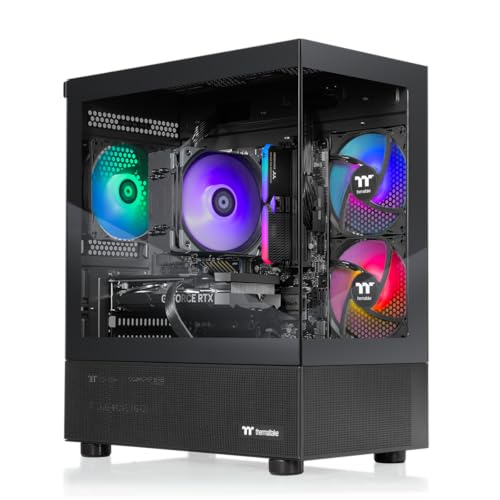
The Skytech Gaming Archangel 5 is a pre-built gaming desktop designed for PC gamers who want a reliable system without the hassle of building one themselves. It combines an Intel Core i5 14400F processor with an NVIDIA GeForce RTX 5060 graphics card, 16GB of DDR5 RAM, and a 1TB NVMe SSD, all housed in a white tempered glass case with ARGB fans. This setup is tailored for competitive gamers, casual players, streamers, and content creators who need a balanced machine for 1080p gaming and everyday productivity.
In real-world use, this PC handles popular titles like Call of Duty, Fortnite, Valorant, and Apex Legends at Ultra settings with smooth 60+ FPS gameplay. The RTX 5060's 8GB of GDDR7 memory provides solid visual clarity and low-latency performance, making it suitable for esports and fast-paced shooters. The 1TB NVMe SSD ensures quick load times, so you spend less time waiting and more time playing. For streamers, the system can handle light streaming tasks alongside gaming, though heavier encoding may benefit from a dedicated capture card.
Build quality is a highlight here. The white Archangel 5 case features a tempered glass side panel that shows off the internal components and RGB lighting. The high-performance air cooler with ARGB fans maintains good airflow and keeps temperatures in check during long sessions. The 750W Gold-rated PSU provides stable power delivery, and the system is assembled in the USA with a 1-year warranty on parts and labor. Cable management is tidy, and the case has a compact footprint that fits well on most desks.
Setup is straightforward: plug in the included keyboard and mouse, connect to Wi-Fi, and you're ready to game. The system comes with Windows 11 Home and no bloatware, so you won't have to uninstall unnecessary software. The free keyboard and mouse are basic but functional for getting started. For those who want to customize further, the case offers room for additional storage or fans, and the ARGB lighting can be controlled via the motherboard software.
One limitation to consider is that the graphics card brand may vary, which could affect the look or warranty support. Additionally, the 8GB VRAM on the RTX 5060 may struggle with 1440p gaming or heavy texture packs in some titles. The air cooler is effective for stock settings but may not be ideal for aggressive overclocking. However, for most gamers targeting 1080p, these are minor concerns.
Overall, the Skytech Gaming Archangel 5 is a practical choice for PC gamers, esports players, and streamers who want a ready-to-use system with strong 1080p performance. It's also a great option for college gamers or work-from-home users who need a versatile desktop for both gaming and productivity. If you prefer a pre-built with no assembly required and a clean white aesthetic, this PC delivers solid value and reliable performance.


Pros
- Excellent gaming performance for the price, rivaling higher-end CPUs in many titles.
- Hybrid architecture efficiently handles gaming and background tasks like streaming or recording.
- Unlocked multiplier allows easy overclocking for extra performance headroom.
- DDR4 and DDR5 support provides memory flexibility and cost savings.
- Integrated graphics can serve as a backup or for non-gaming builds.
Cons
- Requires a capable cooler as it runs hot under load; no cooler included.
- May need a BIOS update on some 600-series motherboards for compatibility.
- Power draw can be high (125W base, more under load), so a quality PSU is recommended.
The Intel Core i5-13600K is a 13th Gen desktop processor built on a hybrid architecture that combines six Performance-cores and eight Efficient-cores, totaling 14 cores and 20 threads. This CPU is designed specifically for gamers, streamers, and content creators who need strong single-threaded performance for gaming alongside efficient multi-threading for background tasks like recording or streaming.
In real-world gaming, the i5-13600K delivers excellent responsiveness and low-latency performance. Its boost clock up to 5.1 GHz ensures competitive frame rates in esports titles like Valorant or CS2, while the hybrid architecture keeps multitasking smooth - you can game, stream, and chat on Discord without noticeable slowdowns. The unlocked multiplier also allows overclocking for those who want to push performance further.
Build quality is solid, with Intel's proven Raptor Lake design. The processor supports PCIe 5.0 and 4.0, giving you access to the fastest SSDs and graphics cards. It's compatible with both DDR4 and DDR5 memory, so you can choose based on your budget. The LGA1700 socket works with Intel 600 and 700 series motherboards, though some older 600-series boards may require a BIOS update.
Setup is straightforward but note that no cooler is included - you'll need an aftermarket solution. A good air cooler or 240mm AIO is recommended for sustained loads. The 125W base power can spike higher under overclocking, so a quality power supply (650W or more) is advisable. Integrated UHD Graphics 770 is present, which helps for basic display or troubleshooting without a dedicated GPU.
Limitations include the need for a capable cooler and potential BIOS updates. Power consumption is higher than previous generations, so budget for a decent PSU and cooling. Overall, the i5-13600K is a fantastic choice for PC gamers building a high-performance rig without going for the top-tier i7 or i9. It's especially suited for competitive gamers, streamers, and anyone who wants great gaming performance with solid multitasking - all at a reasonable price point.

Pros
- Excellent multi-core performance for gaming and productivity workloads
- Integrated graphics provide useful backup for troubleshooting or light tasks
- Unlocked multiplier for easy overclocking with compatible Z-series motherboards
- Good compatibility with both DDR4 and DDR5 memory platforms
- Backward compatible with many LGA1700 motherboards with BIOS update
Cons
- Runs hot under load, requiring a high-end air or liquid cooler for optimal performance
- Power draw can be high, especially when overclocked or under sustained workloads
- May require BIOS update for older 600-series chipset motherboards
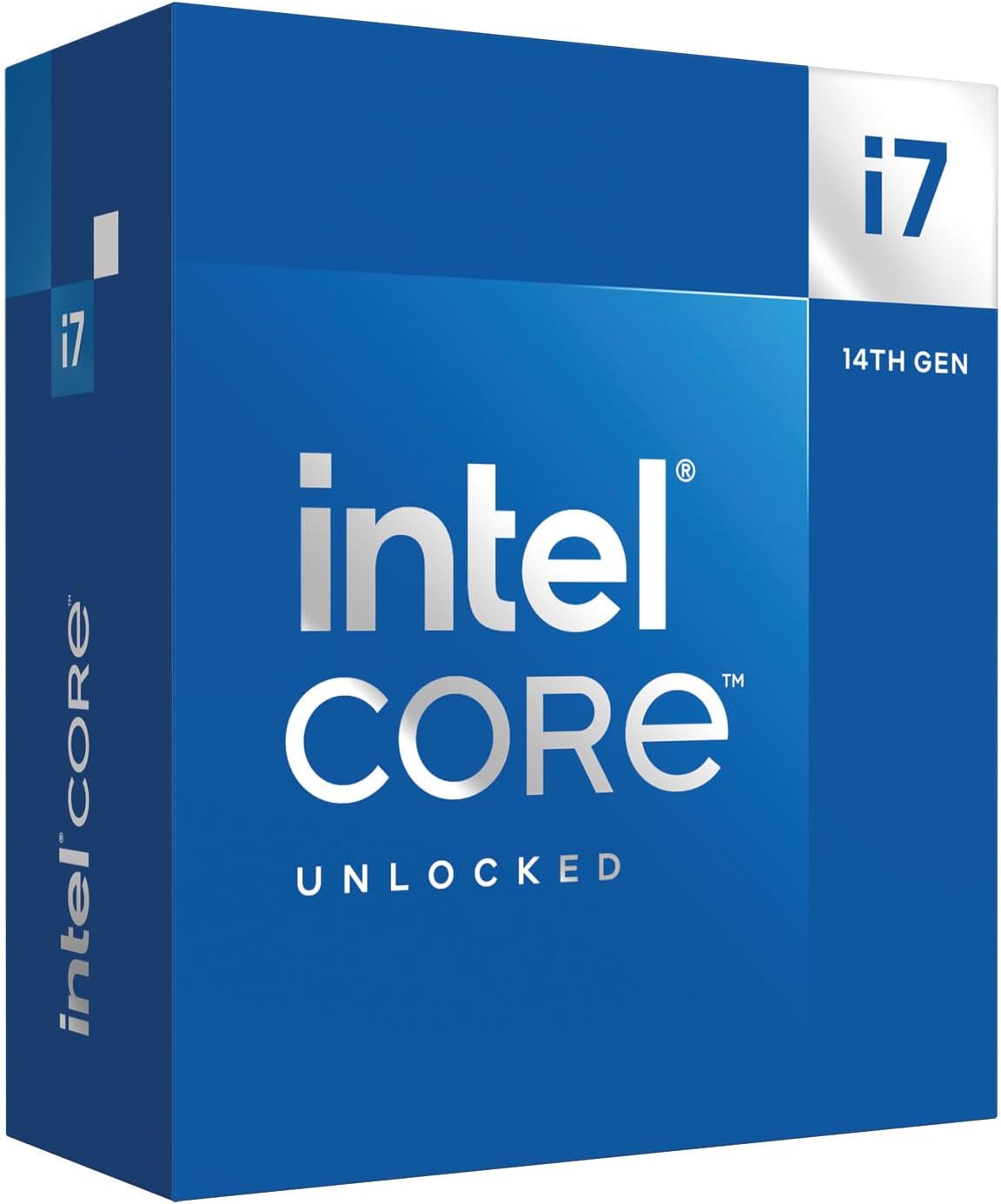
The Intel Core i7-14700K is a 14th-generation desktop processor that blends high-performance P-cores with efficient E-cores, giving PC gamers and content creators a versatile chip for demanding workloads. With 8 performance cores and 12 efficiency cores for a total of 20 cores and 28 threads, it offers strong multi-threaded performance for gaming while streaming, video editing, or running productivity tasks in the background. This processor is designed for the LGA1700 socket and works with both Intel 600 and 700 series motherboards, though a BIOS update may be needed for older boards.
This CPU is best suited for PC gamers who want high frame rates in modern titles, competitive esports players who need consistent responsiveness, streamers who multitask during broadcasts, and content creators who edit video or render 3D assets. Its hybrid architecture allows demanding games to run on the performance cores while background apps like Discord, OBS, or Chrome tabs are handled by the efficient cores, keeping your gameplay smooth and your stream stable. The unlocked multiplier also appeals to enthusiasts who want to push clock speeds beyond stock with adequate cooling.
When it comes to gaming, the i7-14700K delivers strong single-core performance for snappy responsiveness in fast-paced shooters like Valorant, CS2, and Call of Duty, as well as in CPU-intensive titles like Cyberpunk 2077 and Microsoft Flight Simulator. Users report noticeable gains over previous-gen i7s, especially in games that benefit from higher core counts and faster cache. The 33 MB Intel Smart Cache helps reduce latency, while support for PCIe 5.0 and DDR5 memory means this chip can take full advantage of the latest GPUs and fast RAM kits for even better frame rates.
Cooling is a critical consideration with this processor. Under full load, the i7-14700K can draw significant power and generate substantial heat. Most builders will want at least a quality 240mm AIO liquid cooler, and a 360mm AIO or custom loop is recommended for sustained all-core workloads. Undervolting is a popular technique among enthusiasts to reduce temperatures without sacrificing much performance, as noted in user feedback. A good contact frame for the LGA1700 socket can also help with even thermal paste spread and lower temps.
Setup is straightforward if you have a compatible motherboard and a BIOS updated to support 14th-gen chips. The processor integrates Intel UHD Graphics 770, which is handy for troubleshooting or basic display output without a dedicated GPU. Overclocking headroom is available for those who want to push frequencies further, though the stock Turbo Boost performance is already strong for most gaming scenarios. The chip works with both DDR4 and DDR5 memory, giving builders the option to save money with existing DDR4 kits or invest in faster DDR5 for future-proofing.
Realistically, the i7-14700K sits in a sweet spot for high-end gaming builds where you want strong multi-core performance without stepping up to the i9 price tier. It handles gaming, streaming, and productivity tasks simultaneously without breaking a sweat, making it a versatile choice for a gaming PC that also doubles as a workstation. Just be ready to invest in adequate cooling and a quality power supply, as this chip pulls significant power under load. For gamers building a new rig or upgrading from a 12th-gen or earlier platform, this CPU offers a compelling balance of price and performance.
In gaming scenarios, the i7-14700K delivers excellent single-core performance thanks to its high boost clock and Intel Turbo Boost Max Technology 3.0. This translates to high frame rates in competitive shooters like Valorant and CS2, where CPU speed often dictates performance. The 8 P-cores handle the game logic while the 12 E-cores manage background tasks like Discord, streaming software, and game launchers, resulting in smoother gameplay with fewer stutters. Users report strong performance in AAA titles at 1440p and 4K when paired with a modern GPU, with the CPU rarely becoming the bottleneck.
For streaming, the hybrid architecture lets you game on the P-cores while encoding and streaming tasks run on the E-cores, keeping in-game performance consistent. The integrated graphics are not intended for gaming but provide a useful fallback for troubleshooting or basic display output. Overclockers will appreciate the unlocked multiplier and robust VRM support on Z790 boards, though thermal headroom varies by silicon quality.


Evaluating Intel Core i5 Capabilities for Modern Gaming
The straightforward answer to whether an Intel Core i5 delivers exceptional gaming performance is an emphatic yes. Across multiple hardware generations, the Core i5 family has consistently earned its reputation as the sweet spot for desktop gaming builds. Modern iterations such as the Core i5-13600K, the Core i5-14600KF, and the power-efficient Core i5-14400F supply more than enough compute power to drive modern graphics cards without introducing severe processing bottlenecks. Understanding how these processors achieve that balance requires looking closely at their architecture, clock speeds, and platform versatility.
Hybrid Architecture and Thread Allocation in Modern Games
Intel shifted desktop architecture dramatically with the introduction of its performance hybrid topology. Rather than packing a processor die solely with identical compute cores, modern Core i5 processors combine physical Performance cores with background-oriented Efficient cores. The high-clocked Performance cores, commonly called P-cores, focus on latency-sensitive tasks such as primary game logic, physics simulations, and rendering draw calls. Meanwhile, the smaller Efficient cores, or E-cores, absorb routine operating system background tasks, communication software, and low-priority system threads.
This division of labor prevents sudden frametime spikes during intense gaming sessions. When an operating system service or an antivirus scan activates in the background, the Intel Thread Director assigns that workload to the E-cores. Consequently, the primary gaming threads running on the P-cores remain uninterrupted and operate at peak efficiency. Processors like the Core i5-13600K and Core i5-14600KF feature six P-cores backed by eight E-cores, giving them twenty compute threads. That level of multi-threaded parallel throughput gives modern Core i5 processors plenty of headroom to handle background multitasking while keeping gameplay smooth and responsive.
Resolution Bottleneck Dynamics: 1080p, 1440p, and 4K Performance
The impact of a processor on overall frame rates changes significantly depending on the display resolution you select. At 1080p Full HD resolution, modern graphics cards render scenes rapidly, placing heavy demands on the processor to deliver geometry instructions and process player input. In high-refresh esports titles running at 1080p, a fast processor with high single-core boost clocks and substantial cache helps maintain stable 1% low frame rates. Under these CPU-bound conditions, a capable Core i5 maintains swift instructions-per-cycle execution to prevent stuttering.
Stepping up to 1440p Quad HD or 4K Ultra HD alters this dynamic considerably. At higher display resolutions, the graphical workload shifts almost entirely to the dedicated graphics card, which must shade millions of additional pixels every second. Because the graphics processor becomes the primary limiting factor, the performance disparity between an Intel Core i5 and a pricier Core i7 or Core i9 shrinks dramatically. In visually demanding AAA titles running at 1440p or 4K with maximum visual settings, an Intel Core i5 comfortably delivers identical average frame rates to flagship processors because the graphics card dictates the frame pace.
Comparing K-Series and F-Series Core i5 Processors
The Intel Core i5 family is not a uniform lineup; it offers distinct tiers tailored to different building strategies. Processors bearing the K suffix, such as the Core i5-13600K and Core i5-14600KF, feature unlocked clock multipliers, elevated base power limits, and higher boost frequencies. The Core i5-14600KF reaches maximum turbo frequencies up to 5.3 GHz across its 14 cores, delivering exceptional single-thread responsiveness for competitive titles. These unlocked chips require dedicated aftermarket cooling and suit builders who appreciate fine-tuning clock profiles and memory timings.
Conversely, mainstream models like the Core i5-14400F cater to builders seeking maximum value and straightforward assembly. The Core i5-14400F features a 10-core configuration comprising six P-cores and four E-cores with boost speeds reaching up to 4.7 GHz. The F suffix indicates that the processor lacks integrated graphics, requiring a discrete graphics card to display video output. Because non-K chips operate with lower base power envelopes and include basic stock cooling solutions like the Intel RM1 cooler, they lower the total cost of assembling a balanced gaming desktop.
Core i5 Versus Core i7: Weighing Value Against Flagship Power
A common dilemma for PC gamers is whether spending extra for an Intel Core i7 produces a noticeable upgrade in gaming performance. A processor like the Core i7-14700K boasts twenty cores, combining eight P-cores and twelve E-cores to achieve turbo boost frequencies up to 5.6 GHz. In workstation applications like heavy 3D rendering, video encoding, and data compilation, those extra compute resources yield substantial time savings. However, modern game engines rarely utilize more than eight dedicated performance cores effectively.
For dedicated gaming rigs, the frame rate difference between an unlocked Core i5 and a Core i7 remains remarkably modest in real-world scenarios. The Core i5-13600K and Core i5-14600KF already provide six high-speed Performance cores and ample L3 cache to feed modern graphics cards. Reallocating budget savings from a Core i5 purchase toward a higher-tier graphics card, faster storage, or additional system memory generally yields a far greater boost to in-game visuals and frame pacing. Unless your daily routine involves professional workstation rendering alongside your gaming sessions, a Core i5 remains the more cost-effective choice.
LGA1700 Motherboard Chipsets and Power Delivery Requirements
Selecting the right motherboard chipset plays an essential role in maximizing the stability and performance of an Intel Core i5 processor. Desktop processors from the 13th and 14th generations utilize the LGA1700 socket, which is supported across Intel 600-series and 700-series motherboards. Mainstream motherboards built on the B760 chipset represent an ideal pairing for locked processors like the Core i5-14400F, delivering stable voltage regulation, PCIe 4.0 lanes, and robust connectivity without unnecessary overclocking expenses.
Builders opting for an unlocked processor like the Core i5-13600K or Core i5-14600KF typically benefit from a Z790 motherboard featuring expanded voltage regulator modules and robust heatsinks. Our comprehensive gaming motherboard selection guide explores how board power stages and thermal layouts sustain aggressive boost clocks under sustained gaming sessions. Older 600-series motherboards remain compatible with 14th Gen chips as well, though builders must verify that the board firmware supports a BIOS update to recognize newer processor revisions properly.
Memory Architecture: Choosing Between DDR4 Value and DDR5 Speed
A notable advantage of the Intel LGA1700 platform is its dual-memory support, allowing processors to pair with either DDR4 or DDR5 memory modules depending on the selected motherboard. DDR4 memory kits operating at 3200 MT/s provide an exceptionally economical path for gamers upgrading from older systems or building on a strict budget. Systems utilizing DDR4 memory retain solid responsiveness in modern titles, minimizing overall platform entry costs while delivering reliable daily gaming performance.
Opting for a DDR5-compatible motherboard, however, unlocks higher memory bandwidth and superior future compatibility. Fast DDR5 kits rated at 6000 MT/s or higher enhance data transfer rates between the system memory and the processor cache, which helps stabilize 1% low frame rates in memory-sensitive multiplayer games. When configuring a new system with an eye toward longevity, pairing an Intel Core i5 with DDR5 memory ensures your platform remains aligned with evolving memory standards. Builders should always enable Intel XMP profiles within the BIOS to verify that memory kits operate at their rated speeds.
Thermal Management and Real-World Power Consumption
Managing thermal dissipation and electrical power limits is vital to maintaining peak performance from an Intel Core i5 processor. Locked models like the Core i5-14400F feature modest base power ratings of 65 watts, making them easy to keep cool under prolonged gaming loads. While these processors include a basic boxed air cooler, installing an affordable aftermarket tower cooler lowers operating temperatures and reduces fan noise. Standard airflow cases with adequate intake and exhaust fans easily handle the heat generated by mainstream Core i5 silicon.
Unlocked K-series models feature higher maximum turbo power envelopes that can exceed 180 watts when all cores are fully engaged during intensive computing tasks. To prevent thermal throttling, processors such as the Core i5-13600K and Core i5-14600KF require beefier thermal solutions, such as dual-tower air coolers or 240mm liquid cooling radiators. Motherboard manufacturers sometimes apply aggressive default power limits out of the box, so configuring standard baseline power limits within the BIOS helps maintain balanced operating voltages and stable long-term temperatures during demanding gaming marathons.
Multitasking, Content Creation, and Hardware Media Encoding
Modern gamers frequently do more than just play titles; they broadcast to Twitch, participate in Discord voice channels, capture clips, and run background music streams. An Intel Core i5 handles these simultaneous tasks comfortably thanks to its balanced thread capacity. The combination of high-speed Performance cores handling the active game and background Efficient cores managing communication software prevents audio stutter and in-game frame pacing disruptions.
Processors featuring integrated graphics, such as the Core i5-13600K with Intel UHD Graphics 770, offer an additional advantage through Intel Quick Sync Video technology. Quick Sync provides a dedicated hardware encoding engine that can offload video recording and streaming workloads away from your primary graphics card. If you choose an F-series processor lacking integrated graphics, your discrete graphics card handles video encoding through hardware pipelines like NVIDIA NVENC or AMD AMF instead. Both setups provide seamless content creation workflows without sacrificing active gaming frametimes.
Balanced Prebuilt Configurations and Custom Component Pairings
The versatility of the Intel Core i5 makes it the processor of choice across a vast array of prebuilt gaming desktops and custom system builds. System integrators regularly pair the Core i5-14400F with modern graphics cards like the GeForce RTX 5060, supported by 16GB of DDR5 memory and rapid NVMe solid-state storage. These balanced configurations deliver exceptional performance across competitive titles and modern AAA releases at 1080p and 1440p resolutions without forcing users to pay for unused compute hardware.
When planning a custom configuration, consulting our broader desktop PC processor recommendations helps identify how a Core i5 balances against the rest of your component budget. Pairing an Intel Core i5 with a capable mid-tier or upper-mid-tier graphics card creates an ideal synergy where neither component holds back the other. Custom builders also benefit from wide power supply compatibility, as a dependable 650W or 750W power unit provides plenty of electrical headroom for both the processor and the graphics card.
Practical Verdict: Is an Intel Core i5 Right for You?
Evaluating overall gaming value confirms that an Intel Core i5 processor remains one of the smartest investments available for desktop gaming enthusiasts. Whether you select an unlocked Core i5-14600KF to push competitive refresh rates or a power-conscious Core i5-14400F for plug-and-play simplicity, you receive balanced compute throughput, robust multi-tasking headroom, and wide platform flexibility. The architecture delivers exceptional frame pacing and prevents the annoying micro-stutters that degrade fast-paced gaming experiences.
For the vast majority of PC gamers playing at 1080p, 1440p, or 4K resolutions, an Intel Core i5 supplies every bit of processing muscle required to maximize visual settings and sustain smooth gameplay. Unless your daily routine demands massive multi-threaded workstation rendering, stepping up to an enthusiast Core i7 or Core i9 rarely justifies the added component expense. Choosing an Intel Core i5 allows you to build a powerful, balanced, and responsive gaming computer while allocating your budget where it impacts visual fidelity the most.


Write Your Review
No reviews yet. Be the first to share your experience!