

Balancing hardware budgets while chasing fluid 1080p and 1440p frame rates remains one of the trickiest parts of building a modern gaming desktop. Many PC builders wonder whether mid-tier hardware can genuinely sustain demanding modern titles without stuttering or requiring massive system upgrades. When evaluating modern hardware configurations, figuring out is intel arc b580 good for gaming requires looking at real-world driver stability, memory capacity, and how well the silicon scales alongside balanced modern processors. Modern games demand consistent frame delivery and capable hardware architecture, making this GPU lineup an interesting topic for value-focused PC enthusiasts.
Modern titles lean heavily on video memory allocations and low-level API efficiency, meaning hardware choices directly influence 1% low frame pacing and overall system responsiveness. Exploring alternative options like budget gaming graphics options highlights how crucial platform synergy is when balancing visual settings with fluid gameplay. Evaluating this card requires assessing its architecture, memory configuration, and CPU pairing requirements to verify whether it meets modern gaming demands. Understanding these core platform dynamics will help you determine if this graphics solution fits your specific gaming expectations.


Evaluating Intel Arc B580 Gaming Performance, Architecture, and Platform Synergy
Assessing whether the Intel Arc B580 delivers capable gaming performance requires examining its architectural evolution and real-world gaming capabilities. Built on the Xe2 Battlemage microarchitecture, this graphics processor targets mainstream gamers who want dependable frame rates without stepping into excessive investment brackets. The card represents a substantial refinement over previous Alchemist releases, introducing architectural efficiencies that directly enhance modern visual rendering.
Gamers focusing on contemporary game libraries will find that the hardware manages modern rendering pipelines with steady composure. The platform focuses heavily on DirectX 12 and Vulkan execution, allowing it to sustain stable frame delivery across competitive and narrative titles. Understanding its true gaming value involves analyzing how its memory capacity, platform prerequisites, and processor pairings come together inside a desktop system.
Battlemage Architecture and Xe2 Execution Improvements
The transition to the Xe2 architecture introduces redesigned compute clusters that optimize graphics execution pipelines. Earlier generation GPUs occasionally encountered pipeline stalls during rapid thread dispatch, which impacted frame delivery consistency. Intel redesigned the vector engines and instruction issue logic within Xe2 to keep internal processing units saturated during compute-heavy gaming scenes. These modifications allow graphics workloads to process with fewer execution bottlenecks across modern graphic engines.
Hardware ray tracing units also receive functional enhancements within the Xe2 silicon design. Dedicated traversal units handle bounding volume hierarchy calculations more efficiently, reducing the severe rendering penalties associated with ray-traced shadows and reflections. While demanding ray tracing configurations can still challenge mainstream silicon, the improved throughput ensures playable frame rates when selective lighting features are active. This architectural progress provides a more resilient baseline for modern visual effects.
Underlying driver communication has also undergone foundational revisions to match the updated hardware. Early Arc products required aggressive driver patches to streamline draw-call execution, whereas Xe2 was engineered from the silicon level to minimize software overhead. The hardware command processor interacts more cleanly with system memory, translating to tighter frame pacing and less erratic behavior in complex gaming environments.
Resolution Targets: 1080p High Refresh and 1440p Viability
Resolution expectations play a decisive role in determining overall satisfaction with this graphics card. The hardware operates comfortably at 1080p resolution, producing high frame rates across competitive multiplayer titles and modern single-player adventures. Esports titles that emphasize fast reaction times benefit from the GPU’s rapid frame throughput, making it a viable companion for high-refresh gaming displays. Standard visual presets generally maintain smooth frame times without requiring aggressive quality compromises.
Stepping up to 1440p gaming remains viable for a wide selection of modern games, though careful setting management becomes necessary. The card possesses sufficient raw pixel fill rate and memory bandwidth to drive 2560×1440 displays in most modern releases. Demanding graphical features like ultra-dense volumetric fog or unoptimized screen-space reflections may require modest adjustments down to high or medium presets. Adjusting these heavy settings helps maintain stable 1% low frame rates and eliminates jarring frametime spikes.
Frame pacing consistency represents an essential metric when evaluating visual fluidity at higher display resolutions. Sudden frametime variance often creates noticeable micro-stutter even when average frame counters appear respectable. The Arc B580 demonstrates refined frame time pacing compared to first-generation hardware, ensuring that 1440p gaming feels consistent rather than sluggish during intense on-screen action.
The Critical Role of Resizable BAR and PCIe Configuration
Operating an Intel Arc graphics card requires strict adherence to specific platform prerequisites, most notably Resizable BAR support. Traditional motherboard configurations limit the CPU to accessing GPU memory in small 256-megabyte blocks, creating severe transfer bottlenecks for modern asset-heavy games. Enabling Resizable BAR allows the processor to address the entire graphics frame buffer concurrently, drastically improving texture streaming efficiency. Without this feature active in the system BIOS, overall gaming performance can degrade significantly.
Builders utilizing older desktop hardware must verify whether their existing motherboards offer firmware support for this technology. Most modern desktop platforms from AMD and Intel support Resizable BAR seamlessly, but older legacy systems may lack proper UEFI updates. Attempting to run this graphics card on an outdated platform without memory mapping capabilities will lead to erratic frame rates and compromised frame delivery. Ensuring platform compatibility before installation avoids unnecessary troubleshooting down the line.
PCI Express interface bandwidth also factors into the overall platform equation. The card utilizes a modern PCIe 4.0 interface, ensuring rapid data exchange between system memory, the processor, and the dedicated graphics buffer. Installing the card into a compliant motherboard slot guarantees that high-resolution textures and geometry stream without data starvation. This sustained interface speed helps prevent intermittent pauses during open-world asset streaming.
Memory Subsystem: Why 12GB VRAM Matters in Modern Titles
Modern gaming engines increasingly demand higher memory allocations, making the 12GB GDDR6 configuration on the Intel Arc B580 a significant asset. Older graphics solutions in this category often featured 8GB buffers, which frequently led to memory capacity exhaustion in modern titles. When a graphics card runs out of onboard memory, assets must swap across the system bus, resulting in sudden frame rate dips and texture pop-in. Having 12GB of dedicated memory creates comfortable headroom for high-resolution texture packs.
Earlier graphics options like the mainstream gaming processors in modern builds often coordinate closely with graphics buffers during complex simulation workloads. The older Intel Arc A750 Limited Edition 8GB PCI Express 4.0 provided solid entry performance, but its smaller memory buffer faced constraints in memory-heavy modern scenarios. The expanded 12GB pool on the B580 ensures that texture caches remain populated locally on the graphics card. This localized storage prevents sudden performance drops during demanding scene transitions.
Memory bandwidth also contributes to sustained visual stability across demanding visual passes. The memory bus architecture provides ample throughput to feed the Xe2 cores during compute-intensive shader passes. High-resolution shadow mapping, temporal anti-aliasing buffers, and ambient occlusion passes all benefit from generous memory headroom. This capacity ensures that the card remains practical as upcoming games continue to push asset density.
Pairing Considerations: CPU Bottlenecks and System Balance
Achieving optimal gaming performance requires pairing the graphics card with a capable central processing unit. At 1080p resolution, the processor frequently dictates overall frame pacing because it must prepare draw calls rapidly for the GPU. Pairing this card with an underpowered or severely outdated processor can create CPU-bound scenarios where the graphics card remains underutilized. Balanced system configurations ensure that both compute units work synchronously without holding back frame delivery.
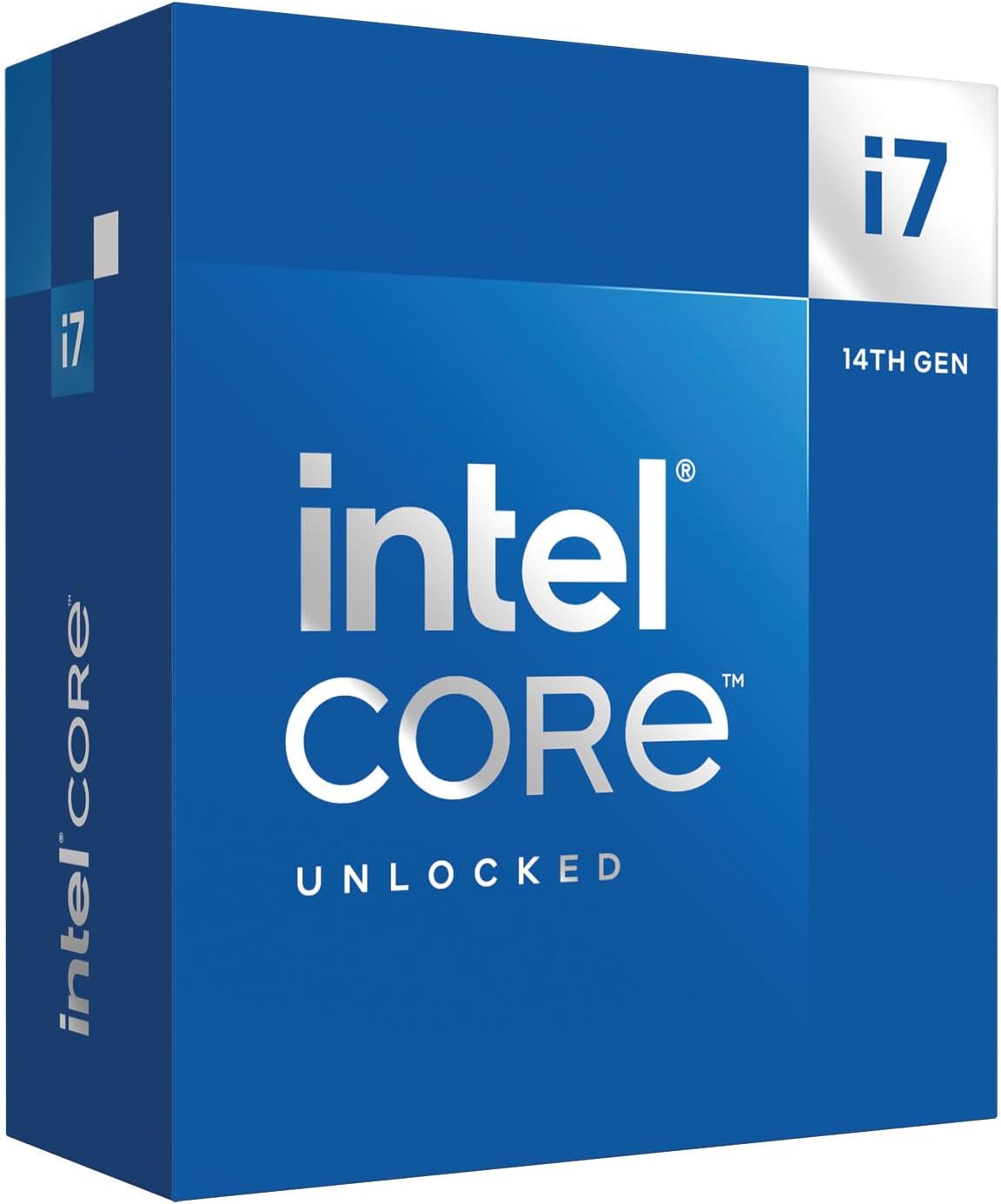
Builders assembling a new rig should consider modern mid-range options, such as capable hex-core or octa-core processors. Exploring reliable desktop processors for balanced gaming builds helps identify chips that offer strong single-core clock speeds and sufficient multi-threaded headroom. Modern processors maintain smooth 1% low frame rates, ensuring that background operating system processes do not interrupt gameplay. A capable CPU allows the Arc B580 to operate at peak utilization across various game genres.
System memory speed and dual-channel configuration also impact overall platform synergy. Equipping the motherboard with adequately fast dual-channel RAM reduces instruction latency between the processor and the PCI Express bus. Single-channel memory setups can introduce noticeable latency spikes, limiting the graphics card’s ability to maintain steady frame pacing. Investing in balanced platform components ensures that the entire system performs harmoniously under sustained gaming loads.
Modern API Optimization and Legacy Game Behavior
Software application programming interfaces heavily dictate how smoothly graphics hardware renders gaming content. The Intel Arc architecture excels when running modern low-level APIs, particularly DirectX 12 and Vulkan. These APIs grant the hardware direct control over resource allocation and multi-threaded command queuing, aligning perfectly with the Xe2 internal design. Modern titles utilizing these engines typically showcase the GPU operating at its highest efficiency levels.
Legacy titles built on DirectX 9 and DirectX 11 historically presented optimization hurdles for newer graphics architectures. Older APIs rely heavily on driver-level management to organize draw calls and pipeline states, which originally challenged early Intel driver revisions. Ongoing driver updates have substantially mitigated these historical bottlenecks through translation layers and specialized driver optimizations. While some older games may still display minor optimization quirks, overall compatibility and stability across legacy catalogs have improved considerably.
Community feedback and developer collaboration have helped address specific software edge cases over successive driver releases. Gamers who enjoy extensive backlogs of older titles will find a much more dependable software foundation than existed during the initial Alchemist launch. Running contemporary titles remains the primary strength of the hardware, but legacy gaming has become far more consistent. Continued driver refinement ensures that software friction continues to decline over time.
Feature Ecosystem: XeSS Upscaling and Media Processing
Modern gaming increasingly relies on intelligent image reconstruction to balance visual fidelity with high frame rates. Intel XeSS technology leverages dedicated machine learning hardware blocks within the GPU to upscale lower-resolution frames with minimal image degradation. Enabling XeSS in supported titles can significantly lift frame rates at 1440p resolution without introducing excessive visual artifacts or temporal blur. This feature provides a valuable tool for extending performance in demanding visual releases.
Hardware media encoding represents another standout capability within the Intel Arc product family. Dedicated hardware encoders provide robust support for modern media formats, including advanced AV1, HEVC, and H.264 video streams. Gamers who enjoy streaming their gameplay via OBS or recording high-bitrate clips will appreciate the hardware offload capabilities. The onboard media engine processes video tasks independently, preventing live broadcasting from degrading active in-game frame rates.
Content creators also benefit from broad acceleration across common creative applications and video editors. The GPU handles video exports, format transcoding, and timeline playback with impressive speed. This dual capability makes the card an appealing choice for users who divide their desktop time between gaming and digital content creation. The multimedia engine adds notable versatility beyond standard 3D gaming workloads.
Power Efficiency, Thermal Headroom, and Chassis Integration
Power consumption and thermal dissipation directly affect overall system noise and chassis ventilation requirements. The Intel Arc B580 operates within reasonable power draw parameters, making it compatible with mainstream power supply units. Builders do not need to invest in premium high-wattage power supplies to support the card comfortably. Standard power configurations with adequate 12V rail capacity provide stable voltage delivery during prolonged gaming sessions.
Thermal management on reference and partner models effectively keeps operating temperatures within safe operating margins. The cooling assemblies utilize dense fin arrays and balanced fan curves to dissipate heat without generating distracting acoustic profiles. Ensuring that your PC case maintains steady intake and exhaust airflow will help preserve boost clock frequencies under sustained graphical loads. Proper chassis airflow also prevents heat buildup from impacting adjacent system components like M.2 solid-state drives.
Physical card dimensions generally remain compact enough to fit into standard mid-tower and compact micro-ATX computer enclosures. Builders should inspect clearance measurements around front-mounted radiator fans and internal drive cages prior to mounting the card. The standard dual-slot profile simplifies installation without obstructing adjacent motherboard expansion slots. Clean cable routing and adequate cooler spacing ensure a straightforward physical installation process.
Practical Buying Takeaway: Defining the Right Gamer Profile
Determining whether the Intel Arc B580 represents a smart gaming purchase comes down to individual system requirements and software priorities. Gamers seeking an efficient 1080p and capable entry-level 1440p solution will find generous memory capacity and modern feature support. The inclusion of 12GB VRAM provides tangible longevity in modern titles that quickly overwhelm older 8GB graphics cards. The combination of XeSS upscaling and robust AV1 encoding expands the card’s practical versatility for modern desktop setups.
Prospective buyers must confirm that their motherboard and processor support Resizable BAR to unlock the full potential of the hardware. Gamers whose primary libraries consist heavily of obscure legacy titles from decades past might still encounter occasional software edge cases, though modern driver updates have closed most gaps. For builders constructing a balanced gaming PC focused on modern releases, this graphics card offers a compelling balance of performance, modern memory capacity, and contemporary visual features.
Carefully evaluating your overall system components ensures that the graphics card operates without unnecessary platform restrictions. Pairing the GPU with a capable modern processor and dual-channel memory creates a fluid, responsive gaming environment across modern game titles. Reviewing your display resolution goals, active game libraries, and platform readiness will confirm whether this card aligns with your gaming expectations.




Write Your Review
No reviews yet. Be the first to share your experience!