


Gamers searching for capable portable hardware often struggle to balance genuine graphic processing power with sensible spending limits. Answering what is the best budget friendly gaming laptop requires examining the exact internal hardware configuration rather than relying on branding or chassis aesthetics alone. A truly capable entry-level machine must maintain steady frame rates across modern titles while keeping operational temperatures within safe limits. Many shoppers find that evaluating affordable gaming laptops helps establish a realistic baseline for core components and display performance. Understanding these foundational specifications ensures that every investment translates into tangible in-game smoothness.
Current budget gaming hardware has evolved considerably, pairing dedicated graphics cards with high-refresh displays that were once exclusive to premium tiers. Navigating this segment means carefully weighing dedicated video memory, system memory capacity, and solid-state storage speed against your specific gaming library. An optimal machine balances sustained graphical horsepower with responsive inputs, ensuring smooth gameplay in competitive esports titles and comfortable daily computing. Clarifying these critical hardware priorities helps buyers avoid underpowered configurations that struggle with modern system requirements.

Pros
- Strong price-to-performance ratio for entry-level 1080p gaming.
- 144Hz display provides smooth gameplay in fast-paced titles.
- Decent storage and memory configuration out of the box.
- Eco-friendly construction with recycled materials.
Cons
- 7-pound weight makes it less portable for frequent travel.
- DDR4 RAM (not DDR5) may limit future upgradability potential.
- No Thunderbolt or USB4 support limits external GPU options.
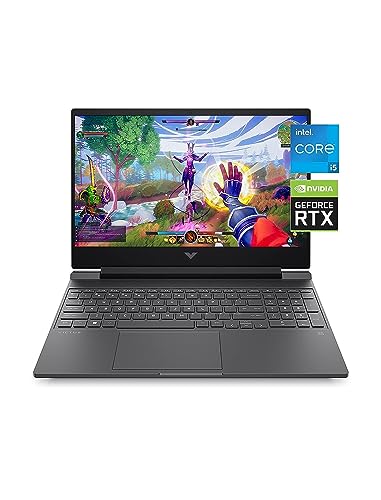
The HP Victus 15.6-inch laptop (model 15-fa1040nr) is a mid-range gaming machine designed for PC gamers who want a capable desktop replacement without breaking the bank. Powered by a 12th Gen Intel Core i5-12500H and an NVIDIA GeForce RTX 4050 with 6GB of dedicated GDDR6 memory, this laptop can handle modern esports titles like Valorant and Apex Legends at high settings, while also running demanding single-player games at medium-to-high details in 1080p. The 144Hz FHD IPS anti-glare display adds a level of smoothness that competitive gamers will appreciate, reducing motion blur and helping you track fast-moving targets.
This laptop is best suited for budget-conscious PC gamers, college students who need a blend of gaming and study performance, and casual gamers who want a reliable machine for their dorm room or home office setup. The 16GB of DDR4 RAM and 512GB PCIe Gen4 NVMe SSD provide snappy boot times and quick level loads, so you can jump into games without long waits. The RTX 4050 supports ray tracing and DLSS in supported titles, which helps improve visual fidelity without tanking frame rates. For streamers or content creators, the 6GB VRAM can handle light 1080p video editing and streaming, though more demanding 4K work may be a stretch.
Build quality is solid for the price point, with a Mica Silver chassis that has a clean, understated look. The laptop weighs 7 pounds, which is on the heavier side, so it's better suited for stationary use or occasional transport rather than daily backpack commuting. The keyboard includes a number pad and offers decent key travel, though it's not mechanical. The 88-degree wide-angle HD webcam with AI noise cancellation is a welcome addition for remote work or Discord calls, ensuring your voice comes through clearly in noisy environments.
Audio from the HP Dual Speakers tuned by B&O is surprisingly rich for a laptop in this class, with decent volume and clarity for casual media consumption and in-game sound effects. For serious gaming, you'll likely still want a dedicated gaming headset for positional audio. Connectivity includes Wi-Fi 6 and Bluetooth 5.3, along with USB-A, USB-C, HDMI, and a headphone jack, covering the basics for peripheral hookup. The battery life is moderate; expect around 4-5 hours of mixed use, less during gaming.
One realistic limitation is the use of DDR4 RAM instead of the newer DDR5, which means memory upgrades won't benefit from the fastest speeds available in other 2023 laptops. Also, the single storage slot limits expansion without replacing the existing SSD. The 512GB drive may fill up quickly if you install several modern games, but you can always use an external drive or cloud storage. Overall, this HP Victus offers a well-balanced package for gamers seeking an affordable entry into 1080p 144Hz gaming without compromising on core performance.
If you're a PC gamer looking for a budget-friendly laptop that can handle esports and moderate AAA titles, or a student needing a versatile device for both gaming and coursework, the HP Victus 15-fa1040nr is a strong contender. Its combination of a responsive 144Hz display, capable CPU/GPU, and reasonable memory configuration makes it a practical choice for U.S. gamers who want reliable performance without overspending.
With the Intel Core i5-12500H and RTX 4050, the HP Victus delivers smooth 1080p gaming in most modern titles. Esports games like Fortnite, Overwatch 2, and Rocket League can easily hit 144fps on competitive settings, fully leveraging the 144Hz panel. Heavier games like Cyberpunk 2077 or Elden Ring will run at medium settings with DLSS enabled for a steady 60fps. The 6GB of VRAM is enough for high-resolution texture packs in many games, though future titles may require more.
The 15.6-inch FHD IPS panel with 144Hz refresh rate and anti-glare coating is a highlight at this price. Colors are decently vibrant with good contrast, and the 178-degree viewing angles make it easy to share the screen. The anti-glare finish helps reduce reflections in bright rooms, which is a plus for gaming near windows or under direct light. The 144Hz refresh rate offers a noticeable upgrade over standard 60Hz for fast-paced gaming, reducing motion blur and improving perceived smoothness.
Core Factors Behind Entry-Level Gaming Laptop Capability
Identifying an outstanding entry-level gaming laptop requires looking past marketing buzzwords to inspect the core hardware combination. Dedicated graphics capabilities, multi-core processing, adequate system memory, and efficient thermal dissipation dictate real-world gaming capability. A well-balanced system ensures consistent frame rates and smooth frame pacing across modern gaming titles without requiring excessive expense. By focusing on how these internal parts collaborate, shoppers can make practical, evidence-backed hardware choices.
Defining the Budget Gaming Laptop Threshold
The entry-level gaming space has shifted dramatically from machines that merely tolerated casual games to systems capable of handling modern releases. Today, a viable budget portable system must deliver smooth performance at full high-definition resolution without stuttering. This performance baseline relies heavily on discrete graphics processing rather than integrated processor chips. When hardware configurations include modern architectural enhancements, games run with greater visual clarity and stability.
Shoppers often encounter severe performance limitations when settling for hardware that cuts corners on essential graphics or processing silicon. Machines limited to basic integrated graphics struggle with modern 3D titles, producing choppy frame rates and input lag. In contrast, an entry-level system equipped with a discrete graphics processor provides dedicated video memory and specialized compute units. This technological foundation separates genuine gaming machines from basic office notebooks that happen to carry stylized chassis accents.
Graphics Hardware: Dedicated Power and Modern Features
Dedicated graphics hardware serves as the single most critical component in any gaming system. The inclusion of an NVIDIA GeForce RTX 4050 mobile GPU with 6 GB of dedicated GDDR6 memory provides a substantial performance leap over previous-generation entry hardware. This GPU tier introduces advanced ray tracing hardware alongside artificial intelligence acceleration via modern upscaling technologies. Having six gigabytes of dedicated video memory also allows players to load higher-resolution textures without exhausting memory pools.
Modern games increasingly require dedicated video memory to render detailed geometry and complex lighting passes smoothly. When a system lacks sufficient video memory, it offloads graphic assets to slower system RAM, causing sudden frame drops and visual stutter. The RTX 4050 GPU helps maintain consistent frame pacing by storing essential scene data directly on its dedicated high-speed GDDR6 bus. This dedicated graphic throughput is vital for maintaining fluid motion during fast-paced multiplayer combat or detailed single-player campaigns.
Graphics features like intelligent upscaling and frame generation further elevate the practical utility of modern entry-level mobile silicon. These technologies allow the GPU to render frames internally at a lower resolution before reconstructing them at the native display target. This process delivers higher perceptible frame rates while reducing thermal load and computational stress on the laptop chassis. Buyers seeking long-term usability should prioritize GPUs that support these modern render pipelines.
Processor Architecture: Core Distribution and Multitasking
Central processing units manage background operating system tasks, game physics calculations, and artificial intelligence logic. A processor such as the 12th Generation Intel Core i5-12500H utilizes a hybrid architecture combining performance cores with efficient cores. This configuration intelligently distributes heavy computing workloads to dedicated performance cores while background utilities run on efficiency cores. As a result, the processor minimizes background interruptions that could otherwise induce micro-stutter during critical gaming sequences.
Modern gaming engines take advantage of high thread counts to stream game assets and coordinate complex multiplayer interactions. Having multiple physical cores and logical threads ensures that voice chat applications, game recording tools, and the operating system run concurrently without choking game performance. The Core i5-12500H provides ample compute headroom for both contemporary gaming engines and demanding productivity applications. This balanced processing capability prevents the CPU from becoming an operational bottleneck for the graphics hardware.
System Memory: Meeting the Sixteen-Gigabyte Baseline
System memory capacity directly impacts gameplay fluidity, application responsiveness, and asset loading efficiency. While older entry-level gaming notebooks frequently shipped with eight gigabytes of RAM, modern gaming demands a minimum of 16 GB. Outfitting a machine with 16 GB of DDR4 memory provides adequate room for operating system operations, open browser tabs, and modern game files. This capacity prevents the operating system from constantly relying on secondary virtual paging files.
Dual-channel memory configurations also significantly boost overall system throughput compared to single-channel arrangements. Distributing memory requests across two physical memory channels doubles the operational bandwidth between the processor and system memory. This additional bandwidth benefits processor-intensive gaming titles, improving minimum frame rates and reducing input latency. Buyers should verify that their prospective purchase features sixteen gigabytes of RAM out of the box to avoid immediate upgrade expenses.
High-Speed Storage: NVMe Drive Performance and Game Installations
Solid-state storage has become a mandatory hardware requirement for modern operating systems and gaming titles. A 512 GB PCIe Gen4 NVMe M.2 solid-state drive delivers data transfer speeds substantially faster than legacy SATA drives. These high read and write speeds drastically shorten boot times, reduce level loading screens, and eliminate texture pop-in during open-world exploration. The rapid access times of NVMe technology keep the system feeling snappy during everyday operations.
Storage capacity requires careful planning because contemporary game installs can easily exceed fifty to one hundred gigabytes each. While a 512 GB solid-state drive accommodates several major games alongside the Windows 11 installation, active gamers must manage their library space prudently. Many budget laptops allow users to add secondary storage drives or swap existing drives for larger capacities later. Checking drive expansion options ensures that your laptop continues meeting your installation requirements as your digital game collection expands.
Display Characteristics: Refresh Rates, Panel Quality, and Motion
The built-in display panel serves as the primary visual interface for all gaming and multimedia activities. A 15.6-inch Full HD display running at 1920 by 1080 resolution strikes an ideal balance between sharp pixel density and achievable rendering performance. Integrating a 144Hz refresh rate allows the panel to display up to 144 individual frames per second. This high refresh capability translates into noticeably smoother cursor movement, fluid camera panning, and enhanced tracking of fast-moving targets in competitive games.
Panel technology also determines color reproduction, contrast, and viewing flexibility during gaming sessions. An IPS anti-glare panel offers wide 178-degree viewing angles, maintaining consistent color accuracy and image clarity even when viewed off-center. The anti-glare coating reduces annoying reflections from overhead lighting or nearby windows, preserving visual visibility in brightly lit environments. A responsive 144Hz IPS panel significantly reduces perceived motion blur and ghosting compared to standard 60Hz office laptop displays.
Thermal Management and Sustained Hardware Performance
Maintaining effective cooling is essential for extracting reliable performance from high-wattage mobile silicon. Gaming laptops house powerful components inside compact enclosures, requiring carefully engineered airflow channels, heat pipes, and exhaust vents. When thermal dissipation fails to keep pace with component heat output, processors automatically throttle their clock speeds to prevent physical damage. This thermal throttling manifests directly in games as sudden, severe frame drops and sluggish input response.
Chassis designs like the HP Victus utilize multi-fan configurations and strategic venting along the rear and underside to draw in cool air and expel heat. Operating a gaming laptop on a hard, flat surface ensures that intake vents remain completely unobstructed during intensive gaming sessions. Users should routinely inspect vents for dust accumulation, which can insulate internal radiators and reduce cooling efficiency over time. Proper thermal hygiene helps components maintain their boost frequencies for extended gaming durations without excessive thermal degradation.
Form Factor Realities and Chassis Portability
Balancing computational power with everyday mobility is an inherent consideration when evaluating budget gaming notebooks. Entry-level machines typically feature durable polycarbonate chassis materials that balance structural rigidity against overall system weight. While dedicated gaming hardware requires slightly thicker profiles to house cooling assemblies, modern 15.6-inch designs remain reasonably portable for campus or office commutes. Exploring dedicated portable gaming laptops can highlight how chassis thickness and cooling design influence overall travel convenience.
Carrying a gaming laptop on the go also requires accounting for the dedicated power brick required to charge high-performance components. Standard mobile power adapters for gaming machines are larger and heavier than typical ultrabook chargers due to their substantial wattage delivery. Despite this extra bulk, a standard clamshell design provides the structural stability needed to protect delicate internal components during transit. Selecting a machine with sturdy hinges and solid deck construction prevents chassis flex and ensures long-term mechanical reliability.
Connectivity, Audio, and Input Capabilities
A satisfying gaming experience extends beyond raw graphics performance to include input responsiveness and network reliability. Modern wireless standards such as Wi-Fi 6 and Bluetooth 5.3 provide reduced latency and higher throughput across congested home networks. Stable wireless connectivity is vital for competitive multiplayer titles where minor packet loss can disrupt gameplay. Bluetooth 5.3 allows seamless pairing with modern wireless headsets, mice, and game controllers with minimal energy drain.
Physical port selection remains equally critical for connecting external displays, mechanical keyboards, and external storage drives. Having multiple USB Type-A and Type-C ports, an HDMI video output, and a dedicated headphone jack eliminates the immediate need for bulky port adapters. Integrated audio systems tuned by audio specialists like B&O provide clear directional cues and natural dialogue during gameplay. Additionally, an integrated wide-angle HD camera with background noise cancellation ensures crisp communication during multiplayer squad matches and remote school or work meetings.
Evaluating Alternative Laptop Form Factors
Shoppers frequently evaluate standard gaming laptops against unconventional designs such as convertibles or hybrid machines. While some users examine convertible gaming laptops for their flexible hinges and touchscreen capabilities, standard clamshell laptops remain superior for raw budget performance. 2-in-1 designs often compromise cooling capacity, graphics wattage, and keyboard travel to achieve their flexible form factors. These structural compromises often result in higher manufacturing costs and lower sustained gaming frame rates.
A traditional clamshell form factor allocates internal volume specifically toward dedicated heat pipes, dual fans, and full-sized mobile components. This focused engineering allows a budget machine like the HP Victus 15 to maintain sustained graphical output without thermal throttling. Clamshell designs also feature more durable hinge mechanisms that withstand thousands of open and close cycles without developing unwanted play. For dedicated gaming tasks, traditional form factors consistently offer the best computational value for your investment.
Power Settings and Battery Expectations While Gaming
Battery longevity on gaming laptops behaves very differently from standard lightweight productivity laptops. High-draw components like the Core i5 processor and RTX 4050 GPU consume substantial wattage under full load, rapidly draining the internal battery. When running on battery power alone, laptops automatically throttle GPU and CPU clock speeds to prevent excessive battery discharge and thermal buildup. Consequently, gaming on battery power results in reduced frame rates and compromised visual fluidity.
Achieving optimal gaming performance requires keeping the laptop plugged into its designated AC wall adapter. Being connected to mains power allows the system power delivery network to deliver maximum wattage to both the processor and graphics card. When using the machine for web browsing, document editing, or media consumption away from an outlet, power-saving profiles extend battery endurance. Understanding this operational distinction helps users set practical expectations for unplugged productivity versus plugged-in gaming sessions.
Crucial Hardware Checks Before Finalizing Your Selection
Before purchasing an entry-level gaming machine, buyers must verify the precise hardware configuration listed by the retailer. Manufacturers frequently offer multiple sub-models under the same product line name, pairing identical chassis designs with wildly different internal specifications. Ensure that the specific model includes a modern dedicated GPU like the RTX 4050 rather than an older, less efficient graphics chip. Confirming that the system carries 16 GB of memory and a high-refresh 144Hz display prevents unwanted post-purchase surprises.
Reviewing the wireless capabilities, operating system version, and physical port array ensures full compatibility with your existing gaming peripherals. A machine pre-installed with Windows 11 Home provides native support for modern gaming features such as Auto HDR and DirectStorage. Checking that the unit features Wi-Fi 6 connectivity guarantees seamless integration with modern high-speed home routers. Taking time to inspect these exact hardware parameters ensures that your investment delivers reliable, enjoyable gaming performance for years to come.
Making a smart hardware decision ultimately comes down to prioritizing balanced internal components over superficial styling. A configuration that pairs an Intel Core i5-12500H processor with an NVIDIA RTX 4050 GPU, 16 GB of RAM, and a 144Hz display hits the performance sweet spot for modern entry-level gaming. This cohesive hardware balance delivers smooth high-definition visuals, responsive control, and dependable daily productivity. Evaluating your gaming needs against verified specifications guarantees that you secure a capable, reliable machine that maximizes your gaming enjoyment.




Write Your Review
No reviews yet. Be the first to share your experience!