
Classic video games continue to captivate players who appreciate straightforward mechanics, memorable soundtracks, and historical design. When asking what is the best retro gaming console, enthusiasts quickly discover that the market divides into portable handheld systems and plug-and-play television devices. Selecting between these form factors requires understanding your preferred play style, whether you prioritize portable convenience during daily travel or shared multiplayer gaming on a living room television. Comparing these dedicated retro systems with entry-level gaming PC setups helps define realistic performance expectations for different emulation generations.
Modern emulation hardware utilizes power-efficient mobile processors and optimized open-source operating systems to reproduce classic gaming environments. The products evaluated in this guide offer varied hardware capabilities, ranging from entry-level Rockchip RK3326 processors to more advanced quad-core silicon and dedicated TV sticks. Understanding how display resolution, memory bandwidth, and controller latency affect your retro sessions ensures you pick a device that matches your favorite gaming eras. By examining processor limits and software interfaces, you can identify which configuration provides dependable entertainment without unnecessary complexity.


Finding the Right Retro Gaming Hardware for Classic Titles
Defining the Best Platform: Handheld Convenience Versus Living Room Play
Answering what is the best retro gaming console begins by evaluating where and how you intend to play your favorite vintage titles. Dedicated handheld consoles pack the processor, display, controls, and battery into a single portable housing, allowing you to enjoy gaming sessions anywhere. In contrast, television-based game sticks plug directly into an open HDMI port to deliver an arcade-style experience on a big screen. Each design serves distinct gaming habits, meaning the ideal choice depends on whether mobility or communal multiplayer matters most to you.
Living room television sticks emphasize straightforward accessibility and social entertainment. Devices like the Kulivloa Retro Gaming Console and the Cesanto Retro Gaming Console 4K HDMI for TV include dual wireless gamepads right in the package. These sticks operate without complex cable routing, drawing power from a USB adapter while sending digital video straight to your screen. They represent a practical option for family gatherings or casual evening sessions where multiple players want instant access to vintage arcade and home console libraries.
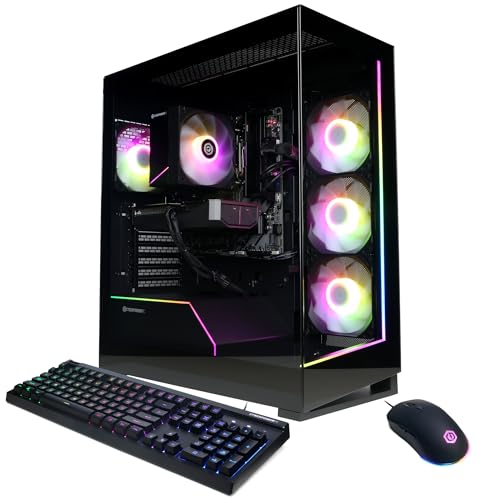
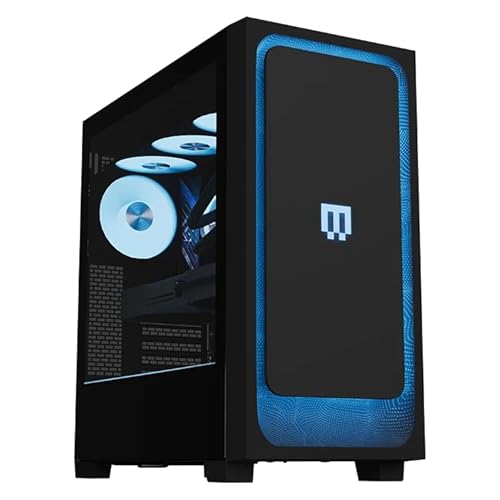
Handheld systems cater to players who prefer private gaming during commutes, travel, or relaxing away from a fixed desk. Players who already use traditional desktop gaming towers often appreciate dedicated portable consoles because they offer a focused, distraction-free environment without notifications. Handheld designs integrate specialized directional controls and displays matched to retro resolutions, providing an authentic feel that general-purpose computers cannot replicate without external accessories. Deciding on your primary physical use case narrows the field before you even begin analyzing system specifications.
System-on-Chip Performance: Examining RK3326 and RK3562 Capabilities
Emulation performance relies heavily on the underlying system-on-chip that powers the retro console. Most dedicated retro gaming devices use ARM-based architectures paired with embedded Linux operating systems to maximize efficiency. The processor dictates which console generations the system can emulate at full speed without frame drops or audio stuttering. Understanding the differences between common chipsets prevents disappointment when launching demanding three-dimensional titles from fifth-generation home consoles.
The Rockchip RK3326 quad-core Cortex-A35 processor remains one of the most widely implemented chips in retro handhelds. Consoles such as the R46H Retro Handheld Game Console and the Boltz Retro Handheld Game Console with 20,503 rely on this efficient processor to run classic eight-bit and sixteen-bit systems with dependable consistency. The RK3326 handles vintage platforms like the original Game Boy, Super Nintendo, and Sega Genesis with ease, while maintaining smooth gameplay on most PlayStation 1 titles. However, it can experience performance limits when attempting to emulate more complex systems such as the Nintendo 64 or Dreamcast.
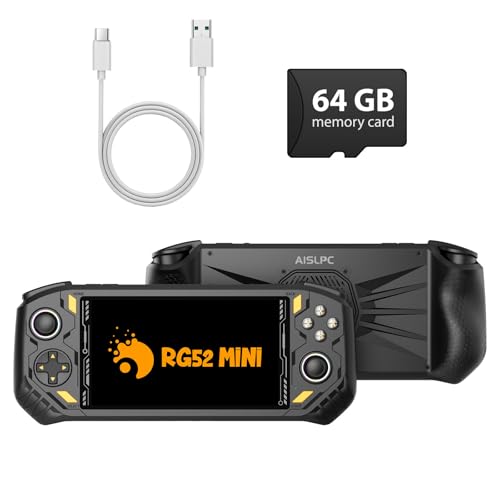
More capable retro devices incorporate newer processors like the Rockchip RK3562 quad-core Cortex-A53 silicon. Found in the RG52MINI Retro Handheld Game Console, this processor operates at clock speeds up to 2.0GHz and pairs with substantial system memory. The extra computing headroom enables smoother frame rendering on difficult three-dimensional games and reduces input lag during intense action scenes. Players who want expanded compatibility with fifth-generation home consoles and handheld 3D platforms will notice smoother emulation on this upgraded hardware class.
Display Clarity, Panel Technology, and Aspect Ratio Matching
The visual quality of a retro handheld depends directly on its integrated display panel and screen resolution. Modern retro handhelds generally utilize In-Plane Switching display panels, commonly referred to as IPS screens. IPS technology delivers wide viewing angles and accurate color reproduction, which prevents washed-out visuals when tilting the console in your hands. Compared to older twisted-nematic LCD screens, an IPS panel makes classic pixel art appear vibrant, sharp, and properly saturated.
Screen dimensions and native pixel resolutions differ considerably across current portable models. The Boltz Retro Handheld Game Console with 20,503 features a 3.75-inch IPS display with a square 720 by 720 resolution. Meanwhile, the R46H Retro Handheld Game Console provides a 4.2-inch panel boasting a 1024 by 768 resolution that closely mirrors standard four-to-three television proportions. For players seeking larger viewing real estate, the RG52MINI Retro Handheld Game Console offers a 5.5-inch laminated screen displaying 720 by 1280 pixels with an anti-glare finish to reduce eye strain.
Aspect ratio matching plays a vital role in preserving authentic visual proportions for vintage titles. Classic home consoles from the eighties and nineties were designed specifically for four-to-three cathode-ray tube television sets. Displaying these games on ultra-wide screens often results in either black side borders, known as pillarboxing, or unnatural horizontal image stretching. Panels with four-to-three or one-to-one square proportions allow integer scaling that preserves crisp square pixels without introducing blurry interpolation artifacts.
Operating Systems and Firmware: Navigating Linux and Dual-Boot Environments
The software interface running on a retro gaming console shapes your everyday user experience from the moment you power it on. Most standalone retro consoles avoid resource-heavy mobile operating systems in favor of streamlined, custom Linux distributions. These specialized Linux operating systems boot rapidly and present a dedicated carousel menu displaying console categories and game titles. By stripping away background tasks, the hardware dedicates nearly all processor cycles and memory bandwidth directly to the active emulator.
Advanced handhelds often feature dual-system architectures designed for both straightforward gaming and expanded software flexibility. The RG52MINI Retro Handheld Game Console, for instance, supports EmuELEC alongside the RGBOX system. This configuration allows users to browse preloaded libraries through an accessible frontend while retaining the ability to adjust backend emulator cores and configure custom shaders. Having dual-system options gives enthusiasts greater control over frame skipping, audio synchronization, and button mapping for unique arcade setups.
In contrast, television-based game sticks prioritize simple plug-and-play operation over deep software customization. Devices such as the Kulivloa Retro Gaming Console boot straight into a fixed menu screen with pre-mapped controller navigation. These fixed firmware interfaces eliminate the risk of accidental configuration changes, making them accessible to younger players and non-technical retro fans. However, they typically provide fewer options for downloading new emulator cores or fine-tuning graphical filters.
Physical Controls, Ergonomics, and Input Accuracy
Physical controls represent the primary tactile connection between the player and vintage games. Classic platformers, arcade brawlers, and fighting games demand precise directional pad inputs with distinct pivot points. A mushy directional pad can cause unintended diagonal inputs, resulting in missed jumps or failed special attacks during critical gameplay moments. When evaluating retro hardware, examining button feedback, travel distance, and overall layout quality is just as important as reviewing internal processor specifications.
Modern retro handhelds have adopted controller advancements once reserved for full-size gaming peripherals. For example, the RG52MINI Retro Handheld Game Console incorporates dual 3D joysticks and Hall linear triggers that utilize magnetic sensors rather than physical friction contacts. Hall-effect components resist physical wear and stick drift over time, ensuring accurate analog response across thousands of gaming hours. Handhelds featuring ergonomic rear shoulder buttons and textured grips allow comfortable hand placement during extended play sessions.
Television stick controllers face different engineering challenges, focusing on wireless responsiveness and battery longevity. The wireless gamepads bundled with the Kulivloa Retro Gaming Console and Cesanto Retro Gaming Console 4K HDMI for TV utilize 2.4GHz wireless transmission to reduce input latency across distances up to forty feet. These controllers generally run on standard AAA batteries, allowing quick power swaps during living room gaming gatherings. Verifying that wireless gamepads pair reliably and deliver crisp button presses ensures smooth local multiplayer matches without frustrating signal dropouts.
Storage Architecture, MicroSD Reliability, and Library Organization
Storage management on modern retro consoles typically relies on removable TF and MicroSD flash memory cards. Preloaded systems often ship with cards ranging from 64GB up to 128GB to hold thousands of classic game ROMs and media files. The Boltz Retro Handheld Game Console with 20,503 and R46H Retro Handheld Game Console include cards containing over twenty thousand titles across multiple classic eras. Having generous storage space allows the system to store game artwork, system bios files, and save states alongside the base game files.
Massive game libraries require efficient menu organization to keep navigation manageable. Many retro game sticks and handhelds include titles from Japanese, European, and American regional releases, which can expand total title counts with regional duplicates. Quality firmware distributions provide search bars, favorites folders, and genre sorting filters to help players locate specific games quickly. Without thoughtful categorization tools, browsing through tens of thousands of unsorted titles can feel overwhelming.
Card quality and data backup practices are critical considerations for long-term retro console ownership. Budget memory cards bundled with inexpensive consoles can occasionally suffer from read errors or file corruption after heavy read and write cycles. Backing up your card contents onto a personal computer ensures you never lose rare titles, bios configurations, or personal save files. Furthermore, high-capacity consoles like the RG52MINI Retro Handheld Game Console support card expansion up to 1TB, providing ample room for larger optical disc images from fifth-generation systems.
Television Output and Audio Immersion: Living Room Integration
Connecting retro hardware to modern high-definition displays involves digital video conversion and scaling. The Kulivloa Retro Gaming Console outputs 1080p video over HDMI, while the Cesanto Retro Gaming Console 4K HDMI for TV is designed to connect to 4K television ports. Modern television displays require proper signal handshake to prevent visual stutter and maintain responsive input timing. Selecting a device with stable HDMI output ensures crisp image delivery on flat screens without requiring external analog-to-digital converter boxes.
Some handheld systems bridge the gap between portable and stationary play by including dedicated video outputs. The RG52MINI Retro Handheld Game Console features an integrated HDMI output port and Type-C display connectivity, allowing players to connect the handheld directly to a monitor or television. This hybrid capability lets you enjoy portable gaming on the bus and then connect to a living room screen when you return home. Handhelds with hybrid television connectivity offer tremendous versatility for gamers who want one device for every setting.
Audio fidelity represents another vital component of nostalgic gaming enjoyment. Dedicated handhelds integrate built-in cavity box speakers that deliver punchy chiptune audio, along with standard 3.5mm headphone jacks for private listening. When evaluating full living room audio setups compared to complete gaming PC setup options, retro consoles maintain simpler sound pathways that route audio directly through your television speakers or internal drivers. Crisp sound reproduction brings vintage soundtracks and sound effects to life, recreating the complete sensory experience of classic gaming eras.
Selecting the Ideal Retro Console for Your Entertainment Needs
Choosing between these retro gaming systems comes down to matching form factor and hardware power to your gaming lifestyle. If your primary goal is casual multiplayer gaming with friends on a living room television, an HDMI stick like the Kulivloa Retro Gaming Console or Cesanto Retro Gaming Console 4K HDMI for TV provides instant entertainment with minimal setup. These units eliminate cable clutter and supply dual wireless controllers right out of the box, making them ideal for living room gatherings.
If your priority is authentic portable gaming, handheld units powered by the RK3326 processor offer a great balance of comfort and eight-bit to thirty-two-bit compatibility. The R46H Retro Handheld Game Console delivers classic four-to-three visual proportions on a crisp IPS screen, while the Boltz Retro Handheld Game Console with 20,503 provides a compact square display backed by a generous 3500mAh rechargeable battery. For enthusiasts seeking superior processing power, larger display real estate, and Hall-effect controls, the RG52MINI Retro Handheld Game Console represents the most capable all-around portable platform.
Ultimately, defining the right retro gaming console requires identifying the specific game libraries you cherish and where you plan to play them. Checking processor tiers, display ratios, control ergonomics, and storage limits ensures your hardware handles your favorite titles reliably. By weighing portable convenience against living room multiplayer functionality, you can confidently invest in a retro console that delivers timeless gaming enjoyment for years to come.




Write Your Review
No reviews yet. Be the first to share your experience!